Nadira Vadaq, Yue Zhang, Elise Meeder, Lisa Van de Wijer, Muhammad Hussein Gasem, Leo Ab Joosten, Mihai G Netea, Quirijn de Mast, Vasiliki Matzaraki, Arnt Schellekens, Jingyuan Fu, André Jam van der Ven
{"title":"Microbiome-Related Indole and Serotonin Metabolites are Linked to Inflammation and Psychiatric Symptoms in People Living with HIV.","authors":"Nadira Vadaq, Yue Zhang, Elise Meeder, Lisa Van de Wijer, Muhammad Hussein Gasem, Leo Ab Joosten, Mihai G Netea, Quirijn de Mast, Vasiliki Matzaraki, Arnt Schellekens, Jingyuan Fu, André Jam van der Ven","doi":"10.1177/11786469221126888","DOIUrl":null,"url":null,"abstract":"<p><strong>Background: </strong>People living with HIV (PLHIV) exhibit dysregulation of tryptophan metabolism. Altered gut microbiome composition in PLHIV might be involved. Mechanistic consequences within the 3 major tryptophan metabolism pathways (serotonin, kynurenine, and indoles), and functional consequences for platelet, immune and behavioral functions are unknown. We investigated plasma tryptophan metabolites, gut microbiome composition, and their association with platelet function, inflammation, and psychiatric symptoms.</p><p><strong>Methods: </strong>This study included 211 PLHIV on long-term antiretroviral treatment (ART). Plasma tryptophan pathway metabolites were measured using time-of-flight mass spectrometry. Bacterial composition was profiled using metagenomic sequencing. Platelet reactivity and serotonin levels were quantified by flowcytometry and ELISA, respectively. Circulating inflammatory markers were determined using ELISA. Symptoms of depression and impulsivity were measured by DASS-42 and BIS-11 self-report questionnaires, respectively.</p><p><strong>Results: </strong>Plasma serotonin and indole metabolites were associated with gut bacterial composition. Notably, species enriched in PLHIV were associated with 3-methyldioxyindole. Platelet serotonin concentrations were elevated in PLHIV, without effects on platelet reactivity. Plasma serotonin and indole metabolites were positively associated with plasma IL-10 and TNF-α concentrations. Finally, higher tryptophan, serotonin, and indole metabolites were associated with lower depression and anxiety, whereas higher kynurenine metabolites were associated with increased impulsivity.</p><p><strong>Conclusion: </strong>Our results suggest that gut bacterial composition and dysbiosis in PLHIV on ART contribute to tryptophan metabolism, which may have clinical consequences for immune function and behavior.</p>","PeriodicalId":2,"journal":{"name":"ACS Applied Bio Materials","volume":" ","pages":"11786469221126888"},"PeriodicalIF":4.7000,"publicationDate":"2022-09-27","publicationTypes":"Journal Article","fieldsOfStudy":null,"isOpenAccess":false,"openAccessPdf":"https://www.ncbi.nlm.nih.gov/pmc/articles/PMC9520182/pdf/","citationCount":"0","resultStr":null,"platform":"Semanticscholar","paperid":null,"PeriodicalName":"ACS Applied Bio Materials","FirstCategoryId":"1085","ListUrlMain":"https://doi.org/10.1177/11786469221126888","RegionNum":0,"RegionCategory":null,"ArticlePicture":[],"TitleCN":null,"AbstractTextCN":null,"PMCID":null,"EPubDate":"2022/1/1 0:00:00","PubModel":"eCollection","JCR":"Q2","JCRName":"MATERIALS SCIENCE, BIOMATERIALS","Score":null,"Total":0}
引用次数: 0
Abstract
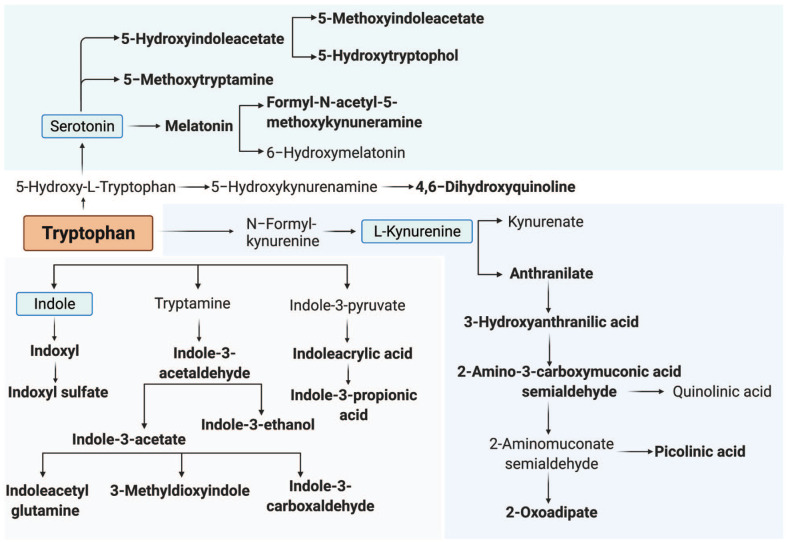
Background: People living with HIV (PLHIV) exhibit dysregulation of tryptophan metabolism. Altered gut microbiome composition in PLHIV might be involved. Mechanistic consequences within the 3 major tryptophan metabolism pathways (serotonin, kynurenine, and indoles), and functional consequences for platelet, immune and behavioral functions are unknown. We investigated plasma tryptophan metabolites, gut microbiome composition, and their association with platelet function, inflammation, and psychiatric symptoms.
Methods: This study included 211 PLHIV on long-term antiretroviral treatment (ART). Plasma tryptophan pathway metabolites were measured using time-of-flight mass spectrometry. Bacterial composition was profiled using metagenomic sequencing. Platelet reactivity and serotonin levels were quantified by flowcytometry and ELISA, respectively. Circulating inflammatory markers were determined using ELISA. Symptoms of depression and impulsivity were measured by DASS-42 and BIS-11 self-report questionnaires, respectively.
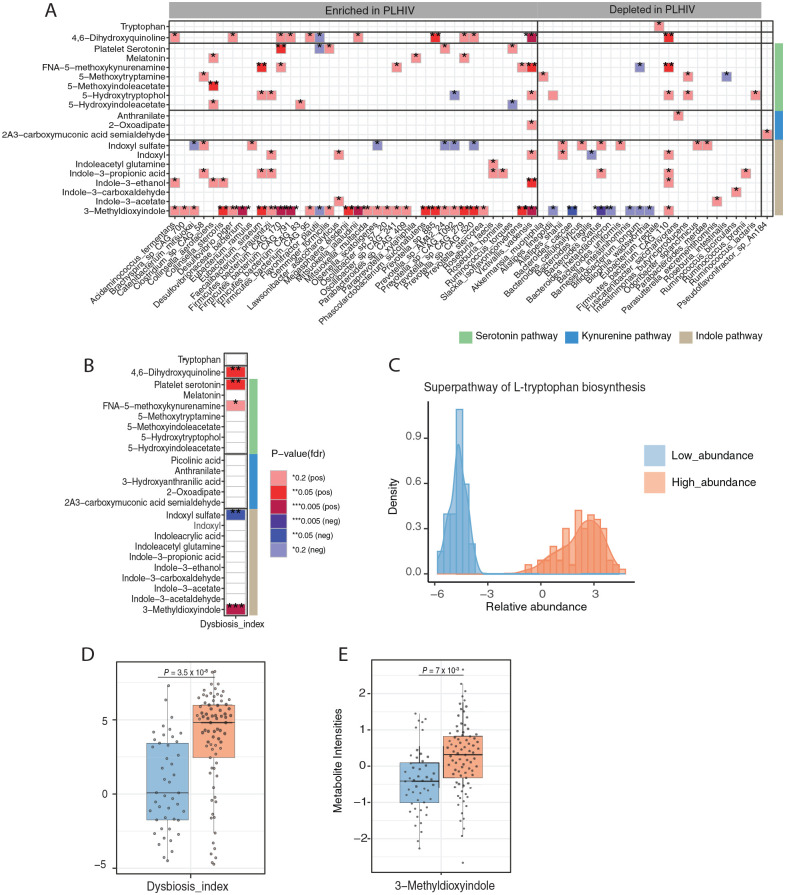
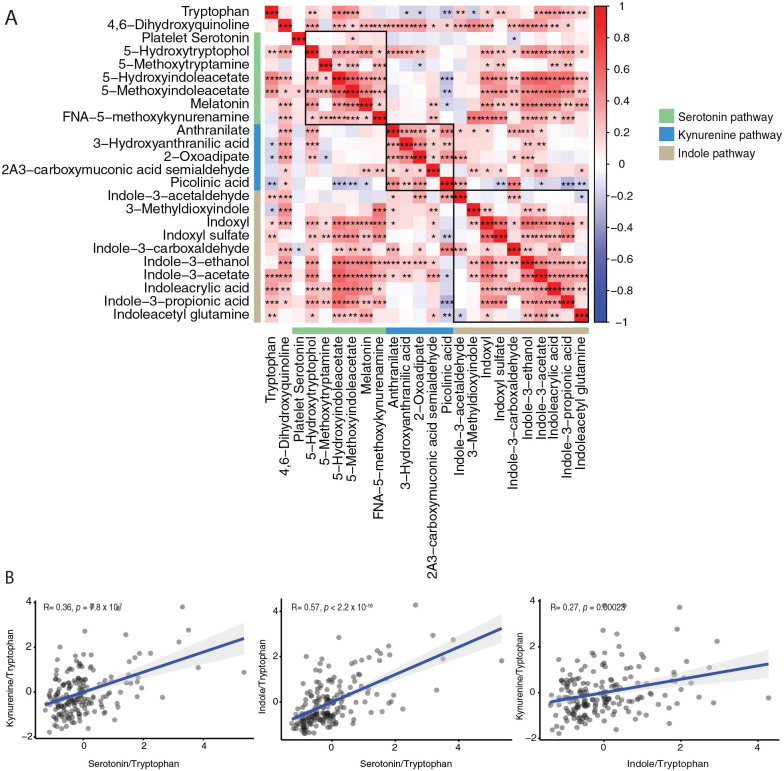
Results: Plasma serotonin and indole metabolites were associated with gut bacterial composition. Notably, species enriched in PLHIV were associated with 3-methyldioxyindole. Platelet serotonin concentrations were elevated in PLHIV, without effects on platelet reactivity. Plasma serotonin and indole metabolites were positively associated with plasma IL-10 and TNF-α concentrations. Finally, higher tryptophan, serotonin, and indole metabolites were associated with lower depression and anxiety, whereas higher kynurenine metabolites were associated with increased impulsivity.
Conclusion: Our results suggest that gut bacterial composition and dysbiosis in PLHIV on ART contribute to tryptophan metabolism, which may have clinical consequences for immune function and behavior.
期刊介绍:
ACS Applied Bio Materials is an interdisciplinary journal publishing original research covering all aspects of biomaterials and biointerfaces including and beyond the traditional biosensing, biomedical and therapeutic applications.
The journal is devoted to reports of new and original experimental and theoretical research of an applied nature that integrates knowledge in the areas of materials, engineering, physics, bioscience, and chemistry into important bio applications. The journal is specifically interested in work that addresses the relationship between structure and function and assesses the stability and degradation of materials under relevant environmental and biological conditions.




 京公网安备 11010802042870号
京ICP备2023020795号-1
京公网安备 11010802042870号
京ICP备2023020795号-1

 分享
分享
 求助内容:
求助内容: 应助结果提醒方式:
 扫码关注我们
