{"title":"Generation of Urothelial Cells from Mouse-Induced Pluripotent Stem Cells.","authors":"Dongxu Zhang, Fengze Sun, Huibao Yao, Di Wang, Xingjun Bao, Jipeng Wang, Jitao Wu","doi":"10.15283/ijsc21250","DOIUrl":null,"url":null,"abstract":"<p><strong>Background and objectives: </strong>The search for a suitable alternative for urethral defect is a challenge in the field of urethral tissue engineering. Induced pluripotent stem cells (iPSCs) possess multipotential for differentiation. The <i>in vitro</i> derivation of urothelial cells from mouse-iPSCs (miPSCs) has thus far not been reported. The purpose of this study was to establish an efficient and robust differentiation protocol for the differentiation of miPSCs into urothelial cells.</p><p><strong>Methods and results: </strong>Our protocol made the visualization of differentiation processes of a 2-step approach possible. We firstly induced miPSCs into posterior definitive endoderm (DE) with glycogen synthase kinase-3<i>β</i> (GSK3<i>β</i>) inhibitor and Activin A. We investigated the optimal conditions for DE differentiation with GSK3<i>β</i> inhibitor treatment by varying the treatment time and concentration. Differentiation into urothelial cells, was directed with all-trans retinoic acid (ATRA) and recombinant mouse fibroblast growth factor-10 (FGF-10). Specific markers expressed at each stage of differentiation were validated by flow cytometry, quantitative real-time polymerase chain reaction (qRT-PCR) assay, immunofluorescence staining, and western blotting Assay. The miPSC-derived urothelial cells were successfully in expressed urothelial cell marker genes, proteins, and normal microscopic architecture.</p><p><strong>Conclusions: </strong>We built a model of directed differentiation of miPSCs into urothelial cells, which may provide the evidence for a regenerative potential of miPSCs in preclinical animal studies.</p>","PeriodicalId":14392,"journal":{"name":"International journal of stem cells","volume":" ","pages":"347-358"},"PeriodicalIF":2.4000,"publicationDate":"2022-11-30","publicationTypes":"Journal Article","fieldsOfStudy":null,"isOpenAccess":false,"openAccessPdf":"https://ftp.ncbi.nlm.nih.gov/pub/pmc/oa_pdf/d0/fe/ijsc-15-4-347.PMC9705153.pdf","citationCount":"0","resultStr":null,"platform":"Semanticscholar","paperid":null,"PeriodicalName":"International journal of stem cells","FirstCategoryId":"3","ListUrlMain":"https://doi.org/10.15283/ijsc21250","RegionNum":4,"RegionCategory":"医学","ArticlePicture":[],"TitleCN":null,"AbstractTextCN":null,"PMCID":null,"EPubDate":"2022/6/30 0:00:00","PubModel":"Epub","JCR":"Q3","JCRName":"CELL & TISSUE ENGINEERING","Score":null,"Total":0}
引用次数: 0
Abstract
Background and objectives: The search for a suitable alternative for urethral defect is a challenge in the field of urethral tissue engineering. Induced pluripotent stem cells (iPSCs) possess multipotential for differentiation. The in vitro derivation of urothelial cells from mouse-iPSCs (miPSCs) has thus far not been reported. The purpose of this study was to establish an efficient and robust differentiation protocol for the differentiation of miPSCs into urothelial cells.
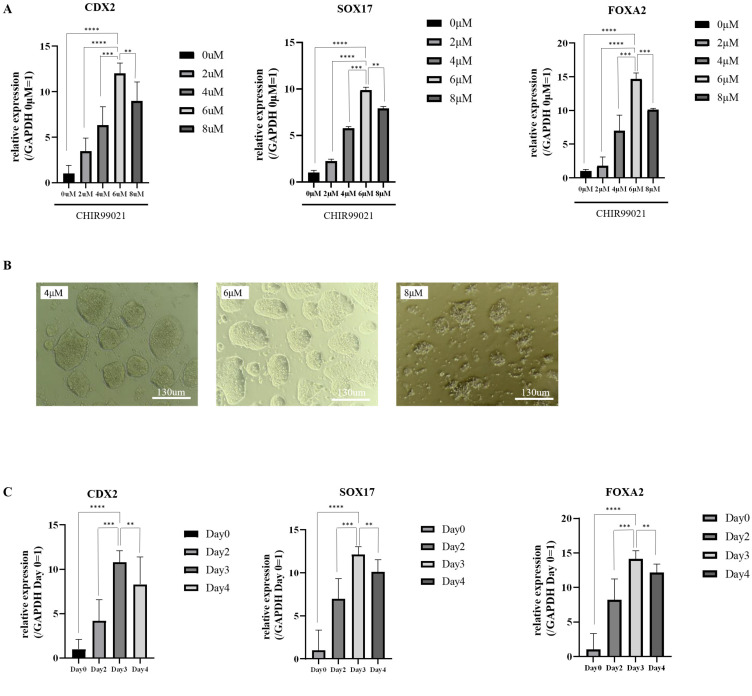
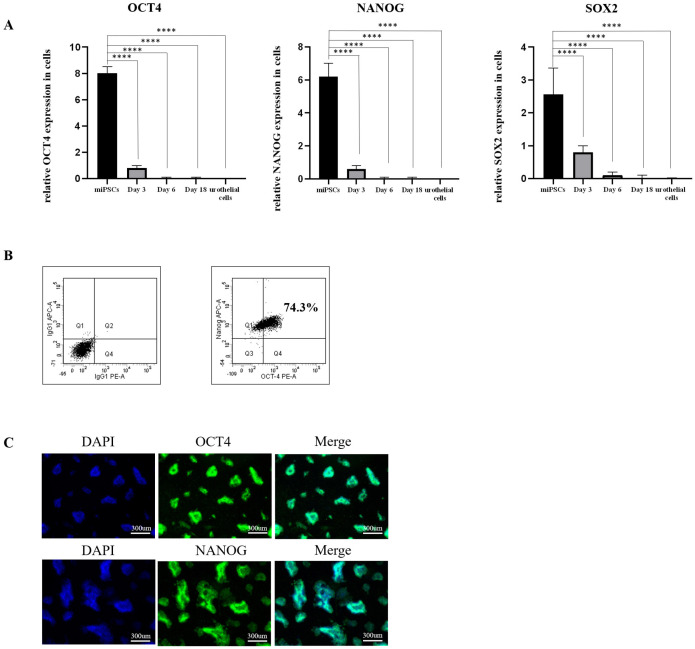
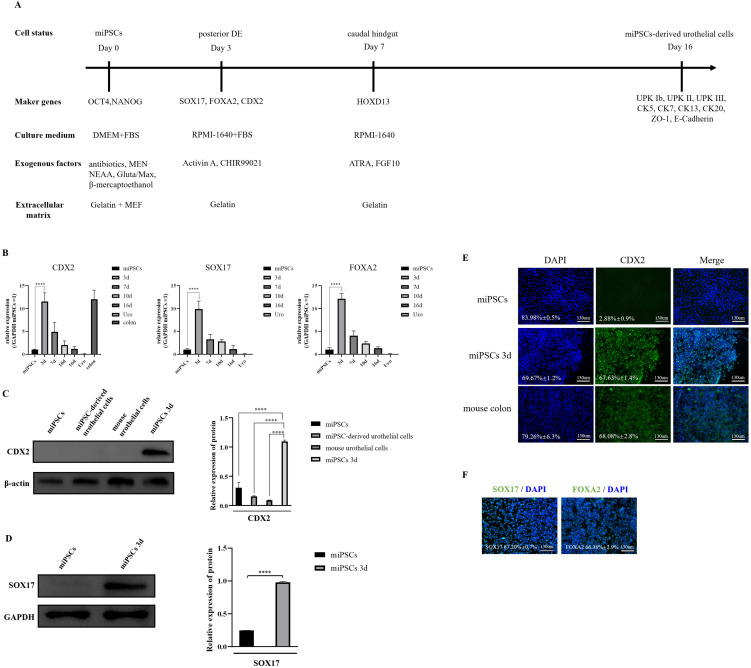
Methods and results: Our protocol made the visualization of differentiation processes of a 2-step approach possible. We firstly induced miPSCs into posterior definitive endoderm (DE) with glycogen synthase kinase-3β (GSK3β) inhibitor and Activin A. We investigated the optimal conditions for DE differentiation with GSK3β inhibitor treatment by varying the treatment time and concentration. Differentiation into urothelial cells, was directed with all-trans retinoic acid (ATRA) and recombinant mouse fibroblast growth factor-10 (FGF-10). Specific markers expressed at each stage of differentiation were validated by flow cytometry, quantitative real-time polymerase chain reaction (qRT-PCR) assay, immunofluorescence staining, and western blotting Assay. The miPSC-derived urothelial cells were successfully in expressed urothelial cell marker genes, proteins, and normal microscopic architecture.
Conclusions: We built a model of directed differentiation of miPSCs into urothelial cells, which may provide the evidence for a regenerative potential of miPSCs in preclinical animal studies.
期刊介绍:
International Journal of Stem Cells (Int J Stem Cells), a peer-reviewed open access journal, principally aims to provide a forum for investigators in the field of stem cell biology to present their research findings and share their visions and opinions. Int J Stem Cells covers all aspects of stem cell biology including basic, clinical and translational research on genetics, biochemistry, and physiology of various types of stem cells including embryonic, adult and induced stem cells. Reports on epigenetics, genomics, proteomics, metabolomics of stem cells are welcome as well. Int J Stem Cells also publishes review articles, technical reports and treatise on ethical issues.



 京公网安备 11010802042870号
京ICP备2023020795号-1
京公网安备 11010802042870号
京ICP备2023020795号-1

 分享
分享
 求助内容:
求助内容: 应助结果提醒方式:
 扫码关注我们
