Kwonwoo Song, Gwang-Mo Yang, Jihae Han, Minchan Gil, Ahmed Abdal Dayem, Kyeongseok Kim, Kyung Min Lim, Geun-Ho Kang, Sejong Kim, Soo Bin Jang, Balachandar Vellingiri, Ssang-Goo Cho
{"title":"Modulation of Osteogenic Differentiation of Adipose-Derived Stromal Cells by Co-Treatment with 3, 4'-Dihydroxyflavone, U0126, and N-Acetyl Cysteine.","authors":"Kwonwoo Song, Gwang-Mo Yang, Jihae Han, Minchan Gil, Ahmed Abdal Dayem, Kyeongseok Kim, Kyung Min Lim, Geun-Ho Kang, Sejong Kim, Soo Bin Jang, Balachandar Vellingiri, Ssang-Goo Cho","doi":"10.15283/ijsc22044","DOIUrl":null,"url":null,"abstract":"Background and Objectives Flavonoids form the largest group of plant phenols and have various biological and pharmacological activities. In this study, we investigated the effect of a flavonoid, 3, 4’-dihydroxyflavone (3, 4’-DHF) on osteogenic differentiation of equine adipose-derived stromal cells (eADSCs). Methods and Results Treatment of 3, 4’-DHF led to increased osteogenic differentiation of eADSCs by increasing phosphorylation of ERK and modulating Reactive Oxygen Species (ROS) generation. Although PD98059, an ERK inhibitor, suppressed osteogenic differentiation, another ERK inhibitor, U0126, apparently increased osteogenic differentiation of the 3, 4’-DHF-treated eADSCs, which may indicate that the effect of U0126 on bone morphogenetic protein signaling is involved in the regulation of 3, 4’-DHF in osteogenic differentiation of eADSCs. We revealed that 3, 4’-DHF could induce osteogenic differentiation of eADSCs by suppressing ROS generation and co-treatment of 3, 4’-DHF, U0126, and/or N-acetyl cysteine (NAC) resulted in the additive enhancement of osteogenic differentiation of eADSCs. Conclusions Our results showed that co-treatment of 3, 4’-DHF, U0126, and/or NAC cumulatively regulated osteogenesis in eADSCs, suggesting that 3, 4’-DHF, a flavonoid, can provide a novel approach to the treatment of osteoporosis and can provide potential therapeutic applications in therapeutics and regenerative medicine for human and companion animals.","PeriodicalId":14392,"journal":{"name":"International journal of stem cells","volume":" ","pages":"334-345"},"PeriodicalIF":2.4000,"publicationDate":"2022-08-30","publicationTypes":"Journal Article","fieldsOfStudy":null,"isOpenAccess":false,"openAccessPdf":"https://ftp.ncbi.nlm.nih.gov/pub/pmc/oa_pdf/da/ae/ijsc-15-3-334.PMC9396012.pdf","citationCount":"1","resultStr":null,"platform":"Semanticscholar","paperid":null,"PeriodicalName":"International journal of stem cells","FirstCategoryId":"3","ListUrlMain":"https://doi.org/10.15283/ijsc22044","RegionNum":4,"RegionCategory":"医学","ArticlePicture":[],"TitleCN":null,"AbstractTextCN":null,"PMCID":null,"EPubDate":"2022/6/30 0:00:00","PubModel":"Epub","JCR":"Q3","JCRName":"CELL & TISSUE ENGINEERING","Score":null,"Total":0}
引用次数: 1
Abstract
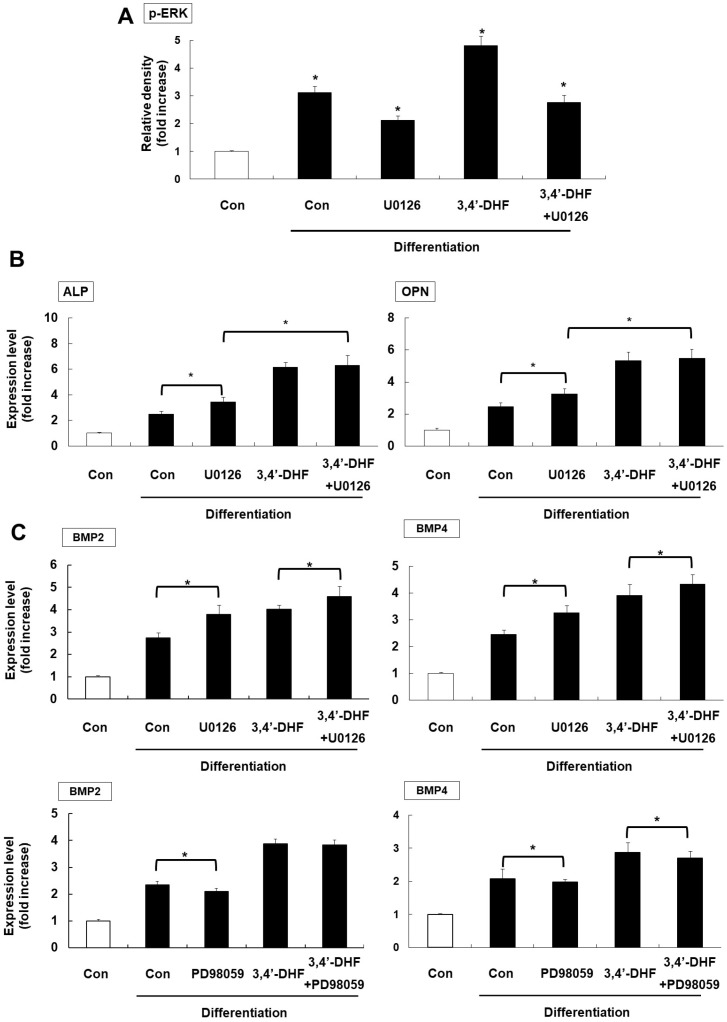
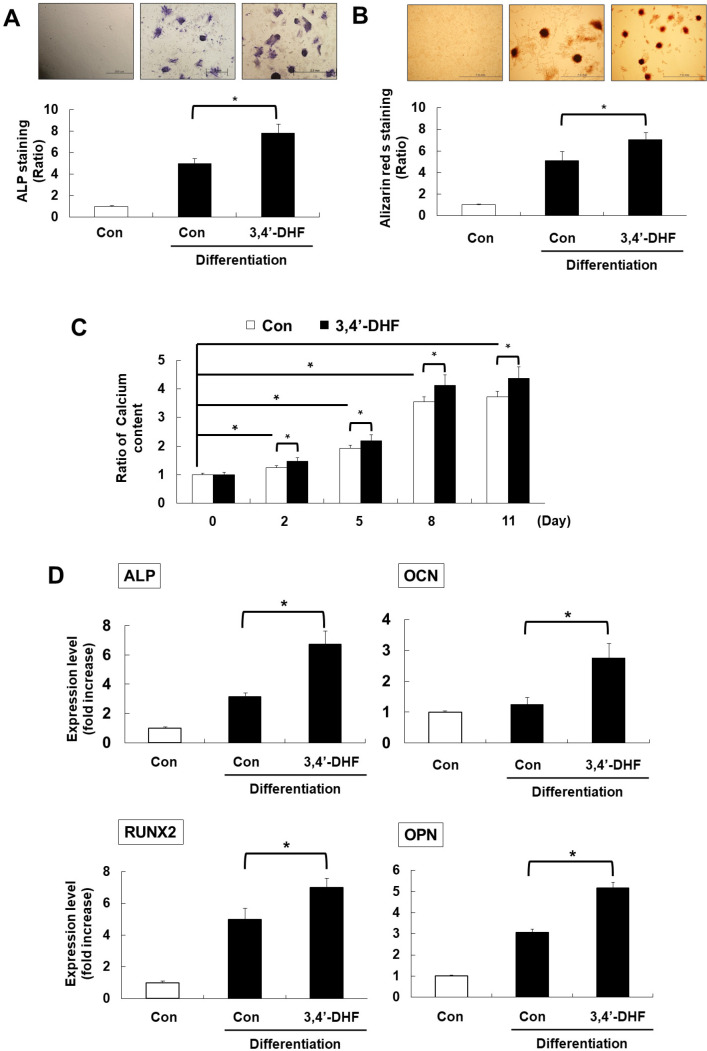
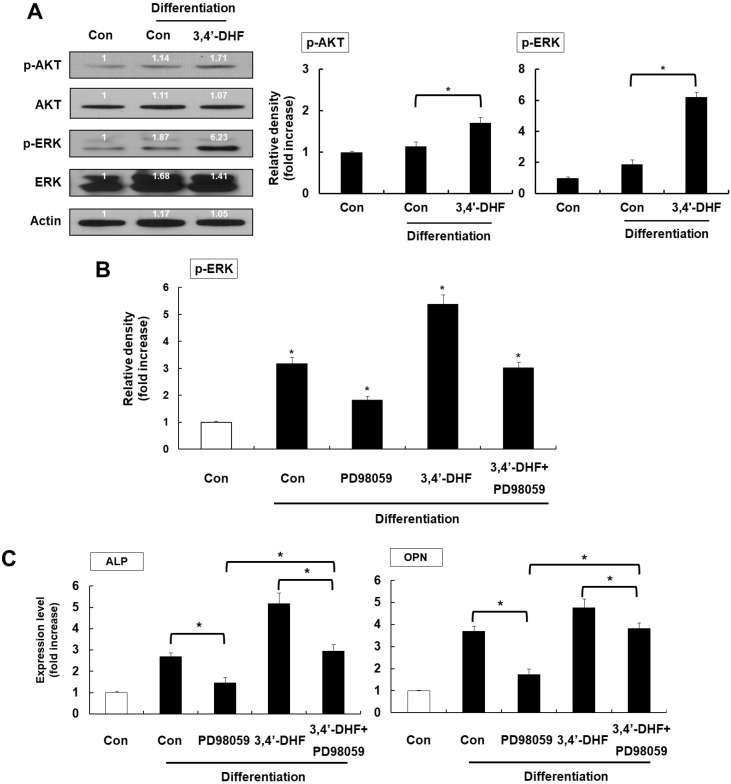
Background and Objectives Flavonoids form the largest group of plant phenols and have various biological and pharmacological activities. In this study, we investigated the effect of a flavonoid, 3, 4’-dihydroxyflavone (3, 4’-DHF) on osteogenic differentiation of equine adipose-derived stromal cells (eADSCs). Methods and Results Treatment of 3, 4’-DHF led to increased osteogenic differentiation of eADSCs by increasing phosphorylation of ERK and modulating Reactive Oxygen Species (ROS) generation. Although PD98059, an ERK inhibitor, suppressed osteogenic differentiation, another ERK inhibitor, U0126, apparently increased osteogenic differentiation of the 3, 4’-DHF-treated eADSCs, which may indicate that the effect of U0126 on bone morphogenetic protein signaling is involved in the regulation of 3, 4’-DHF in osteogenic differentiation of eADSCs. We revealed that 3, 4’-DHF could induce osteogenic differentiation of eADSCs by suppressing ROS generation and co-treatment of 3, 4’-DHF, U0126, and/or N-acetyl cysteine (NAC) resulted in the additive enhancement of osteogenic differentiation of eADSCs. Conclusions Our results showed that co-treatment of 3, 4’-DHF, U0126, and/or NAC cumulatively regulated osteogenesis in eADSCs, suggesting that 3, 4’-DHF, a flavonoid, can provide a novel approach to the treatment of osteoporosis and can provide potential therapeutic applications in therapeutics and regenerative medicine for human and companion animals.
期刊介绍:
International Journal of Stem Cells (Int J Stem Cells), a peer-reviewed open access journal, principally aims to provide a forum for investigators in the field of stem cell biology to present their research findings and share their visions and opinions. Int J Stem Cells covers all aspects of stem cell biology including basic, clinical and translational research on genetics, biochemistry, and physiology of various types of stem cells including embryonic, adult and induced stem cells. Reports on epigenetics, genomics, proteomics, metabolomics of stem cells are welcome as well. Int J Stem Cells also publishes review articles, technical reports and treatise on ethical issues.



 京公网安备 11010802042870号
京ICP备2023020795号-1
京公网安备 11010802042870号
京ICP备2023020795号-1

 分享
分享
 求助内容:
求助内容: 应助结果提醒方式:
 扫码关注我们
