Jie Gao, Yan Li, Zijin Liu, Dong Wang, Huawu Zhang
{"title":"Acetaminophen changes the RNA m<sup>6</sup>A levels and m<sup>6</sup>A-related proteins expression in IL-1β-treated chondrocyte cells.","authors":"Jie Gao, Yan Li, Zijin Liu, Dong Wang, Huawu Zhang","doi":"10.1186/s12860-022-00444-3","DOIUrl":null,"url":null,"abstract":"<p><strong>Background: </strong>Acetaminophen is commonly recommended for the early analgesia of osteoarthritis. However, the molecular mechanism by which it acts remains unknown. The aim of this study is to investigate the effect of acetaminophen on inflammation and extracellular matrix degradation in human chondrocytes, and the possible molecular mechanisms involved in its effect.</p><p><strong>Methods: </strong>The normal chondrocyte cell line C28/I2 was treated with interleukin-1β to mimic the inflammatory state. Acetaminophen and the methylation inhibitor (cycloleucine) were used to treat interleukin-1β-induced C28/I2 cells. The expression of RNA N<sup>6</sup>-methyladenosine -related proteins was detected by RT-qPCR and western blot. The total RNA N<sup>6</sup>-methyladenosine level was measured by dot blot analysis and enzyme linked immunosorbent assay. The levels of interleukin-6, interleukin-8 and anti-tumor necrosis factor-α were measured by enzyme linked immunosorbent assay. The extracellular matrix synthesis and degradation were examined by western blot.</p><p><strong>Results: </strong>After interleukin-1β stimulated C28/I2 cells, the intracellular RNA N<sup>6</sup>-methyladenosine level increased, and the expression of regulatory proteins also changed, mainly including the increased expression of methyltransferase like 3 and the downregulated expression of AlkB family member 5. The use of cycloleucine inhibited interleukin-1β-induced inflammation and extracellular matrix degradation by inhibiting RNA N<sup>6</sup>-methyladenosine modification. In contrast, acetaminophen treatment counteracted interleukin-1β-induced changes in RNA N<sup>6</sup>-methyladenosine levels and regulatory protein expression. Furthermore, acetaminophen treatment of interleukin-1β-induced C28/I2 cells inhibited the secretion of interleukin-6, interleukin-8 and anti-tumor necrosis factor-α, down-regulated the expression of matrix metalloproteinase-13 and Collagen X, and up-regulated the expression of collagen II and aggrecan. In addition, AlkB family member 5 overexpression activated interleukin-1β-induced chondrocyte viability and suppressed inflammation and extracellular matrix degradation.</p><p><strong>Conclusion: </strong>Acetaminophen affects inflammatory factors secretion and extracellular matrix synthesis of human chondrocytes by regulating RNA N<sup>6</sup>-methyladenosine level and N<sup>6</sup>-methyladenosine-related protein expression. Stimulation of the normal chondrocyte cell line C28/I2 with the cytokine IL-1β (10 μM) mimics the inflammatory state in vitro. Acetaminophen (Ace, 50 μg/mL) changes the m<sup>6</sup>A related proteins expression and the total RNA m<sup>6</sup>A levels in IL-1β-treated chondrocyte cells. Furthermore, regulation of RNA m<sup>6</sup>A levels (by methylation inhibitor Cyc and/or Ace) affects IL-1β-induced inflammatory cytokines secretion and extracellular matrix synthesis in C28/I2 cells.</p>","PeriodicalId":9099,"journal":{"name":"BMC Molecular and Cell Biology","volume":" ","pages":"45"},"PeriodicalIF":2.7000,"publicationDate":"2022-10-27","publicationTypes":"Journal Article","fieldsOfStudy":null,"isOpenAccess":false,"openAccessPdf":"https://www.ncbi.nlm.nih.gov/pmc/articles/PMC9609262/pdf/","citationCount":"0","resultStr":null,"platform":"Semanticscholar","paperid":null,"PeriodicalName":"BMC Molecular and Cell Biology","FirstCategoryId":"3","ListUrlMain":"https://doi.org/10.1186/s12860-022-00444-3","RegionNum":3,"RegionCategory":"生物学","ArticlePicture":[],"TitleCN":null,"AbstractTextCN":null,"PMCID":null,"EPubDate":"","PubModel":"","JCR":"Q4","JCRName":"CELL BIOLOGY","Score":null,"Total":0}
引用次数: 0
Abstract
Background: Acetaminophen is commonly recommended for the early analgesia of osteoarthritis. However, the molecular mechanism by which it acts remains unknown. The aim of this study is to investigate the effect of acetaminophen on inflammation and extracellular matrix degradation in human chondrocytes, and the possible molecular mechanisms involved in its effect.
Methods: The normal chondrocyte cell line C28/I2 was treated with interleukin-1β to mimic the inflammatory state. Acetaminophen and the methylation inhibitor (cycloleucine) were used to treat interleukin-1β-induced C28/I2 cells. The expression of RNA N6-methyladenosine -related proteins was detected by RT-qPCR and western blot. The total RNA N6-methyladenosine level was measured by dot blot analysis and enzyme linked immunosorbent assay. The levels of interleukin-6, interleukin-8 and anti-tumor necrosis factor-α were measured by enzyme linked immunosorbent assay. The extracellular matrix synthesis and degradation were examined by western blot.
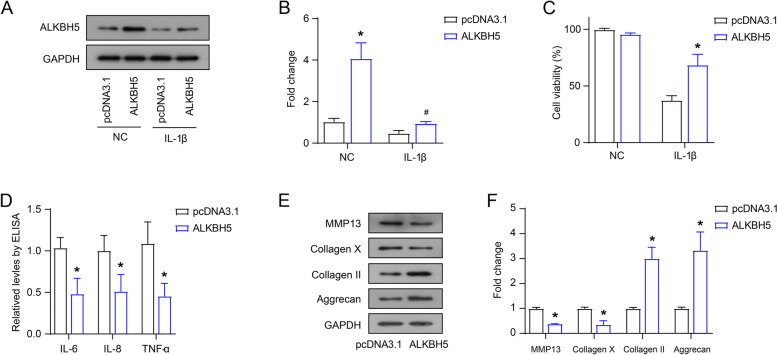
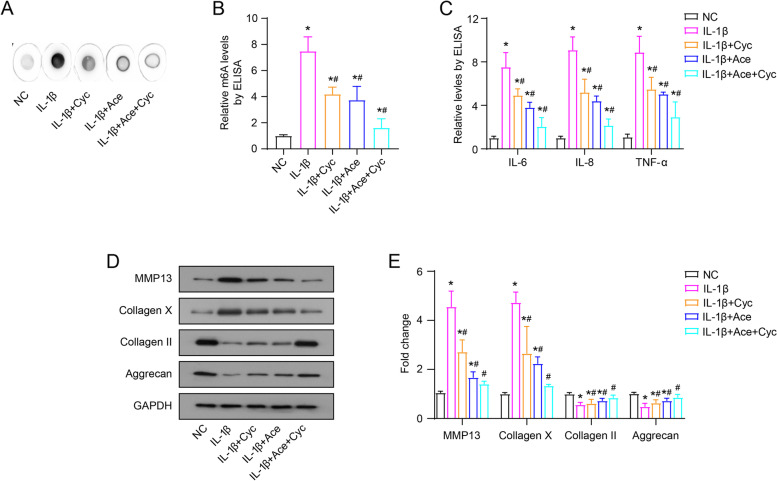
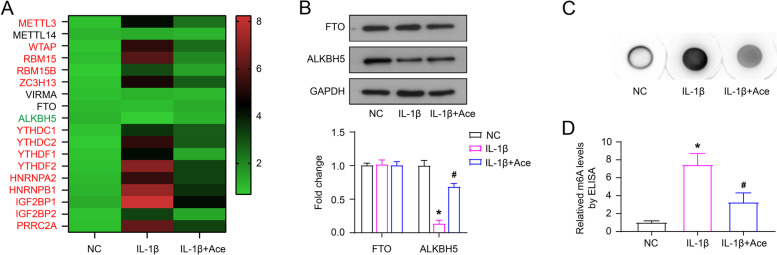
Results: After interleukin-1β stimulated C28/I2 cells, the intracellular RNA N6-methyladenosine level increased, and the expression of regulatory proteins also changed, mainly including the increased expression of methyltransferase like 3 and the downregulated expression of AlkB family member 5. The use of cycloleucine inhibited interleukin-1β-induced inflammation and extracellular matrix degradation by inhibiting RNA N6-methyladenosine modification. In contrast, acetaminophen treatment counteracted interleukin-1β-induced changes in RNA N6-methyladenosine levels and regulatory protein expression. Furthermore, acetaminophen treatment of interleukin-1β-induced C28/I2 cells inhibited the secretion of interleukin-6, interleukin-8 and anti-tumor necrosis factor-α, down-regulated the expression of matrix metalloproteinase-13 and Collagen X, and up-regulated the expression of collagen II and aggrecan. In addition, AlkB family member 5 overexpression activated interleukin-1β-induced chondrocyte viability and suppressed inflammation and extracellular matrix degradation.
Conclusion: Acetaminophen affects inflammatory factors secretion and extracellular matrix synthesis of human chondrocytes by regulating RNA N6-methyladenosine level and N6-methyladenosine-related protein expression. Stimulation of the normal chondrocyte cell line C28/I2 with the cytokine IL-1β (10 μM) mimics the inflammatory state in vitro. Acetaminophen (Ace, 50 μg/mL) changes the m6A related proteins expression and the total RNA m6A levels in IL-1β-treated chondrocyte cells. Furthermore, regulation of RNA m6A levels (by methylation inhibitor Cyc and/or Ace) affects IL-1β-induced inflammatory cytokines secretion and extracellular matrix synthesis in C28/I2 cells.




 京公网安备 11010802042870号
京ICP备2023020795号-1
京公网安备 11010802042870号
京ICP备2023020795号-1

 分享
分享
 求助内容:
求助内容: 应助结果提醒方式:
 扫码关注我们
