Prevalence and outcomes associated with hypocalcaemia and hypercalcaemia among pre-dialysis chronic kidney disease patients with mineral and bone disorder.
Mei Hui Amanda Yong, Jun Jie Benjamin Seng, Ying Lin Cheryl Tan, Jiunn Wong, Priscilla How
{"title":"Prevalence and outcomes associated with hypocalcaemia and hypercalcaemia among pre-dialysis chronic kidney disease patients with mineral and bone disorder.","authors":"Mei Hui Amanda Yong, Jun Jie Benjamin Seng, Ying Lin Cheryl Tan, Jiunn Wong, Priscilla How","doi":"10.4103/singaporemedj.SMJ-2021-391","DOIUrl":null,"url":null,"abstract":"<p><strong>Introduction: </strong>Chronic kidney disease-mineral and bone disease (CKD-MBD) is a complication of chronic kidney disease (CKD) involving derangements in serum calcium and phosphate. This study aims to evaluate hypo- and hypercalcaemia and their associated outcomes among pre-dialysis CKD patients.</p><p><strong>Methods: </strong>A retrospective cohort study was performed and included all adult CKD stage 4-stage 5 patients who were on treatment for CKD-MBD between 2016 and 2017. Each patient was followed up for 3 years. Hypo- and hypercalcaemia were defined as serum corrected calcium (Ca 2+ ) <2.10 and >2.46 mmol/L, respectively. Outcomes evaluated included all-cause mortality and cardiovascular events. Multivariate Cox regression analysis was done to evaluate the association of hypocalcaemia and/or hypercalcaemia with the clinical outcomes. Severity of hypocalcaemia episode was classified as 'mild' (Ca 2+ : between 1.90 and 2.10 mmol/L) and 'severe' (Ca 2+ : <1.90 mmol/L). Severity of hypercalcaemia was classified as 'mild' (Ca 2+ : between 2.47 and 3.00 mmol/L), moderate (Ca 2+ : between 3.01 and 3.50 mmol/L) and severe (Ca 2+ : >3.50 mmol/L).</p><p><strong>Results: </strong>Of the 400 patients, 169 (42.2%) and 94 (23.5%) patients experienced hypocalcaemia and hypercalcaemia, respectively. Severe hypocalcaemia was more prevalent in CKD stage 5 compared to CKD stage 4 (96 [40.5%] vs. 36 [25.9%], P = 0.004). Results from multivariate analyses after adjustment showed that hypocalcaemia and/or hypercalcaemia were not associated with all-cause mortality ( P > 0.05) or the occurrence of cardiovascular events ( P > 0.05).</p><p><strong>Conclusion: </strong>Hypocalcaemia and hypercalcaemia episodes were prevalent among pre-dialysis CKD patients. Studies with longer follow-up durations are required to assess the effects of calcium derangements on clinical outcomes.</p>","PeriodicalId":1,"journal":{"name":"Accounts of Chemical Research","volume":" ","pages":"421-429"},"PeriodicalIF":17.7000,"publicationDate":"2024-08-01","publicationTypes":"Journal Article","fieldsOfStudy":null,"isOpenAccess":false,"openAccessPdf":"https://www.ncbi.nlm.nih.gov/pmc/articles/PMC11382823/pdf/","citationCount":"0","resultStr":null,"platform":"Semanticscholar","paperid":null,"PeriodicalName":"Accounts of Chemical Research","FirstCategoryId":"92","ListUrlMain":"https://doi.org/10.4103/singaporemedj.SMJ-2021-391","RegionNum":1,"RegionCategory":"化学","ArticlePicture":[],"TitleCN":null,"AbstractTextCN":null,"PMCID":null,"EPubDate":"2022/11/2 0:00:00","PubModel":"Epub","JCR":"Q1","JCRName":"CHEMISTRY, MULTIDISCIPLINARY","Score":null,"Total":0}
引用次数: 0
Abstract
Introduction: Chronic kidney disease-mineral and bone disease (CKD-MBD) is a complication of chronic kidney disease (CKD) involving derangements in serum calcium and phosphate. This study aims to evaluate hypo- and hypercalcaemia and their associated outcomes among pre-dialysis CKD patients.
Methods: A retrospective cohort study was performed and included all adult CKD stage 4-stage 5 patients who were on treatment for CKD-MBD between 2016 and 2017. Each patient was followed up for 3 years. Hypo- and hypercalcaemia were defined as serum corrected calcium (Ca 2+ ) <2.10 and >2.46 mmol/L, respectively. Outcomes evaluated included all-cause mortality and cardiovascular events. Multivariate Cox regression analysis was done to evaluate the association of hypocalcaemia and/or hypercalcaemia with the clinical outcomes. Severity of hypocalcaemia episode was classified as 'mild' (Ca 2+ : between 1.90 and 2.10 mmol/L) and 'severe' (Ca 2+ : <1.90 mmol/L). Severity of hypercalcaemia was classified as 'mild' (Ca 2+ : between 2.47 and 3.00 mmol/L), moderate (Ca 2+ : between 3.01 and 3.50 mmol/L) and severe (Ca 2+ : >3.50 mmol/L).
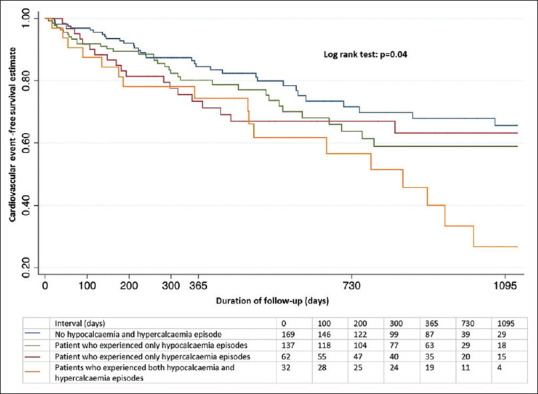
Results: Of the 400 patients, 169 (42.2%) and 94 (23.5%) patients experienced hypocalcaemia and hypercalcaemia, respectively. Severe hypocalcaemia was more prevalent in CKD stage 5 compared to CKD stage 4 (96 [40.5%] vs. 36 [25.9%], P = 0.004). Results from multivariate analyses after adjustment showed that hypocalcaemia and/or hypercalcaemia were not associated with all-cause mortality ( P > 0.05) or the occurrence of cardiovascular events ( P > 0.05).
Conclusion: Hypocalcaemia and hypercalcaemia episodes were prevalent among pre-dialysis CKD patients. Studies with longer follow-up durations are required to assess the effects of calcium derangements on clinical outcomes.
期刊介绍:
Accounts of Chemical Research presents short, concise and critical articles offering easy-to-read overviews of basic research and applications in all areas of chemistry and biochemistry. These short reviews focus on research from the author’s own laboratory and are designed to teach the reader about a research project. In addition, Accounts of Chemical Research publishes commentaries that give an informed opinion on a current research problem. Special Issues online are devoted to a single topic of unusual activity and significance.
Accounts of Chemical Research replaces the traditional article abstract with an article "Conspectus." These entries synopsize the research affording the reader a closer look at the content and significance of an article. Through this provision of a more detailed description of the article contents, the Conspectus enhances the article's discoverability by search engines and the exposure for the research.






 京公网安备 11010802042870号
京ICP备2023020795号-1
京公网安备 11010802042870号
京ICP备2023020795号-1

 分享
分享
 求助内容:
求助内容: 应助结果提醒方式:
 扫码关注我们
