Sophie-Charlotte K Doll, Peggy Haimerl, Alexander Bartel, Sebastian P Arlt
{"title":"Determination of reference intervals for nonesterified fatty acids in the blood serum of healthy dogs.","authors":"Sophie-Charlotte K Doll, Peggy Haimerl, Alexander Bartel, Sebastian P Arlt","doi":"10.1002/vro2.40","DOIUrl":null,"url":null,"abstract":"<p><strong>Background: </strong>Nonesterified fatty acids (NEFAs) are an important energy substrate in mammals. Measurement of the NEFA concentration in blood serum is common practice and enables reliable detection of a negative energy balance in several species. This parameter can be used to detect subclinical metabolic diseases or to optimise feeding to prevent severe negative energy balance. Since no reference values for dogs have been published, the aim of this study was to establish such values.</p><p><strong>Methods: </strong>Blood serum from 85 healthy dogs was examined with a multiparameter clinical chemistry analyser. Given that NEFA values are not usually normally distributed, reference intervals (RIs) were calculated nonparametrically using bootstrapping (5000 replicates) for the 90% confidence intervals.</p><p><strong>Results: </strong>The examined cohort had a median age of 62.16 months (2-180 months) and a median weight of 19.2 kg (3.0-55.0 kg) and comprised 27 (31.8%) males and 58 (68.2%) females, with 32 (37.6%) neutered or spayed. The fasting time was 5.9 h (range 0-23 h). The tested confounders age, sex, neuter status, bodyweight and body condition score did not significantly affect the NEFA concentrations.</p><p><strong>Conclusions: </strong>The NEFA RI for dogs in this study was 0.2-1.47 mmol/L. The results may be used to adjust food composition and amount in healthy dogs or to detect metabolic disorders. Further research on NEFA metabolism in dogs maintained in standardised conditions and in specific nutritional situations or with particular diseases is warranted.</p>","PeriodicalId":1,"journal":{"name":"Accounts of Chemical Research","volume":" ","pages":"e40"},"PeriodicalIF":17.7000,"publicationDate":"2022-07-25","publicationTypes":"Journal Article","fieldsOfStudy":null,"isOpenAccess":false,"openAccessPdf":"https://www.ncbi.nlm.nih.gov/pmc/articles/PMC9313937/pdf/","citationCount":"0","resultStr":null,"platform":"Semanticscholar","paperid":null,"PeriodicalName":"Accounts of Chemical Research","FirstCategoryId":"1085","ListUrlMain":"https://doi.org/10.1002/vro2.40","RegionNum":1,"RegionCategory":"化学","ArticlePicture":[],"TitleCN":null,"AbstractTextCN":null,"PMCID":null,"EPubDate":"2022/12/1 0:00:00","PubModel":"eCollection","JCR":"Q1","JCRName":"CHEMISTRY, MULTIDISCIPLINARY","Score":null,"Total":0}
引用次数: 0
Abstract
Background: Nonesterified fatty acids (NEFAs) are an important energy substrate in mammals. Measurement of the NEFA concentration in blood serum is common practice and enables reliable detection of a negative energy balance in several species. This parameter can be used to detect subclinical metabolic diseases or to optimise feeding to prevent severe negative energy balance. Since no reference values for dogs have been published, the aim of this study was to establish such values.
Methods: Blood serum from 85 healthy dogs was examined with a multiparameter clinical chemistry analyser. Given that NEFA values are not usually normally distributed, reference intervals (RIs) were calculated nonparametrically using bootstrapping (5000 replicates) for the 90% confidence intervals.
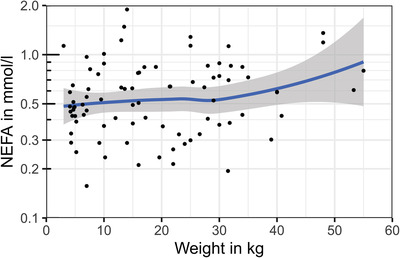
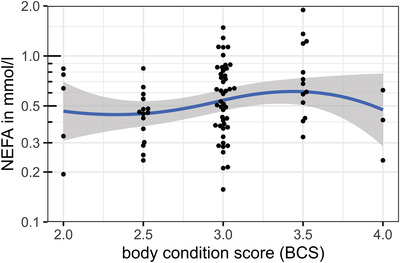
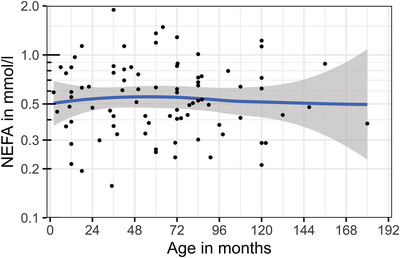
Results: The examined cohort had a median age of 62.16 months (2-180 months) and a median weight of 19.2 kg (3.0-55.0 kg) and comprised 27 (31.8%) males and 58 (68.2%) females, with 32 (37.6%) neutered or spayed. The fasting time was 5.9 h (range 0-23 h). The tested confounders age, sex, neuter status, bodyweight and body condition score did not significantly affect the NEFA concentrations.
Conclusions: The NEFA RI for dogs in this study was 0.2-1.47 mmol/L. The results may be used to adjust food composition and amount in healthy dogs or to detect metabolic disorders. Further research on NEFA metabolism in dogs maintained in standardised conditions and in specific nutritional situations or with particular diseases is warranted.
期刊介绍:
Accounts of Chemical Research presents short, concise and critical articles offering easy-to-read overviews of basic research and applications in all areas of chemistry and biochemistry. These short reviews focus on research from the author’s own laboratory and are designed to teach the reader about a research project. In addition, Accounts of Chemical Research publishes commentaries that give an informed opinion on a current research problem. Special Issues online are devoted to a single topic of unusual activity and significance.
Accounts of Chemical Research replaces the traditional article abstract with an article "Conspectus." These entries synopsize the research affording the reader a closer look at the content and significance of an article. Through this provision of a more detailed description of the article contents, the Conspectus enhances the article's discoverability by search engines and the exposure for the research.




 京公网安备 11010802042870号
京ICP备2023020795号-1
京公网安备 11010802042870号
京ICP备2023020795号-1

 分享
分享
 求助内容:
求助内容: 应助结果提醒方式:
 扫码关注我们
