Filippo Naso, Antonio Maria Calafiore, Mario Gaudino, Peter Zilla, Axel Haverich, Andrea Colli, Robert John Melder, Alessandro Gandaglia
{"title":"Polyphenols could be Effective in Exerting a Disinfectant-Like Action on Bioprosthetic Heart Valves, Counteracting Bacterial Adhesiveness.","authors":"Filippo Naso, Antonio Maria Calafiore, Mario Gaudino, Peter Zilla, Axel Haverich, Andrea Colli, Robert John Melder, Alessandro Gandaglia","doi":"10.26502/fccm.92920287","DOIUrl":null,"url":null,"abstract":"<p><strong>Background: </strong>The incidence of infective endocarditis in patients with bioprosthetic heart valves is over 100 times that of the general population with <i>S. aureus</i> recognized as the causative organism in approximately 1/3 of cases. In this study, (1) the microbicidal and virucidal effect of a polyphenolic solution was carefully evaluated. The same solution was then adopted for the treatment of a commercial bioprosthetic heart valve model for (2) the assessment of inhibition of <i>S. aureus</i> adhesiveness.</p><p><strong>Methods: </strong>(1) the viability of 9 microorganisms strains (colony-forming units) and the infectivity degree of 3 viral strains (cellular infection capacity) were evaluated after suspension in the polyphenolic solution. (2) Leaflets from a treated and untreated commercial surgical valve model were incubated with a known concentration of <i>S. aureus</i>. After incubation, the leaflets were homogenized and placed in specific culture media to quantify the bacterial load.</p><p><strong>Results: </strong>(1) The polyphenolic solution proved to be effective in eliminating microorganisms strains guaranteeing the killing of at least 99.9%. The effectiveness is particularly relevant against <i>M. chelonae</i> (99.999%). (2) The polyphenol-based treatment resulted in the inhibition of the S. aureus adhesiveness by 96% concerning untreated samples.</p><p><strong>Conclusions: </strong>The data suggest an interesting protective effect against infections and bacterial adhesiveness by a polyphenolic-based solution. Further studies will plan to extend the panel of microorganisms for the evaluation of the anti-adhesive effect; however, the use of optimized polyphenolic blends could lead to the development of new treatments capable to make transcatheter-valve substitutes more resistant to infection.</p>","PeriodicalId":72523,"journal":{"name":"Cardiology and cardiovascular medicine","volume":" ","pages":"487-492"},"PeriodicalIF":0.0000,"publicationDate":"2022-01-01","publicationTypes":"Journal Article","fieldsOfStudy":null,"isOpenAccess":false,"openAccessPdf":"https://www.ncbi.nlm.nih.gov/pmc/articles/PMC9601395/pdf/","citationCount":"2","resultStr":null,"platform":"Semanticscholar","paperid":null,"PeriodicalName":"Cardiology and cardiovascular medicine","FirstCategoryId":"1085","ListUrlMain":"https://doi.org/10.26502/fccm.92920287","RegionNum":0,"RegionCategory":null,"ArticlePicture":[],"TitleCN":null,"AbstractTextCN":null,"PMCID":null,"EPubDate":"2022/9/30 0:00:00","PubModel":"Epub","JCR":"","JCRName":"","Score":null,"Total":0}
引用次数: 2
Abstract
Background: The incidence of infective endocarditis in patients with bioprosthetic heart valves is over 100 times that of the general population with S. aureus recognized as the causative organism in approximately 1/3 of cases. In this study, (1) the microbicidal and virucidal effect of a polyphenolic solution was carefully evaluated. The same solution was then adopted for the treatment of a commercial bioprosthetic heart valve model for (2) the assessment of inhibition of S. aureus adhesiveness.
Methods: (1) the viability of 9 microorganisms strains (colony-forming units) and the infectivity degree of 3 viral strains (cellular infection capacity) were evaluated after suspension in the polyphenolic solution. (2) Leaflets from a treated and untreated commercial surgical valve model were incubated with a known concentration of S. aureus. After incubation, the leaflets were homogenized and placed in specific culture media to quantify the bacterial load.
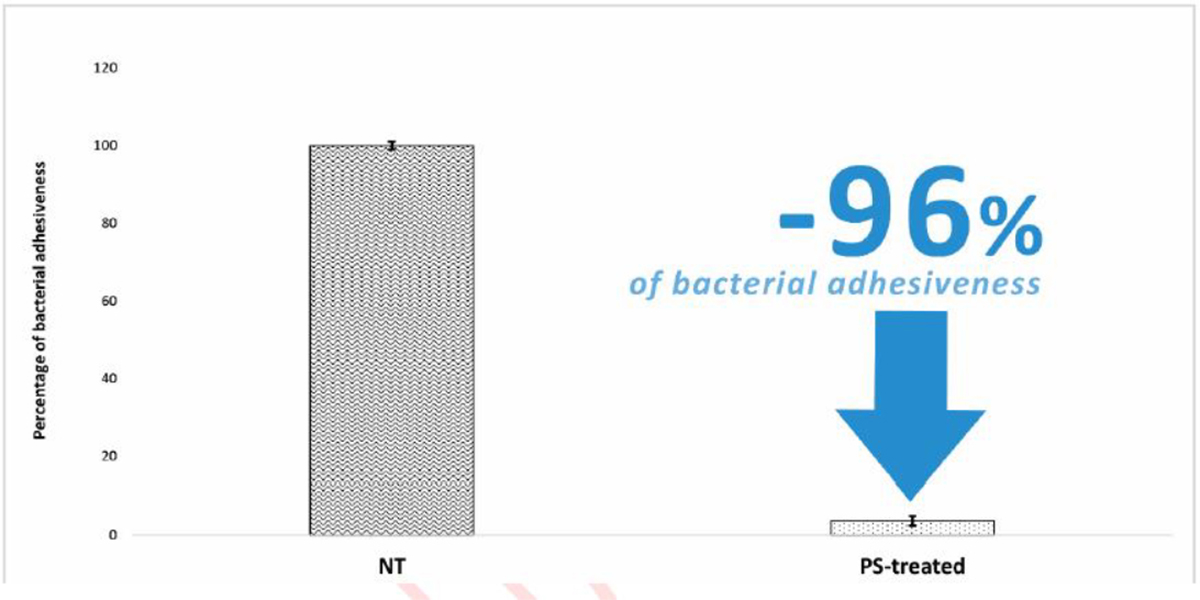
Results: (1) The polyphenolic solution proved to be effective in eliminating microorganisms strains guaranteeing the killing of at least 99.9%. The effectiveness is particularly relevant against M. chelonae (99.999%). (2) The polyphenol-based treatment resulted in the inhibition of the S. aureus adhesiveness by 96% concerning untreated samples.
Conclusions: The data suggest an interesting protective effect against infections and bacterial adhesiveness by a polyphenolic-based solution. Further studies will plan to extend the panel of microorganisms for the evaluation of the anti-adhesive effect; however, the use of optimized polyphenolic blends could lead to the development of new treatments capable to make transcatheter-valve substitutes more resistant to infection.



 京公网安备 11010802042870号
京ICP备2023020795号-1
京公网安备 11010802042870号
京ICP备2023020795号-1

 分享
分享

 求助内容:
求助内容: 应助结果提醒方式:
 扫码关注我们
