{"title":"The Impact of Long-Term Orientation Traits on Pandemic Fatigue Behavior: Evidence from the Columbian Exchange.","authors":"Sutanuka Roy, Sudhir Gupta, Rabee Tourky","doi":"10.1007/s10887-022-09218-0","DOIUrl":null,"url":null,"abstract":"<p><p>Leveraging exogenous variation in time preferences, we measure the causal effects of culturally embodied long-term orientation traits on voluntary social distancing behavior, COVID-19 cases, hospitalizations, and mortality outcomes in 2020 in the United States. We establish that long-term orientation traits with bio-geographical origins causally reduce measures of COVID-19 cases, deaths and hospitalization, inpatient bed utilization, and age-specific excess deaths. Mobility indicators measuring voluntary decisions to socially distance, comprising measures of visitors/visits to recreational locations, and mobility proxy measuring duration of hours away from home show that a lower prevalence of long-term orientation traits explains persistent resistance to social distancing.</p><p><strong>Supplementary information: </strong>The online version contains supplementary material available at 10.1007/s10887-022-09218-0.</p>","PeriodicalId":73716,"journal":{"name":"","volume":" ","pages":"1-42"},"PeriodicalIF":0.0,"publicationDate":"2022-10-27","publicationTypes":"Journal Article","fieldsOfStudy":null,"isOpenAccess":false,"openAccessPdf":"https://www.ncbi.nlm.nih.gov/pmc/articles/PMC9612631/pdf/","citationCount":"0","resultStr":null,"platform":"Semanticscholar","paperid":null,"PeriodicalName":"","FirstCategoryId":"96","ListUrlMain":"https://doi.org/10.1007/s10887-022-09218-0","RegionNum":0,"RegionCategory":null,"ArticlePicture":[],"TitleCN":null,"AbstractTextCN":null,"PMCID":null,"EPubDate":"","PubModel":"","JCR":"","JCRName":"","Score":null,"Total":0}
引用次数: 0
Abstract
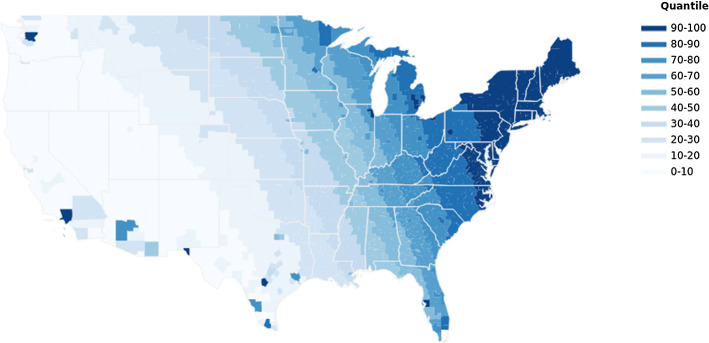
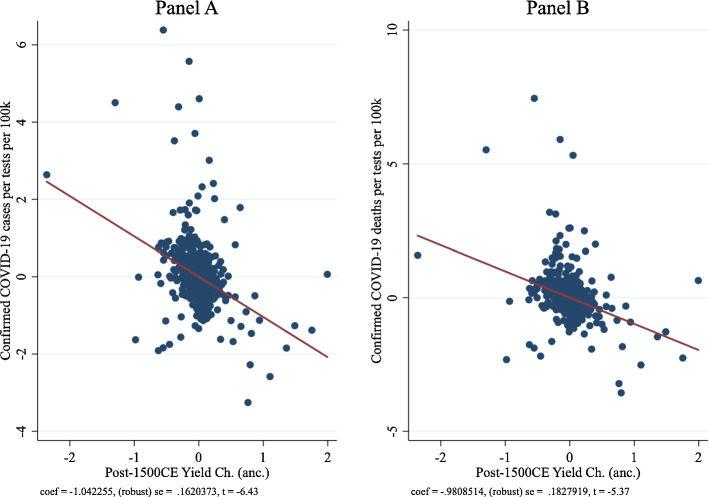
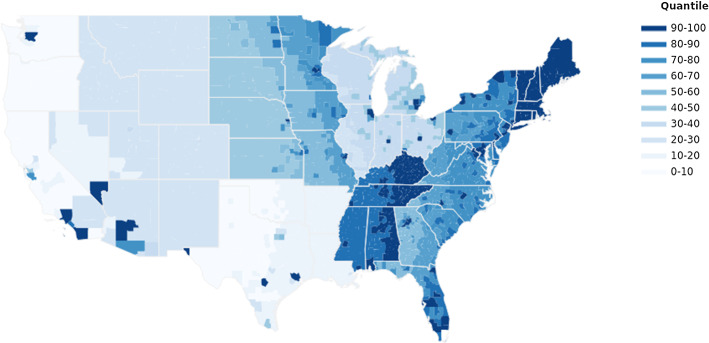
Leveraging exogenous variation in time preferences, we measure the causal effects of culturally embodied long-term orientation traits on voluntary social distancing behavior, COVID-19 cases, hospitalizations, and mortality outcomes in 2020 in the United States. We establish that long-term orientation traits with bio-geographical origins causally reduce measures of COVID-19 cases, deaths and hospitalization, inpatient bed utilization, and age-specific excess deaths. Mobility indicators measuring voluntary decisions to socially distance, comprising measures of visitors/visits to recreational locations, and mobility proxy measuring duration of hours away from home show that a lower prevalence of long-term orientation traits explains persistent resistance to social distancing.
Supplementary information: The online version contains supplementary material available at 10.1007/s10887-022-09218-0.



 京公网安备 11010802042870号
京ICP备2023020795号-1
京公网安备 11010802042870号
京ICP备2023020795号-1

 分享
分享
 求助内容:
求助内容: 应助结果提醒方式:
 扫码关注我们
