Luísa Menezes-Silva, Jonatas da Silva Catarino, Laura Caroline de Faria, Bárbara Cristina Pizzolante, Leonardo Eurípedes Andrade-Silva, Marcos Vinicius da Silva, Virmondes Rodrigues, Helioswilton Sales-Campos, Carlo José Freire Oliveira
{"title":"Hemolymph of triatomines presents fungistatic activity against <i>Cryptococcus neoformans</i> and improves macrophage function through MCP-I/TNF-α increase.","authors":"Luísa Menezes-Silva, Jonatas da Silva Catarino, Laura Caroline de Faria, Bárbara Cristina Pizzolante, Leonardo Eurípedes Andrade-Silva, Marcos Vinicius da Silva, Virmondes Rodrigues, Helioswilton Sales-Campos, Carlo José Freire Oliveira","doi":"10.1590/1678-9199-JVATITD-2021-0124","DOIUrl":null,"url":null,"abstract":"<p><strong>Background: </strong>Triatomines are blood-feeding arthropods belonging to the subfamily Triatominae (Hemiptera; Reduviidae), capable of producing immunomodulatory and water-soluble molecules in their hemolymph, such as antimicrobial peptides (AMPs). In this work, we evaluated the antifungal and immunomodulatory activity of the hemolymph of <i>Meccus pallidipennis</i> (MPH) and <i>Rhodnius prolixus</i> (RPH) against <i>Cryptococcus neoformans</i>.</p><p><strong>Methods: </strong>We assessed the activity of the hemolymph of both insects on fungal growth by a minimum inhibitory concentration (MIC) assay. Further, RAW 264.7 macrophages were cultivated with hemolymph and challenged with <i>C. neoformans</i>. Then, their phagocytic and killing activities were assessed. The cytokines MCP-1, IFN-γ, TNF-α, IL-10, IL-12, and IL-6 were measured in culture supernatants 4- and 48-hours post-infection.</p><p><strong>Results: </strong>Both hemolymph samples directly affected the growth rate of the fungus in a dose-dependent manner. Either MPH or RPH was capable of inhibiting fungal growth by at least 70%, using the lowest dilution (1:20). Treatment of RAW 264.7 macrophages with hemolymph of both insects was capable of increasing the production of MCP-I and TNF-α. In addition, when these cells were stimulated with hemolymph in the presence of <i>C. neoformans</i>, a 2- and a 4-fold increase in phagocytic rate was observed with MPH and RPH, respectively, when compared to untreated cells. For the macrophage killing activity, MPH decreased in approximately 30% the number of viable yeasts inside the cells compared to untreated control; however, treatment with RPH could not reduce the total number of viable yeasts. MPH was also capable of increasing MHC-II expression on macrophages. Regarding the cytokine production, MCP-I and TNF-α, were increased in the supernatant of macrophages treated with both hemolymphs, 4 and 48 hours after stimulation.</p><p><strong>Conclusion: </strong>These results suggested that hemolymph of triatomines may represent a source of molecules capable of presenting antifungal and immunomodulatory activity in macrophages during fungal infection.</p>","PeriodicalId":1,"journal":{"name":"Accounts of Chemical Research","volume":" ","pages":"e20210124"},"PeriodicalIF":17.7000,"publicationDate":"2022-07-18","publicationTypes":"Journal Article","fieldsOfStudy":null,"isOpenAccess":false,"openAccessPdf":"https://www.ncbi.nlm.nih.gov/pmc/articles/PMC9302513/pdf/","citationCount":"0","resultStr":null,"platform":"Semanticscholar","paperid":null,"PeriodicalName":"Accounts of Chemical Research","FirstCategoryId":"3","ListUrlMain":"https://doi.org/10.1590/1678-9199-JVATITD-2021-0124","RegionNum":1,"RegionCategory":"化学","ArticlePicture":[],"TitleCN":null,"AbstractTextCN":null,"PMCID":null,"EPubDate":"2022/1/1 0:00:00","PubModel":"eCollection","JCR":"Q1","JCRName":"CHEMISTRY, MULTIDISCIPLINARY","Score":null,"Total":0}
引用次数: 0
Abstract
Background: Triatomines are blood-feeding arthropods belonging to the subfamily Triatominae (Hemiptera; Reduviidae), capable of producing immunomodulatory and water-soluble molecules in their hemolymph, such as antimicrobial peptides (AMPs). In this work, we evaluated the antifungal and immunomodulatory activity of the hemolymph of Meccus pallidipennis (MPH) and Rhodnius prolixus (RPH) against Cryptococcus neoformans.
Methods: We assessed the activity of the hemolymph of both insects on fungal growth by a minimum inhibitory concentration (MIC) assay. Further, RAW 264.7 macrophages were cultivated with hemolymph and challenged with C. neoformans. Then, their phagocytic and killing activities were assessed. The cytokines MCP-1, IFN-γ, TNF-α, IL-10, IL-12, and IL-6 were measured in culture supernatants 4- and 48-hours post-infection.
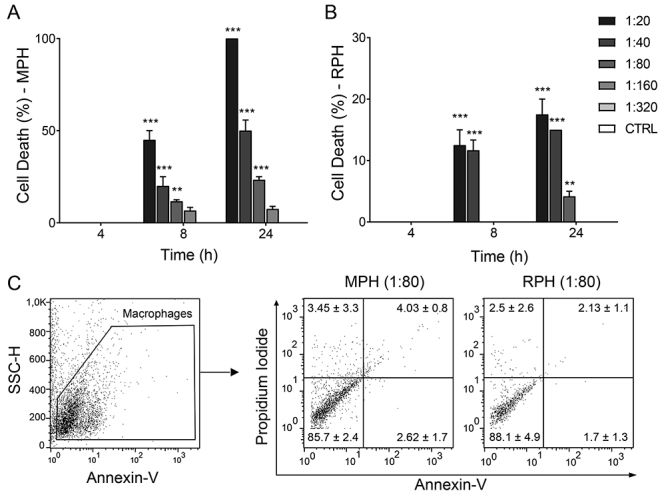
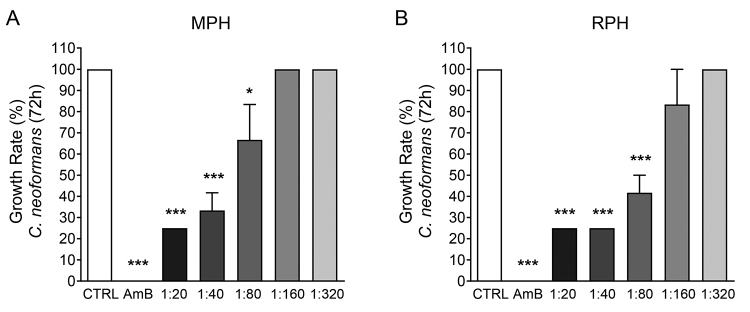
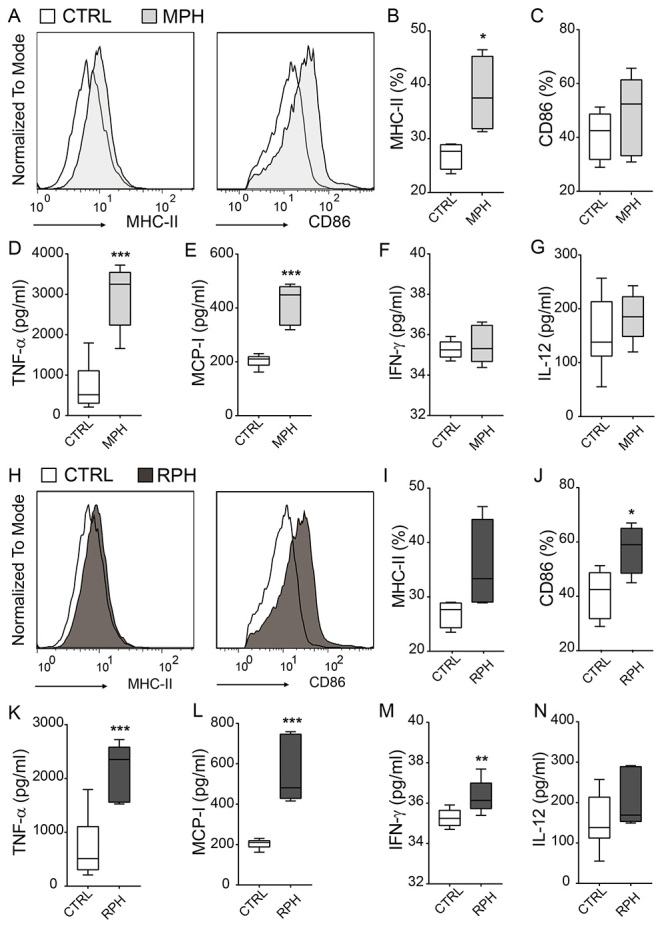
Results: Both hemolymph samples directly affected the growth rate of the fungus in a dose-dependent manner. Either MPH or RPH was capable of inhibiting fungal growth by at least 70%, using the lowest dilution (1:20). Treatment of RAW 264.7 macrophages with hemolymph of both insects was capable of increasing the production of MCP-I and TNF-α. In addition, when these cells were stimulated with hemolymph in the presence of C. neoformans, a 2- and a 4-fold increase in phagocytic rate was observed with MPH and RPH, respectively, when compared to untreated cells. For the macrophage killing activity, MPH decreased in approximately 30% the number of viable yeasts inside the cells compared to untreated control; however, treatment with RPH could not reduce the total number of viable yeasts. MPH was also capable of increasing MHC-II expression on macrophages. Regarding the cytokine production, MCP-I and TNF-α, were increased in the supernatant of macrophages treated with both hemolymphs, 4 and 48 hours after stimulation.
Conclusion: These results suggested that hemolymph of triatomines may represent a source of molecules capable of presenting antifungal and immunomodulatory activity in macrophages during fungal infection.
期刊介绍:
Accounts of Chemical Research presents short, concise and critical articles offering easy-to-read overviews of basic research and applications in all areas of chemistry and biochemistry. These short reviews focus on research from the author’s own laboratory and are designed to teach the reader about a research project. In addition, Accounts of Chemical Research publishes commentaries that give an informed opinion on a current research problem. Special Issues online are devoted to a single topic of unusual activity and significance.
Accounts of Chemical Research replaces the traditional article abstract with an article "Conspectus." These entries synopsize the research affording the reader a closer look at the content and significance of an article. Through this provision of a more detailed description of the article contents, the Conspectus enhances the article's discoverability by search engines and the exposure for the research.




 京公网安备 11010802042870号
京ICP备2023020795号-1
京公网安备 11010802042870号
京ICP备2023020795号-1

 分享
分享
 求助内容:
求助内容: 应助结果提醒方式:
 扫码关注我们
