Daichi Tsukakoshi, Shuhei Yamamoto, Shuhei Takeda, Keisuke Furuhashi, Masaaki Sato
{"title":"Clinical Perspectives on Cardiac Rehabilitation After Heart Failure in Elderly Patients with Frailty: A Narrative Review.","authors":"Daichi Tsukakoshi, Shuhei Yamamoto, Shuhei Takeda, Keisuke Furuhashi, Masaaki Sato","doi":"10.2147/TCRM.S350748","DOIUrl":null,"url":null,"abstract":"<p><p>The purpose of this narrative review is to examine rehabilitation modalities for patients with heart failure and Frailty who require comprehensive intervention. Ischemic heart disease is the leading cause of death worldwide, accounting for 16% of global mortality. Due to population growing and aging, the total number of heart failure patients continues to rise, a condition known as the heart failure pandemic. Furthermore, frailty has been associated with an increased risk for heart failure and increased morbidity and mortality. The 2021 update of the 2017 ACC expert consensus decision pathway for optimization of HF treatment has become more concerning, citing frailty as one of the 10 most important issues associated with heart failure with reduced ejection fraction (HFrEF). Frailty and heart failure share common pathological mechanisms and are associated with poor clinical outcomes. Most studies of frailty in patients with heart failure primarily focus on physical frailty, and associations between psycho-psychological and social factors such as cognitive dysfunction and social isolation have also been reported. These results suggest that a more comprehensive assessment of frailty is important to determine the risk in patients with heart failure. Therefore, mechanisms of the three domains, including not only physical frailty but also cognitive, psychological, spiritual, and social aspects, should be understood. In addition to interventions in these three domains, nutritional and pharmacological interventions are also important and require tailor-made interventions for the widely varied conditions associated with heart failure and frailty. Although several studies have shown a relationship between frailty and prognosis in patients with heart failure, interventions to improve the prognosis have not yet been established. Further information is needed on frailty intervention by a multidisciplinary team to improve the prognosis.</p>","PeriodicalId":2,"journal":{"name":"ACS Applied Bio Materials","volume":" ","pages":"1009-1028"},"PeriodicalIF":4.7000,"publicationDate":"2022-10-27","publicationTypes":"Journal Article","fieldsOfStudy":null,"isOpenAccess":false,"openAccessPdf":"https://ftp.ncbi.nlm.nih.gov/pub/pmc/oa_pdf/54/2c/tcrm-18-1009.PMC9620837.pdf","citationCount":"0","resultStr":null,"platform":"Semanticscholar","paperid":null,"PeriodicalName":"ACS Applied Bio Materials","FirstCategoryId":"3","ListUrlMain":"https://doi.org/10.2147/TCRM.S350748","RegionNum":0,"RegionCategory":null,"ArticlePicture":[],"TitleCN":null,"AbstractTextCN":null,"PMCID":null,"EPubDate":"2022/1/1 0:00:00","PubModel":"eCollection","JCR":"Q2","JCRName":"MATERIALS SCIENCE, BIOMATERIALS","Score":null,"Total":0}
引用次数: 0
Abstract
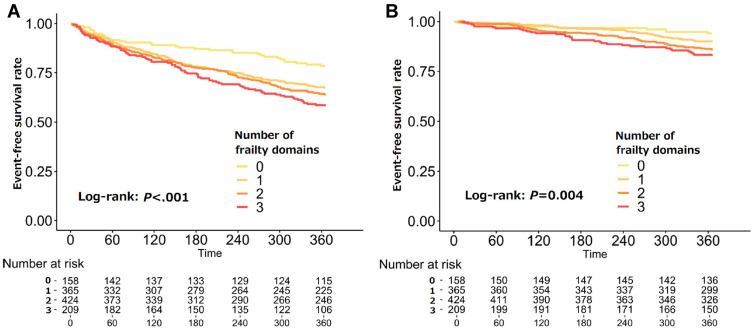
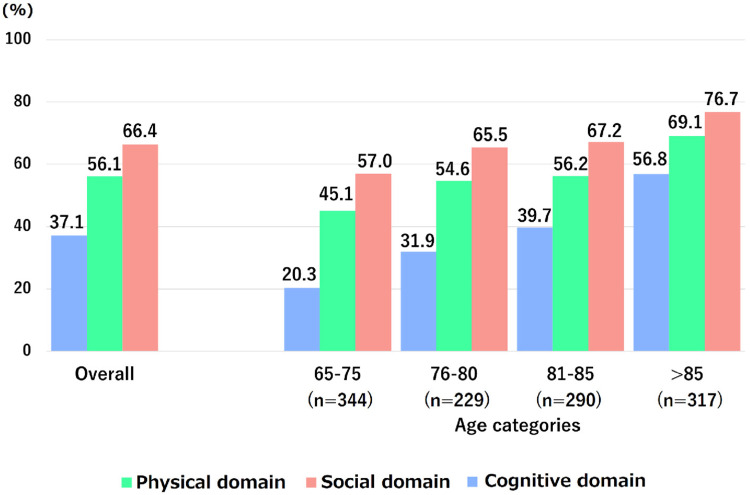
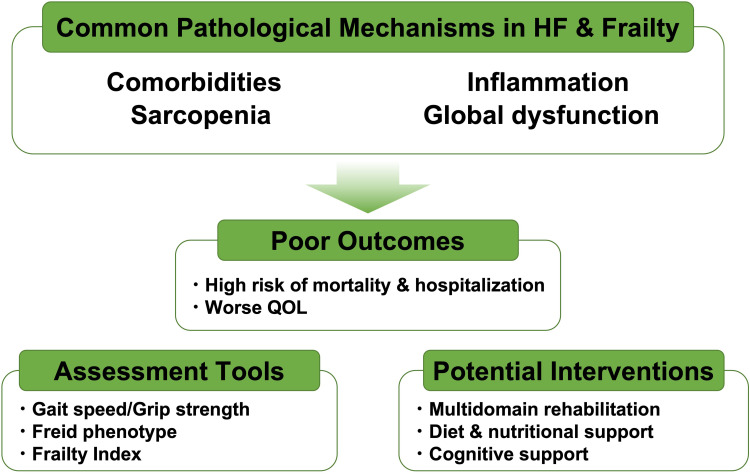
The purpose of this narrative review is to examine rehabilitation modalities for patients with heart failure and Frailty who require comprehensive intervention. Ischemic heart disease is the leading cause of death worldwide, accounting for 16% of global mortality. Due to population growing and aging, the total number of heart failure patients continues to rise, a condition known as the heart failure pandemic. Furthermore, frailty has been associated with an increased risk for heart failure and increased morbidity and mortality. The 2021 update of the 2017 ACC expert consensus decision pathway for optimization of HF treatment has become more concerning, citing frailty as one of the 10 most important issues associated with heart failure with reduced ejection fraction (HFrEF). Frailty and heart failure share common pathological mechanisms and are associated with poor clinical outcomes. Most studies of frailty in patients with heart failure primarily focus on physical frailty, and associations between psycho-psychological and social factors such as cognitive dysfunction and social isolation have also been reported. These results suggest that a more comprehensive assessment of frailty is important to determine the risk in patients with heart failure. Therefore, mechanisms of the three domains, including not only physical frailty but also cognitive, psychological, spiritual, and social aspects, should be understood. In addition to interventions in these three domains, nutritional and pharmacological interventions are also important and require tailor-made interventions for the widely varied conditions associated with heart failure and frailty. Although several studies have shown a relationship between frailty and prognosis in patients with heart failure, interventions to improve the prognosis have not yet been established. Further information is needed on frailty intervention by a multidisciplinary team to improve the prognosis.
期刊介绍:
ACS Applied Bio Materials is an interdisciplinary journal publishing original research covering all aspects of biomaterials and biointerfaces including and beyond the traditional biosensing, biomedical and therapeutic applications.
The journal is devoted to reports of new and original experimental and theoretical research of an applied nature that integrates knowledge in the areas of materials, engineering, physics, bioscience, and chemistry into important bio applications. The journal is specifically interested in work that addresses the relationship between structure and function and assesses the stability and degradation of materials under relevant environmental and biological conditions.




 京公网安备 11010802042870号
京ICP备2023020795号-1
京公网安备 11010802042870号
京ICP备2023020795号-1

 分享
分享
 求助内容:
求助内容: 应助结果提醒方式:
 扫码关注我们
