Mi Zhou, Huaien Bu, Dongjun Wang, Mengyang Wang, Yuanyuan Guan, Xuan Sun, Zhikui Tian, Hongwu Wang
{"title":"An Overview of Systematic Reviews: Acupuncture in the Treatment of Essential Hypertension.","authors":"Mi Zhou, Huaien Bu, Dongjun Wang, Mengyang Wang, Yuanyuan Guan, Xuan Sun, Zhikui Tian, Hongwu Wang","doi":"10.2147/IJGM.S387490","DOIUrl":null,"url":null,"abstract":"<p><strong>Objective: </strong>Acupuncture treatment is widely used for essential hypertension (EH), and numerous systematic reviews on acupuncture for EH have been published. This article provides an overview of the effectiveness and safety of acupuncture for EH and assesses the quality of reports, methodological bias, quality of evidence and risk of bias for inclusion in the evaluation.</p><p><strong>Methods: </strong>Two researchers independently computer searched Pubmed, EMbase, The Cochrane library, WOS, CBM, CNKI, Wangfang Data, VIP and other Chinese and English databases with a search time frame from the date of creation to 13th October 2022; and independently screened systematic reviews of acupuncture therapy for EH; and finally The Report Quality Assessment Tool (PRISMA 2020), Methodological Quality Assessment Tool (AMSTAR2), Grading of Evidence Assessment Tool (GRADE), and Bias Assessment Tool (ROBIS) were used independently to assess the bias of the included literature.</p><p><strong>Results: </strong>A total of 11 systematic reviews were included. The included studies mainly reported on outcome indicators such as efficiency rate, end SBP, end DBP, SBP change value, DBP change value, etc. Deficiencies in the quality of PRISMA 2020 reporting were mainly in the areas of independent screening by multiple researchers, use of GRADE for analysis, early registration, description of conflict of interest, and public access to information; the results of the AMSTAR 2 tool evaluation were mostly were very low, and of the 16 entries affecting the methodological quality of the systematic evaluation, entries 2/3/4/5/12/16 had the greatest methodological bias; GRADE assessed the quality of evidence for key outcome indicators, with a few being low and all others being very low; and ROBIS reported a high level of bias in the literature.</p><p><strong>Conclusion: </strong>Current acupuncture has some efficacy in the treatment of essential hypertension, but its quality of evidence is low. It is hoped that the quality of relevant literature reporting, methodological quality, quality of evidence, and bias will improve.</p>","PeriodicalId":14131,"journal":{"name":"International Journal of General Medicine","volume":" ","pages":"8093-8109"},"PeriodicalIF":2.0000,"publicationDate":"2022-11-08","publicationTypes":"Journal Article","fieldsOfStudy":null,"isOpenAccess":false,"openAccessPdf":"https://ftp.ncbi.nlm.nih.gov/pub/pmc/oa_pdf/61/b0/ijgm-15-8093.PMC9653068.pdf","citationCount":"0","resultStr":null,"platform":"Semanticscholar","paperid":null,"PeriodicalName":"International Journal of General Medicine","FirstCategoryId":"3","ListUrlMain":"https://doi.org/10.2147/IJGM.S387490","RegionNum":4,"RegionCategory":"医学","ArticlePicture":[],"TitleCN":null,"AbstractTextCN":null,"PMCID":null,"EPubDate":"2022/1/1 0:00:00","PubModel":"eCollection","JCR":"Q2","JCRName":"MEDICINE, GENERAL & INTERNAL","Score":null,"Total":0}
引用次数: 0
Abstract
Objective: Acupuncture treatment is widely used for essential hypertension (EH), and numerous systematic reviews on acupuncture for EH have been published. This article provides an overview of the effectiveness and safety of acupuncture for EH and assesses the quality of reports, methodological bias, quality of evidence and risk of bias for inclusion in the evaluation.
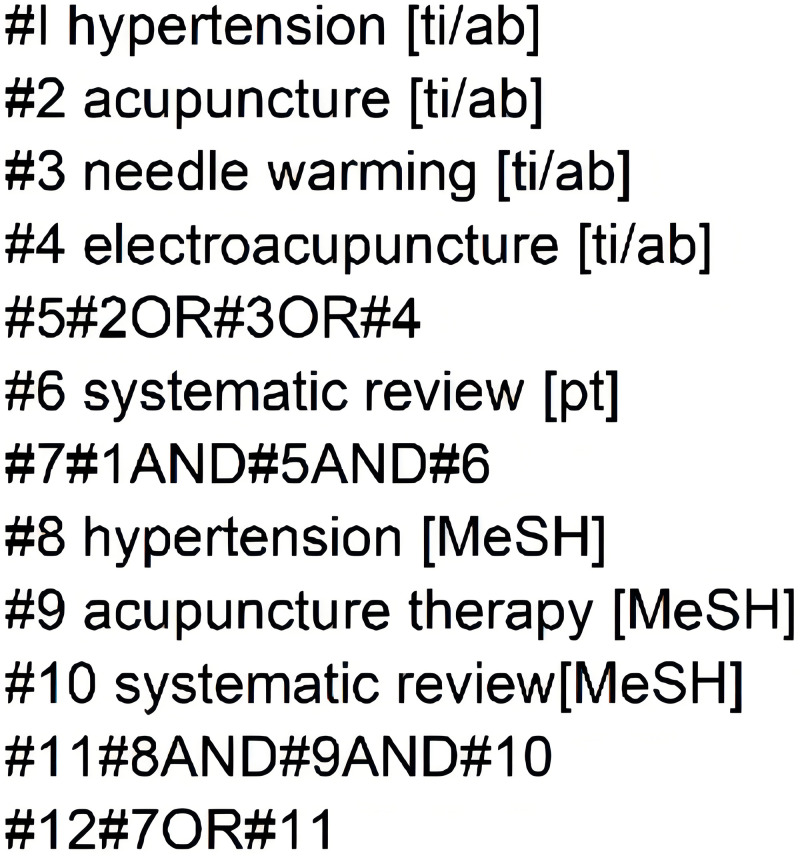
Methods: Two researchers independently computer searched Pubmed, EMbase, The Cochrane library, WOS, CBM, CNKI, Wangfang Data, VIP and other Chinese and English databases with a search time frame from the date of creation to 13th October 2022; and independently screened systematic reviews of acupuncture therapy for EH; and finally The Report Quality Assessment Tool (PRISMA 2020), Methodological Quality Assessment Tool (AMSTAR2), Grading of Evidence Assessment Tool (GRADE), and Bias Assessment Tool (ROBIS) were used independently to assess the bias of the included literature.
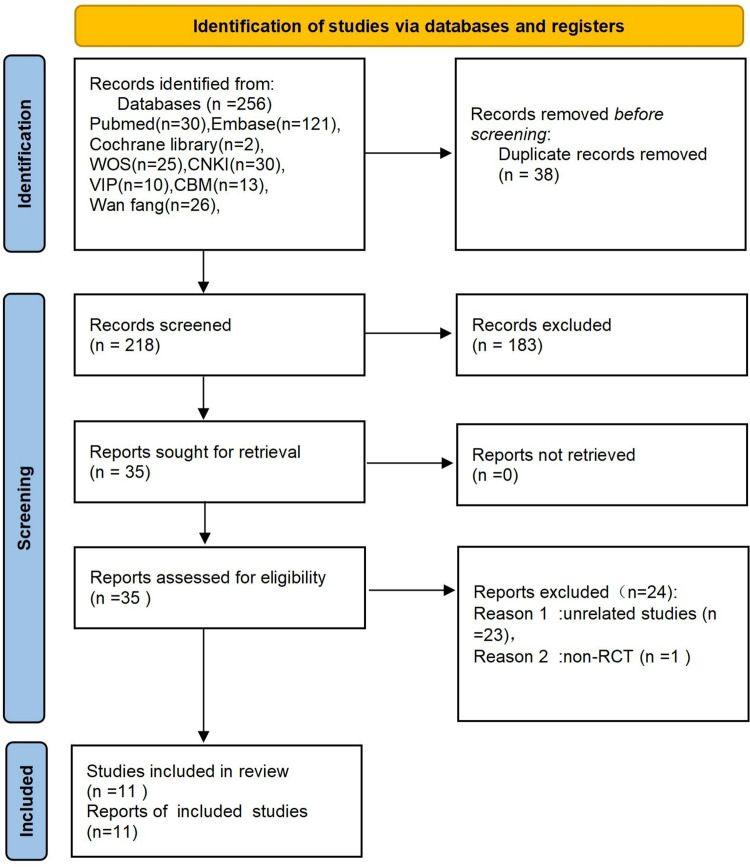
Results: A total of 11 systematic reviews were included. The included studies mainly reported on outcome indicators such as efficiency rate, end SBP, end DBP, SBP change value, DBP change value, etc. Deficiencies in the quality of PRISMA 2020 reporting were mainly in the areas of independent screening by multiple researchers, use of GRADE for analysis, early registration, description of conflict of interest, and public access to information; the results of the AMSTAR 2 tool evaluation were mostly were very low, and of the 16 entries affecting the methodological quality of the systematic evaluation, entries 2/3/4/5/12/16 had the greatest methodological bias; GRADE assessed the quality of evidence for key outcome indicators, with a few being low and all others being very low; and ROBIS reported a high level of bias in the literature.
Conclusion: Current acupuncture has some efficacy in the treatment of essential hypertension, but its quality of evidence is low. It is hoped that the quality of relevant literature reporting, methodological quality, quality of evidence, and bias will improve.
期刊介绍:
The International Journal of General Medicine is an international, peer-reviewed, open access journal that focuses on general and internal medicine, pathogenesis, epidemiology, diagnosis, monitoring and treatment protocols. The journal is characterized by the rapid reporting of reviews, original research and clinical studies across all disease areas.
A key focus of the journal is the elucidation of disease processes and management protocols resulting in improved outcomes for the patient. Patient perspectives such as satisfaction, quality of life, health literacy and communication and their role in developing new healthcare programs and optimizing clinical outcomes are major areas of interest for the journal.
As of 1st April 2019, the International Journal of General Medicine will no longer consider meta-analyses for publication.




 京公网安备 11010802042870号
京ICP备2023020795号-1
京公网安备 11010802042870号
京ICP备2023020795号-1

 分享
分享
 求助内容:
求助内容: 应助结果提醒方式:
 扫码关注我们
