{"title":"\"Caught in the Middle! Wealth Inequality and Conflict over Redistribution\".","authors":"Hanna Lierse, Davy-Kim Lascombes, Bastian Becker","doi":"10.1007/s11211-021-00384-x","DOIUrl":null,"url":null,"abstract":"<p><p>A vast literature documents that wealth inequality has risen throughout advanced democracies, especially the accumulation of wealth among the rich. Yet, instead of increasing wealth redistribution, governments have done the seemingly opposite. Key to understanding why democratic governments do not increase wealth redistribution in times of rising inequalities is to shed light on the public's preferences. In this paper, we map the public's redistributive preferences in fourteen countries based on new survey data. We show that traditional socioeconomic cleavages in preferences for wealth redistribution are undermined by diverging mobility expectations. People who expect to climb up the wealth distribution, mostly lower wealth groups, are less supportive of redistribution than people with high stakes of major wealth losses, mainly upper wealth groups. We show that future expectations among the rich and the poor have a highly moderating role for the class conflict over wealth redistribution. Moreover, the middle class, the decisive group in democracies, is highly unresponsive to future prospects. The findings suggest that the middle class does not have much to lose or to win, and therefore, wealth redistribution is of low salience among this group.</p>","PeriodicalId":1,"journal":{"name":"Accounts of Chemical Research","volume":" ","pages":"436-461"},"PeriodicalIF":17.7000,"publicationDate":"2022-01-01","publicationTypes":"Journal Article","fieldsOfStudy":null,"isOpenAccess":false,"openAccessPdf":"https://www.ncbi.nlm.nih.gov/pmc/articles/PMC9666299/pdf/","citationCount":"0","resultStr":null,"platform":"Semanticscholar","paperid":null,"PeriodicalName":"Accounts of Chemical Research","FirstCategoryId":"90","ListUrlMain":"https://doi.org/10.1007/s11211-021-00384-x","RegionNum":1,"RegionCategory":"化学","ArticlePicture":[],"TitleCN":null,"AbstractTextCN":null,"PMCID":null,"EPubDate":"2022/1/29 0:00:00","PubModel":"Epub","JCR":"Q1","JCRName":"CHEMISTRY, MULTIDISCIPLINARY","Score":null,"Total":0}
引用次数: 0
Abstract
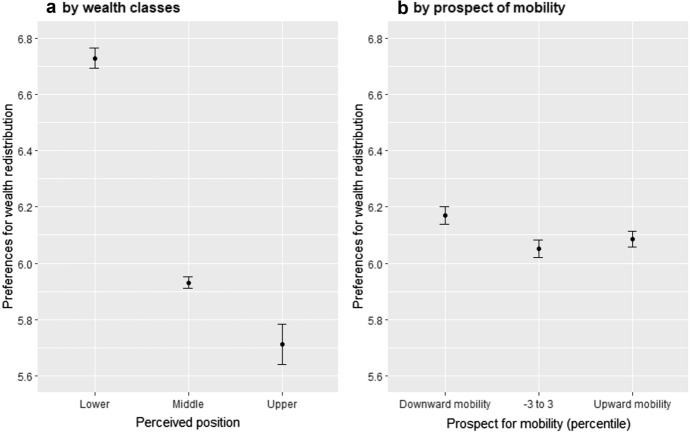
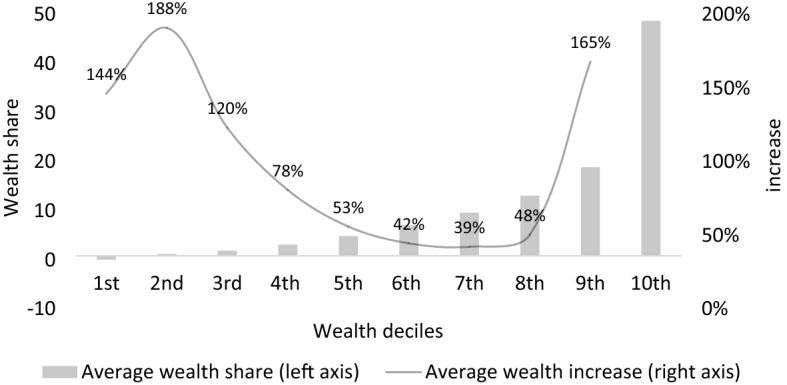
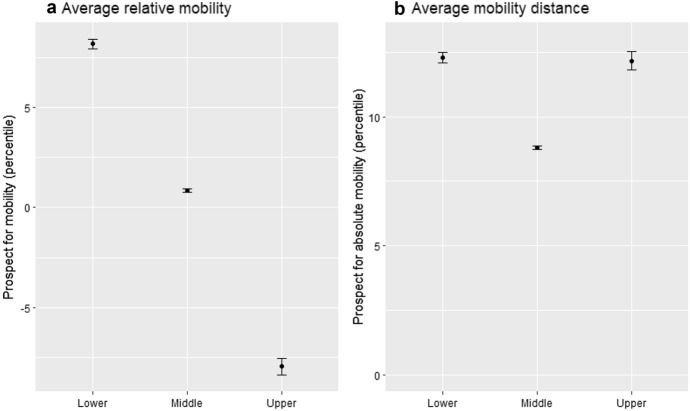
A vast literature documents that wealth inequality has risen throughout advanced democracies, especially the accumulation of wealth among the rich. Yet, instead of increasing wealth redistribution, governments have done the seemingly opposite. Key to understanding why democratic governments do not increase wealth redistribution in times of rising inequalities is to shed light on the public's preferences. In this paper, we map the public's redistributive preferences in fourteen countries based on new survey data. We show that traditional socioeconomic cleavages in preferences for wealth redistribution are undermined by diverging mobility expectations. People who expect to climb up the wealth distribution, mostly lower wealth groups, are less supportive of redistribution than people with high stakes of major wealth losses, mainly upper wealth groups. We show that future expectations among the rich and the poor have a highly moderating role for the class conflict over wealth redistribution. Moreover, the middle class, the decisive group in democracies, is highly unresponsive to future prospects. The findings suggest that the middle class does not have much to lose or to win, and therefore, wealth redistribution is of low salience among this group.
期刊介绍:
Accounts of Chemical Research presents short, concise and critical articles offering easy-to-read overviews of basic research and applications in all areas of chemistry and biochemistry. These short reviews focus on research from the author’s own laboratory and are designed to teach the reader about a research project. In addition, Accounts of Chemical Research publishes commentaries that give an informed opinion on a current research problem. Special Issues online are devoted to a single topic of unusual activity and significance.
Accounts of Chemical Research replaces the traditional article abstract with an article "Conspectus." These entries synopsize the research affording the reader a closer look at the content and significance of an article. Through this provision of a more detailed description of the article contents, the Conspectus enhances the article's discoverability by search engines and the exposure for the research.




 京公网安备 11010802042870号
京ICP备2023020795号-1
京公网安备 11010802042870号
京ICP备2023020795号-1

 分享
分享
 求助内容:
求助内容: 应助结果提醒方式:
 扫码关注我们
