{"title":"Ocular surface microbiota dysbiosis contributes to the high prevalence of dry eye disease in diabetic patients.","authors":"Qingyu An, Haidong Zou","doi":"10.1080/1040841X.2022.2142090","DOIUrl":null,"url":null,"abstract":"<p><p>People with diabetes mellitus (DM) are at an increased risk for developing dry eye disease (DED). However, the mechanisms underlying this phenomenon remain unclear. Recent studies have found that the ocular surface microbiota (OSM) differs significantly between patients with DED and healthy people, suggesting that OSM dysbiosis may contribute to the pathogenesis of DED. This hypothesis provides a new possible explanation for why diabetic patients have a higher prevalence of DED than healthy people. The high-glucose environment and the subsequent pathological changes on the ocular surface can cause OSM dysbiosis. The unbalanced microbiota then promotes ocular surface inflammation and alters tear composition, which disturbs the homeostasis of the ocular surface. This \"high glucose-OSM dysbiosis\" pathway in the pathogenesis of DED with DM (DM-DED) is discussed in this review.</p>","PeriodicalId":6,"journal":{"name":"ACS Applied Nano Materials","volume":" ","pages":"805-814"},"PeriodicalIF":5.5000,"publicationDate":"2023-11-01","publicationTypes":"Journal Article","fieldsOfStudy":null,"isOpenAccess":false,"openAccessPdf":"","citationCount":"5","resultStr":null,"platform":"Semanticscholar","paperid":null,"PeriodicalName":"ACS Applied Nano Materials","FirstCategoryId":"99","ListUrlMain":"https://doi.org/10.1080/1040841X.2022.2142090","RegionNum":2,"RegionCategory":"材料科学","ArticlePicture":[],"TitleCN":null,"AbstractTextCN":null,"PMCID":null,"EPubDate":"2022/11/21 0:00:00","PubModel":"Epub","JCR":"Q2","JCRName":"MATERIALS SCIENCE, MULTIDISCIPLINARY","Score":null,"Total":0}
引用次数: 5
Abstract
People with diabetes mellitus (DM) are at an increased risk for developing dry eye disease (DED). However, the mechanisms underlying this phenomenon remain unclear. Recent studies have found that the ocular surface microbiota (OSM) differs significantly between patients with DED and healthy people, suggesting that OSM dysbiosis may contribute to the pathogenesis of DED. This hypothesis provides a new possible explanation for why diabetic patients have a higher prevalence of DED than healthy people. The high-glucose environment and the subsequent pathological changes on the ocular surface can cause OSM dysbiosis. The unbalanced microbiota then promotes ocular surface inflammation and alters tear composition, which disturbs the homeostasis of the ocular surface. This "high glucose-OSM dysbiosis" pathway in the pathogenesis of DED with DM (DM-DED) is discussed in this review.
期刊介绍:
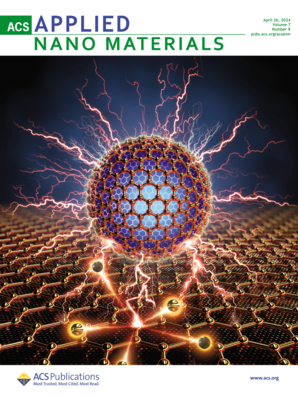
ACS Applied Nano Materials is an interdisciplinary journal publishing original research covering all aspects of engineering, chemistry, physics and biology relevant to applications of nanomaterials. The journal is devoted to reports of new and original experimental and theoretical research of an applied nature that integrate knowledge in the areas of materials, engineering, physics, bioscience, and chemistry into important applications of nanomaterials.



 京公网安备 11010802042870号
京ICP备2023020795号-1
京公网安备 11010802042870号
京ICP备2023020795号-1

 分享
分享
 求助内容:
求助内容: 应助结果提醒方式:
 扫码关注我们
