Kevin R Keene, Julia Bongers, Robert H P de Meel, Jeroen Venhovens, Jan J G M Verschuuren, Martijn R Tannemaat
{"title":"Test-Retest Reliability of Repetitive Ocular Vestibular Evoked Myogenic Potentials in Myasthenia Gravis Patients and Healthy Control Subjects.","authors":"Kevin R Keene, Julia Bongers, Robert H P de Meel, Jeroen Venhovens, Jan J G M Verschuuren, Martijn R Tannemaat","doi":"10.1097/WNP.0000000000000956","DOIUrl":null,"url":null,"abstract":"<p><strong>Purpose: </strong>Repetitive ocular vestibular evoked myogenic potentials (ROVEMP) are a novel diagnostic test to quantify neuromuscular transmission deficits in extraocular muscles in myasthenia gravis. We aimed to investigate the test-retest reliability of the ROVEMP and the effect of amplitude and age.</p><p><strong>Methods: </strong>We performed the ROVEMP test twice in 19 patients with myasthenia gravis (52.7 ± 19.8 years) and in 15 healthy control subjects (46.5 ± 16 years). The Bland-Altman level of agreement was determined. The relationship between test-retest reliability and signal quality, participant age and signal amplitude was studied.</p><p><strong>Results: </strong>Limits of agreement were from -179.9 to 139.3 in myasthenia gravis patients and from -56.9 to 89.5 in healthy control subjects. Difference between measurements correlated with signal amplitude ( r = -0.50, P < 0.001). Combining the primary cohort with previously published data from 114 subjects, we found a significant negative correlation between age and reference amplitude ( r = -0.163, P = 0.045).</p><p><strong>Conclusions: </strong>This study shows that in our hands, the test-retest reliability of the ROVEMP is not optimal. Measurements with higher reference amplitude had a better quality, higher reproducibility, and increased diagnostic yield. We caution against the use of ROVEMP measurements of lower amplitude in clinical practice. In addition, given the correlation between age and amplitude, age matching of healthy control subjects and patients is essential in future studies.</p>","PeriodicalId":2,"journal":{"name":"ACS Applied Bio Materials","volume":" ","pages":"265-270"},"PeriodicalIF":4.7000,"publicationDate":"2024-03-01","publicationTypes":"Journal Article","fieldsOfStudy":null,"isOpenAccess":false,"openAccessPdf":"https://www.ncbi.nlm.nih.gov/pmc/articles/PMC10898539/pdf/","citationCount":"0","resultStr":null,"platform":"Semanticscholar","paperid":null,"PeriodicalName":"ACS Applied Bio Materials","FirstCategoryId":"3","ListUrlMain":"https://doi.org/10.1097/WNP.0000000000000956","RegionNum":0,"RegionCategory":null,"ArticlePicture":[],"TitleCN":null,"AbstractTextCN":null,"PMCID":null,"EPubDate":"2022/6/29 0:00:00","PubModel":"Epub","JCR":"Q2","JCRName":"MATERIALS SCIENCE, BIOMATERIALS","Score":null,"Total":0}
引用次数: 0
Abstract
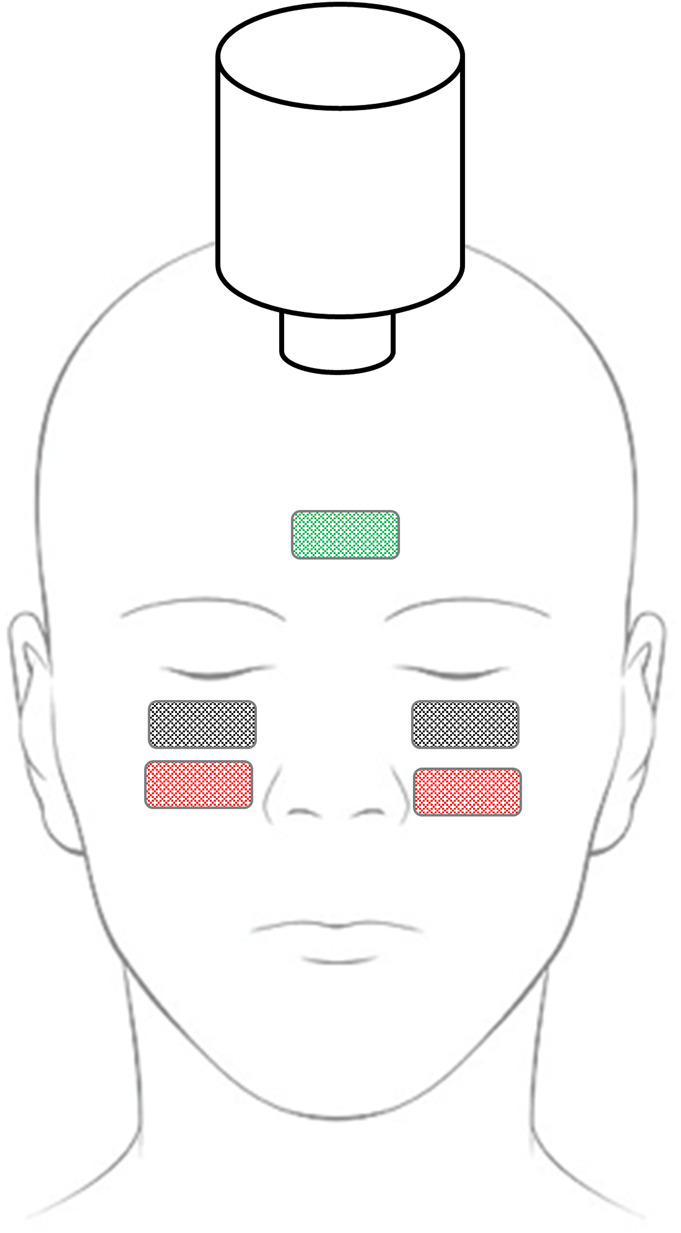
Purpose: Repetitive ocular vestibular evoked myogenic potentials (ROVEMP) are a novel diagnostic test to quantify neuromuscular transmission deficits in extraocular muscles in myasthenia gravis. We aimed to investigate the test-retest reliability of the ROVEMP and the effect of amplitude and age.
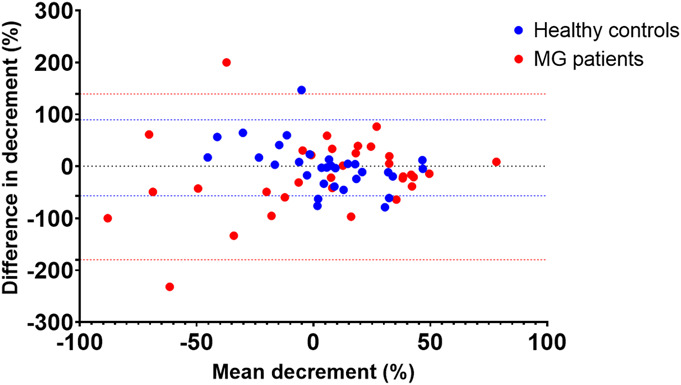
Methods: We performed the ROVEMP test twice in 19 patients with myasthenia gravis (52.7 ± 19.8 years) and in 15 healthy control subjects (46.5 ± 16 years). The Bland-Altman level of agreement was determined. The relationship between test-retest reliability and signal quality, participant age and signal amplitude was studied.
Results: Limits of agreement were from -179.9 to 139.3 in myasthenia gravis patients and from -56.9 to 89.5 in healthy control subjects. Difference between measurements correlated with signal amplitude ( r = -0.50, P < 0.001). Combining the primary cohort with previously published data from 114 subjects, we found a significant negative correlation between age and reference amplitude ( r = -0.163, P = 0.045).
Conclusions: This study shows that in our hands, the test-retest reliability of the ROVEMP is not optimal. Measurements with higher reference amplitude had a better quality, higher reproducibility, and increased diagnostic yield. We caution against the use of ROVEMP measurements of lower amplitude in clinical practice. In addition, given the correlation between age and amplitude, age matching of healthy control subjects and patients is essential in future studies.
期刊介绍:
ACS Applied Bio Materials is an interdisciplinary journal publishing original research covering all aspects of biomaterials and biointerfaces including and beyond the traditional biosensing, biomedical and therapeutic applications.
The journal is devoted to reports of new and original experimental and theoretical research of an applied nature that integrates knowledge in the areas of materials, engineering, physics, bioscience, and chemistry into important bio applications. The journal is specifically interested in work that addresses the relationship between structure and function and assesses the stability and degradation of materials under relevant environmental and biological conditions.





 京公网安备 11010802042870号
京ICP备2023020795号-1
京公网安备 11010802042870号
京ICP备2023020795号-1

 分享
分享
 求助内容:
求助内容: 应助结果提醒方式:
 扫码关注我们
