Barriers and Facilitators to Successful Intensive Adherence Counseling in Rural Northern Uganda: An Exploratory Interview with HIV-Positive Clients Using the COM-B Framework.
{"title":"Barriers and Facilitators to Successful Intensive Adherence Counseling in Rural Northern Uganda: An Exploratory Interview with HIV-Positive Clients Using the COM-B Framework.","authors":"Humphrey Beja, Nakayiwa Daisy, Micheal Tonny Edek, Veronic Kobusinge, Oscar Akaki, Innocent Ocitti Owachgiu, Samson Udho","doi":"10.2147/HIV.S393093","DOIUrl":null,"url":null,"abstract":"<p><strong>Purpose: </strong>Intensive adherence counseling (IAC) was introduced as a strategy to enhance adherence to antiretroviral therapy (ART) among HIV clients with non-suppressed viral loads. There has been sub-optimal viral load suppression among HIV clients in Uganda enrolled in IAC. However, there is a scarcity of literature on the barriers and facilitators of successful IAC. We aim to explore the barriers and facilitators to successful IAC among HIV-positive clients seeking care in public health facilities in rural northern Uganda.</p><p><strong>Patients and methods: </strong>This was an exploratory qualitative study conducted among 15 purposively sampled HIV-positive clients enrolled in IAC in public health facilities offering ART services in northern Uganda. We conducted in-depth interviews using semi-structured interview guides based on the capability, opportunity, motivation, and behavior (COM-B) framework for behaviour change. Data were analyzed using the deductive thematic approach of Braun and Clarke following the COM-B framework.</p><p><strong>Results: </strong>The majority of the participants were females (60%), married (53%), and attained primary education (47%). Barriers to successful IAC were Capability - alcoholism and promiscuity, Opportunity - stigma and discrimination, delayed viral load result, shortage of food, and heavy workload; and Motivation - deteriorating health and lack of incentives. Facilitators to successful IAC were Capability - good knowledge of ART, good memory, and reminder alerts; Opportunity - availability of ART, social support, availability of ART, prolonged ART refill, and good counseling; and Motivation - desire to live longer and healthy and the desire to fulfill dreams and goals.</p><p><strong>Conclusion: </strong>Successful implementation of IAC needs to consider the context of the person in care thus the need to strengthen individualized IAC sessions. HIV care providers can adopt the COM-B framework to perform individualized IACs and use the information to strengthen the counseling sessions.</p>","PeriodicalId":1,"journal":{"name":"Accounts of Chemical Research","volume":" ","pages":"553-563"},"PeriodicalIF":17.7000,"publicationDate":"2022-11-21","publicationTypes":"Journal Article","fieldsOfStudy":null,"isOpenAccess":false,"openAccessPdf":"https://ftp.ncbi.nlm.nih.gov/pub/pmc/oa_pdf/8b/dc/hiv-14-553.PMC9699700.pdf","citationCount":"0","resultStr":null,"platform":"Semanticscholar","paperid":null,"PeriodicalName":"Accounts of Chemical Research","FirstCategoryId":"1085","ListUrlMain":"https://doi.org/10.2147/HIV.S393093","RegionNum":1,"RegionCategory":"化学","ArticlePicture":[],"TitleCN":null,"AbstractTextCN":null,"PMCID":null,"EPubDate":"2022/1/1 0:00:00","PubModel":"eCollection","JCR":"Q1","JCRName":"CHEMISTRY, MULTIDISCIPLINARY","Score":null,"Total":0}
引用次数: 0
Abstract
Purpose: Intensive adherence counseling (IAC) was introduced as a strategy to enhance adherence to antiretroviral therapy (ART) among HIV clients with non-suppressed viral loads. There has been sub-optimal viral load suppression among HIV clients in Uganda enrolled in IAC. However, there is a scarcity of literature on the barriers and facilitators of successful IAC. We aim to explore the barriers and facilitators to successful IAC among HIV-positive clients seeking care in public health facilities in rural northern Uganda.
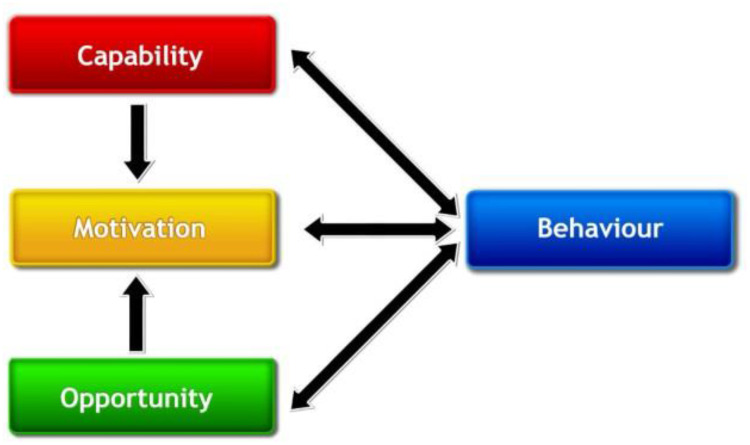
Patients and methods: This was an exploratory qualitative study conducted among 15 purposively sampled HIV-positive clients enrolled in IAC in public health facilities offering ART services in northern Uganda. We conducted in-depth interviews using semi-structured interview guides based on the capability, opportunity, motivation, and behavior (COM-B) framework for behaviour change. Data were analyzed using the deductive thematic approach of Braun and Clarke following the COM-B framework.
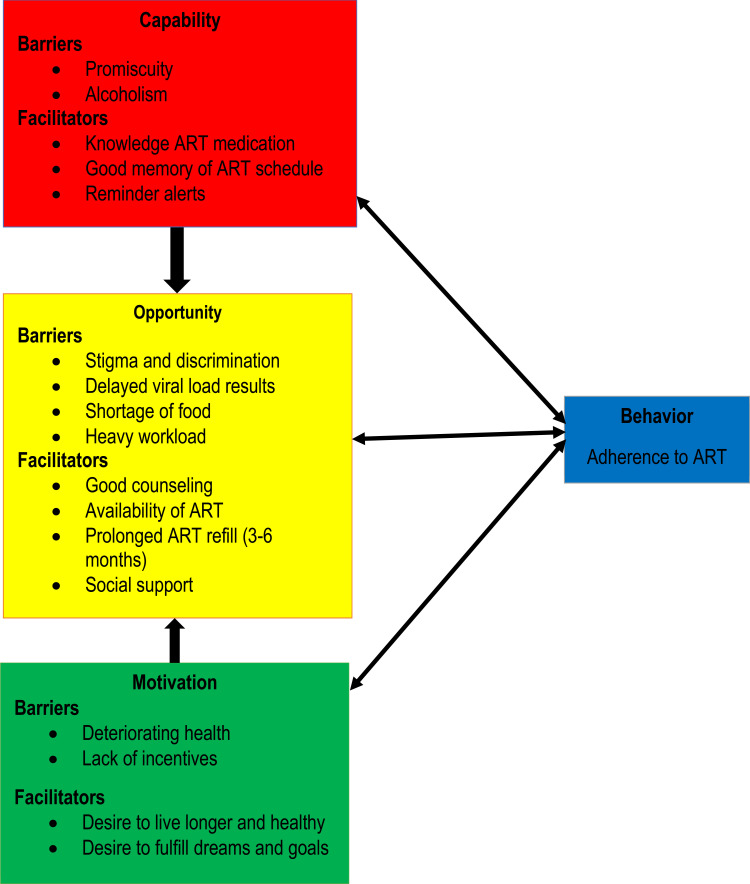
Results: The majority of the participants were females (60%), married (53%), and attained primary education (47%). Barriers to successful IAC were Capability - alcoholism and promiscuity, Opportunity - stigma and discrimination, delayed viral load result, shortage of food, and heavy workload; and Motivation - deteriorating health and lack of incentives. Facilitators to successful IAC were Capability - good knowledge of ART, good memory, and reminder alerts; Opportunity - availability of ART, social support, availability of ART, prolonged ART refill, and good counseling; and Motivation - desire to live longer and healthy and the desire to fulfill dreams and goals.
Conclusion: Successful implementation of IAC needs to consider the context of the person in care thus the need to strengthen individualized IAC sessions. HIV care providers can adopt the COM-B framework to perform individualized IACs and use the information to strengthen the counseling sessions.
期刊介绍:
Accounts of Chemical Research presents short, concise and critical articles offering easy-to-read overviews of basic research and applications in all areas of chemistry and biochemistry. These short reviews focus on research from the author’s own laboratory and are designed to teach the reader about a research project. In addition, Accounts of Chemical Research publishes commentaries that give an informed opinion on a current research problem. Special Issues online are devoted to a single topic of unusual activity and significance.
Accounts of Chemical Research replaces the traditional article abstract with an article "Conspectus." These entries synopsize the research affording the reader a closer look at the content and significance of an article. Through this provision of a more detailed description of the article contents, the Conspectus enhances the article's discoverability by search engines and the exposure for the research.




 京公网安备 11010802042870号
京ICP备2023020795号-1
京公网安备 11010802042870号
京ICP备2023020795号-1

 分享
分享
 求助内容:
求助内容: 应助结果提醒方式:
 扫码关注我们
