F Gimenez, S Barraud de Lagerie, C Fernandez, P Pino, D Mazier
{"title":"Tumor necrosis factor alpha in the pathogenesis of cerebral malaria.","authors":"F Gimenez, S Barraud de Lagerie, C Fernandez, P Pino, D Mazier","doi":"10.1007/s00018-003-2347-x","DOIUrl":null,"url":null,"abstract":"<p><p>Physiologically in the brain, cytokines such as tumor necrosis factor-alpha (TNalpha) are released by the immune system and can modulate neurological responses. Conversely, the central nervous system (CNS) is also able to modulate cytokine production. In the case of CNS disorders, cytokine release may be modified. Cerebral malaria (CM) is a complication of Plasmodium falciparum infection in humans and is characterized by a reversible encephalopathy with seizures and loss of consciousness. Central clinical signs are partly due to sequestration of parasitized red blood cells in the brain microvasculature due to interactions between parasite proteins and adhesion molecules. TNFalpha is produced and released by host cells following exposure to various malarial antigens. The increase of TNFalpha release is responsible for the overexpression of adhesion molecules. This article reviews the involvement of TNFalpha in cerebral malaria and the relation with all the processes involved in this pathology. It shows that (i). TNFalpha levels are increased in plasma and brain but with no clear correlation between TNFalpha levels and occurrence and severity of CM; (ii). TNFalpha is responsible for intercellular adhesion molecule-1 upregulation in CM, the relation being less clear for other adhesion molecules; (iii). TNFalpha receptors are upregulated in CM, with TNF receptor 2 (TNFR2) showing a higher upregulation than TNFR1 in vivo; (iv). in murine CM, low doses of TNFalpha seem to protect from CM, whereas excess TNFalpha induces CM and anti-TNFalpha therapies (antibodies, pentoxifylline) did not show any efficiency in protection from CM. Moreover, the involvement of lymphotoxin a, which shares with TNFalpha the same receptors with similar affinity, appears to be an interesting target for further investigation.</p>","PeriodicalId":6,"journal":{"name":"ACS Applied Nano Materials","volume":" ","pages":"1623-35"},"PeriodicalIF":5.5000,"publicationDate":"2003-08-01","publicationTypes":"Journal Article","fieldsOfStudy":null,"isOpenAccess":false,"openAccessPdf":"https://www.ncbi.nlm.nih.gov/pmc/articles/PMC11138823/pdf/","citationCount":"0","resultStr":null,"platform":"Semanticscholar","paperid":null,"PeriodicalName":"ACS Applied Nano Materials","FirstCategoryId":"99","ListUrlMain":"https://doi.org/10.1007/s00018-003-2347-x","RegionNum":2,"RegionCategory":"材料科学","ArticlePicture":[],"TitleCN":null,"AbstractTextCN":null,"PMCID":null,"EPubDate":"","PubModel":"","JCR":"Q2","JCRName":"MATERIALS SCIENCE, MULTIDISCIPLINARY","Score":null,"Total":0}
引用次数: 0
Abstract
Physiologically in the brain, cytokines such as tumor necrosis factor-alpha (TNalpha) are released by the immune system and can modulate neurological responses. Conversely, the central nervous system (CNS) is also able to modulate cytokine production. In the case of CNS disorders, cytokine release may be modified. Cerebral malaria (CM) is a complication of Plasmodium falciparum infection in humans and is characterized by a reversible encephalopathy with seizures and loss of consciousness. Central clinical signs are partly due to sequestration of parasitized red blood cells in the brain microvasculature due to interactions between parasite proteins and adhesion molecules. TNFalpha is produced and released by host cells following exposure to various malarial antigens. The increase of TNFalpha release is responsible for the overexpression of adhesion molecules. This article reviews the involvement of TNFalpha in cerebral malaria and the relation with all the processes involved in this pathology. It shows that (i). TNFalpha levels are increased in plasma and brain but with no clear correlation between TNFalpha levels and occurrence and severity of CM; (ii). TNFalpha is responsible for intercellular adhesion molecule-1 upregulation in CM, the relation being less clear for other adhesion molecules; (iii). TNFalpha receptors are upregulated in CM, with TNF receptor 2 (TNFR2) showing a higher upregulation than TNFR1 in vivo; (iv). in murine CM, low doses of TNFalpha seem to protect from CM, whereas excess TNFalpha induces CM and anti-TNFalpha therapies (antibodies, pentoxifylline) did not show any efficiency in protection from CM. Moreover, the involvement of lymphotoxin a, which shares with TNFalpha the same receptors with similar affinity, appears to be an interesting target for further investigation.
期刊介绍:
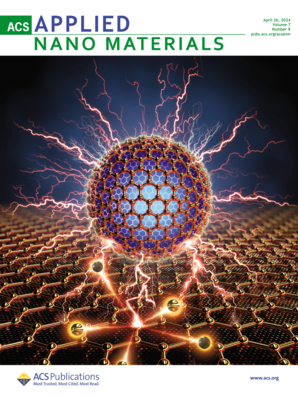
ACS Applied Nano Materials is an interdisciplinary journal publishing original research covering all aspects of engineering, chemistry, physics and biology relevant to applications of nanomaterials. The journal is devoted to reports of new and original experimental and theoretical research of an applied nature that integrate knowledge in the areas of materials, engineering, physics, bioscience, and chemistry into important applications of nanomaterials.



 京公网安备 11010802042870号
京ICP备2023020795号-1
京公网安备 11010802042870号
京ICP备2023020795号-1

 分享
分享
 求助内容:
求助内容: 应助结果提醒方式:
 扫码关注我们
