{"title":"Advances in the discovery of genetic elements underlying longissimus dorsi muscle growth and development in the pig","authors":"Qingjie Zeng, Zhi-Qiang Du","doi":"10.1111/age.13365","DOIUrl":null,"url":null,"abstract":"<p>As a major source of protein in human diets, pig meat plays a crucial role in ensuring global food security. Key determinants of meat production refer to the chemical and physical compositions or characteristics of muscle fibers, such as the number, hypertrophy potential, fiber-type conversion and intramuscular fat deposition. However, the growth and formation of muscle fibers comprises a complex process under spatio-temporal regulation, that is, the intermingled and concomitant proliferation, differentiation, migration and fusion of myoblasts. Recently, with the fast and continuous development of next-generation sequencing technology, the integration of quantitative trait loci mapping with genome-wide association studies (GWAS) has greatly helped animal geneticists to discover and explore thousands of functional or causal genetic elements underlying muscle growth and development. However, owing to the underlying complex molecular mechanisms, challenges to in-depth understanding and utilization remain, and the cost of large-scale sequencing, which requires integrated analyses of high-throughput omics data, is high. In this review, we mainly elaborate on research advances in integrative analyses (e.g. GWAS, omics) for identifying functional genes or genomic elements for longissimus dorsi muscle growth and development for different pig breeds, describing several successful transcriptome analyses and functional genomics cases, in an attempt to provide some perspective on the future functional annotation of genetic elements for muscle growth and development in pigs.</p>","PeriodicalId":7905,"journal":{"name":"Animal genetics","volume":"54 6","pages":"709-720"},"PeriodicalIF":2.1000,"publicationDate":"2023-10-05","publicationTypes":"Journal Article","fieldsOfStudy":null,"isOpenAccess":false,"openAccessPdf":"","citationCount":"0","resultStr":null,"platform":"Semanticscholar","paperid":null,"PeriodicalName":"Animal genetics","FirstCategoryId":"99","ListUrlMain":"https://onlinelibrary.wiley.com/doi/10.1111/age.13365","RegionNum":3,"RegionCategory":"生物学","ArticlePicture":[],"TitleCN":null,"AbstractTextCN":null,"PMCID":null,"EPubDate":"","PubModel":"","JCR":"Q2","JCRName":"AGRICULTURE, DAIRY & ANIMAL SCIENCE","Score":null,"Total":0}
引用次数: 0
Abstract
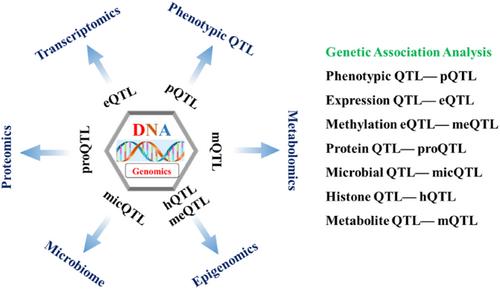
As a major source of protein in human diets, pig meat plays a crucial role in ensuring global food security. Key determinants of meat production refer to the chemical and physical compositions or characteristics of muscle fibers, such as the number, hypertrophy potential, fiber-type conversion and intramuscular fat deposition. However, the growth and formation of muscle fibers comprises a complex process under spatio-temporal regulation, that is, the intermingled and concomitant proliferation, differentiation, migration and fusion of myoblasts. Recently, with the fast and continuous development of next-generation sequencing technology, the integration of quantitative trait loci mapping with genome-wide association studies (GWAS) has greatly helped animal geneticists to discover and explore thousands of functional or causal genetic elements underlying muscle growth and development. However, owing to the underlying complex molecular mechanisms, challenges to in-depth understanding and utilization remain, and the cost of large-scale sequencing, which requires integrated analyses of high-throughput omics data, is high. In this review, we mainly elaborate on research advances in integrative analyses (e.g. GWAS, omics) for identifying functional genes or genomic elements for longissimus dorsi muscle growth and development for different pig breeds, describing several successful transcriptome analyses and functional genomics cases, in an attempt to provide some perspective on the future functional annotation of genetic elements for muscle growth and development in pigs.
期刊介绍:
Animal Genetics reports frontline research on immunogenetics, molecular genetics and functional genomics of economically important and domesticated animals. Publications include the study of variability at gene and protein levels, mapping of genes, traits and QTLs, associations between genes and traits, genetic diversity, and characterization of gene or protein expression and control related to phenotypic or genetic variation.
The journal publishes full-length articles, short communications and brief notes, as well as commissioned and submitted mini-reviews on issues of interest to Animal Genetics readers.



 京公网安备 11010802042870号
京ICP备2023020795号-1
京公网安备 11010802042870号
京ICP备2023020795号-1

 分享
分享
 求助内容:
求助内容: 应助结果提醒方式:
 扫码关注我们
