Salivary Biomarkers and Temporomandibular Disorders: A Systematic Review conducted according to PRISMA guidelines and the Cochrane Handbook for Systematic Reviews of Interventions

IF 4 3区 医学 Q1 DENTISTRY, ORAL SURGERY & MEDICINE Journal of oral rehabilitation Pub Date : 2023-09-20 DOI:10.1111/joor.13589
Mohammad Khursheed Alam, Mahmud Uz Zaman, Nasser Raqe Alqhtani, Abdullah Saad Alqahtani, Fawaz Alqahtani, Marco Cicciù, Giuseppe Minervini
{"title":"Salivary Biomarkers and Temporomandibular Disorders: A Systematic Review conducted according to PRISMA guidelines and the Cochrane Handbook for Systematic Reviews of Interventions","authors":"Mohammad Khursheed Alam,&nbsp;Mahmud Uz Zaman,&nbsp;Nasser Raqe Alqhtani,&nbsp;Abdullah Saad Alqahtani,&nbsp;Fawaz Alqahtani,&nbsp;Marco Cicciù,&nbsp;Giuseppe Minervini","doi":"10.1111/joor.13589","DOIUrl":null,"url":null,"abstract":"<div>\n \n \n <section>\n \n <h3> Background</h3>\n \n <p>The present review aimed to investigate the association between salivary biomarkers and temporomandibular disorders (TMD). TMD is a multifactorial condition characterised by pain and dysfunction in the temporomandibular joint (TMJ) and surrounding structures. Salivary biomarkers have emerged as potential diagnostic tools due to their non-invasiveness and easy accessibility. However, the literature on salivary biomarkers in relation to TMD is limited and inconsistent.</p>\n </section>\n \n <section>\n \n <h3> Methods</h3>\n \n <p>Electronic databases of Pubmed, Embase, Web of Science, Scopus, Cochrane Library, PsychINFO, CINAHL and Medline were searched using specific search terms and Boolean operators. The search was limited to articles published in English that assessed salivary biomarkers in individuals diagnosed with TMD. Two reviewers independently screened the articles and extracted data. ROB-2 was used to assess the risk of bias.</p>\n </section>\n \n <section>\n \n <h3> Results</h3>\n \n <p>Eleven clinical papers met the inclusion criteria and were included in the review. The findings provided consistent evidence of a clear association between salivary biomarkers and TMD. Various biomarkers, including cortisol, IL-1, glutamate and several others, were assessed. Some studies reported higher levels of cortisol and IL-1 in TMD patients, indicating potential involvement in stress and inflammation. Glutamate levels were found to be elevated, suggesting a role in pain modulation. Other biomarkers also showed alterations in TMD patients compared to controls:</p>\n </section>\n \n <section>\n \n <h3> Conclusion</h3>\n \n <p>The findings from the included studies suggest that salivary biomarkers may play a role in TMD pathophysiology. Though a definitive conclusion can be drawn regarding the specific salivary biomarkers and their association with TMD, the results must be interpreted with caution considering the heterogeneity of the biomarkers assessed. Further research with larger sample sizes, standardised methodology and rigorous study designs is needed to elucidate the role of salivary biomarkers in TMD.</p>\n </section>\n </div>","PeriodicalId":16605,"journal":{"name":"Journal of oral rehabilitation","volume":"51 2","pages":"416-426"},"PeriodicalIF":4.0000,"publicationDate":"2023-09-20","publicationTypes":"Journal Article","fieldsOfStudy":null,"isOpenAccess":false,"openAccessPdf":"https://onlinelibrary.wiley.com/doi/epdf/10.1111/joor.13589","citationCount":"0","resultStr":null,"platform":"Semanticscholar","paperid":null,"PeriodicalName":"Journal of oral rehabilitation","FirstCategoryId":"3","ListUrlMain":"https://onlinelibrary.wiley.com/doi/10.1111/joor.13589","RegionNum":3,"RegionCategory":"医学","ArticlePicture":[],"TitleCN":null,"AbstractTextCN":null,"PMCID":null,"EPubDate":"","PubModel":"","JCR":"Q1","JCRName":"DENTISTRY, ORAL SURGERY & MEDICINE","Score":null,"Total":0}
引用次数: 0

Abstract

Background

The present review aimed to investigate the association between salivary biomarkers and temporomandibular disorders (TMD). TMD is a multifactorial condition characterised by pain and dysfunction in the temporomandibular joint (TMJ) and surrounding structures. Salivary biomarkers have emerged as potential diagnostic tools due to their non-invasiveness and easy accessibility. However, the literature on salivary biomarkers in relation to TMD is limited and inconsistent.

Methods

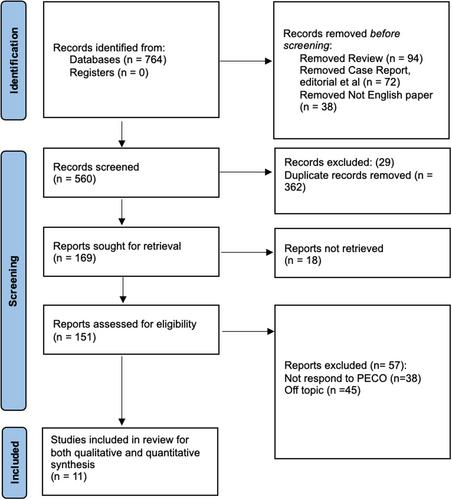
Electronic databases of Pubmed, Embase, Web of Science, Scopus, Cochrane Library, PsychINFO, CINAHL and Medline were searched using specific search terms and Boolean operators. The search was limited to articles published in English that assessed salivary biomarkers in individuals diagnosed with TMD. Two reviewers independently screened the articles and extracted data. ROB-2 was used to assess the risk of bias.

Results

Eleven clinical papers met the inclusion criteria and were included in the review. The findings provided consistent evidence of a clear association between salivary biomarkers and TMD. Various biomarkers, including cortisol, IL-1, glutamate and several others, were assessed. Some studies reported higher levels of cortisol and IL-1 in TMD patients, indicating potential involvement in stress and inflammation. Glutamate levels were found to be elevated, suggesting a role in pain modulation. Other biomarkers also showed alterations in TMD patients compared to controls:

Conclusion

The findings from the included studies suggest that salivary biomarkers may play a role in TMD pathophysiology. Though a definitive conclusion can be drawn regarding the specific salivary biomarkers and their association with TMD, the results must be interpreted with caution considering the heterogeneity of the biomarkers assessed. Further research with larger sample sizes, standardised methodology and rigorous study designs is needed to elucidate the role of salivary biomarkers in TMD.
Abstract Image

查看原文
分享 分享
微信好友 朋友圈 QQ好友 复制链接
本刊更多论文
唾液生物标志物和颞下颌疾病:根据PRISMA指南和Cochrane干预系统评价手册进行的系统评价。
背景:本综述旨在探讨唾液生物标志物与颞下颌关节紊乱病(TMD)的关系。TMD是一种多因素疾病,其特征是颞下颌关节(TMJ)及其周围结构的疼痛和功能障碍。唾液生物标志物由于其非侵入性和易获取性而成为潜在的诊断工具。然而,有关TMD的唾液生物标志物的文献是有限的和不一致的。方法:使用特定检索词和布尔运算符检索Pubmed、Embase、Web of Science、Scopus、Cochrane Library、PsychINFO、CINAHL和Medline的电子数据库。搜索仅限于以英文发表的评估TMD患者唾液生物标志物的文章。两位评审员对文章进行了独立筛选并提取了数据。ROB-2用于评估偏倚的风险。结果:11篇临床论文符合入选标准,被纳入综述。这些发现为唾液生物标志物与TMD之间的明确关联提供了一致的证据。评估了各种生物标志物,包括皮质醇、IL-1、谷氨酸和其他几种。一些研究报告称,TMD患者的皮质醇和IL-1水平较高,表明其可能与压力和炎症有关。谷氨酸水平升高,提示其在疼痛调节中发挥作用。其他生物标志物也显示,与对照组相比,TMD患者发生了变化:结论:纳入研究的结果表明,唾液生物标志物可能在TMD病理生理学中发挥作用。尽管可以就特定的唾液生物标志物及其与TMD的关系得出明确的结论,但考虑到所评估的生物标志物的异质性,必须谨慎解释结果。需要通过更大的样本量、标准化的方法和严格的研究设计来进一步研究唾液生物标志物在TMD中的作用。
本文章由计算机程序翻译,如有差异,请以英文原文为准。
求助全文
约1分钟内获得全文 去求助
来源期刊
Journal of oral rehabilitation
Journal of oral rehabilitation 医学-牙科与口腔外科
CiteScore
5.60
自引率
10.30%
发文量
116
审稿时长
4-8 weeks
期刊介绍: Journal of Oral Rehabilitation aims to be the most prestigious journal of dental research within all aspects of oral rehabilitation and applied oral physiology. It covers all diagnostic and clinical management aspects necessary to re-establish a subjective and objective harmonious oral function. Oral rehabilitation may become necessary as a result of developmental or acquired disturbances in the orofacial region, orofacial traumas, or a variety of dental and oral diseases (primarily dental caries and periodontal diseases) and orofacial pain conditions. As such, oral rehabilitation in the twenty-first century is a matter of skilful diagnosis and minimal, appropriate intervention, the nature of which is intimately linked to a profound knowledge of oral physiology, oral biology, and dental and oral pathology. The scientific content of the journal therefore strives to reflect the best of evidence-based clinical dentistry. Modern clinical management should be based on solid scientific evidence gathered about diagnostic procedures and the properties and efficacy of the chosen intervention (e.g. material science, biological, toxicological, pharmacological or psychological aspects). The content of the journal also reflects documentation of the possible side-effects of rehabilitation, and includes prognostic perspectives of the treatment modalities chosen.
期刊最新文献
Development of Multiple Risk Prediction Models for Postoperative Symptoms Following Dental Implant Surgery. The OMA-Project-Orofacial Myofunctional Behaviour in Adults: Effectiveness of Orofacial Myofunctional Therapy Protocols in Healthy Young Adults With Orofacial Myofunctional Disorders. Respiratory Muscle Force, Body Position, and Sarcopenic Indices: Correlations and Clinical Implications in Older Women. Prevalence of Dysgeusia in Head and Neck Cancer Patients: A Meta-Analysis and Moderator Analysis. Craniofacial Pain and Disability Inventory and Tampa Scale for Kinesiophobia for Temporomandibular Disorders: A Study of Responsiveness and Minimal Important Change.
×
引用
GB/T 7714-2015
复制
MLA
复制
APA
复制
导出至
BibTeX EndNote RefMan NoteFirst NoteExpress
×
×
提示
您的信息不完整,为了账户安全,请先补充。
现在去补充
×
提示
您因"违规操作"
具体请查看互助需知
我知道了
×
提示
现在去查看 取消
×
提示
确定
0
微信
客服QQ
Book学术公众号 扫码关注我们
反馈
×
意见反馈
请填写您的意见或建议
请填写您的手机或邮箱
已复制链接
已复制链接
快去分享给好友吧!
我知道了
×
扫码分享
扫码分享
Book学术官方微信
Book学术文献互助
Book学术文献互助群
群 号:604180095
Book学术
文献互助 智能选刊 最新文献 互助须知 联系我们:info@booksci.cn
Book学术提供免费学术资源搜索服务,方便国内外学者检索中英文文献。致力于提供最便捷和优质的服务体验。
Copyright © 2023 Book学术 All rights reserved.
ghs 京公网安备 11010802042870号 京ICP备2023020795号-1





