Jo Ghillebert, Joost Geeroms, Louis Flynn, Sander De Bock, Renée Govaerts, Elke Lathouwers, Simona Crea, Nicola Vitiello, Dirk Lefeber, Romain Meeusen, Kevin De Pauw
{"title":"Performance of the CYBERLEGs motorized lower limb prosthetic device during simulated daily activities.","authors":"Jo Ghillebert, Joost Geeroms, Louis Flynn, Sander De Bock, Renée Govaerts, Elke Lathouwers, Simona Crea, Nicola Vitiello, Dirk Lefeber, Romain Meeusen, Kevin De Pauw","doi":"10.1017/wtc.2021.15","DOIUrl":null,"url":null,"abstract":"<p><strong>Background: </strong>The CYBERLEGs-gamma (CLs-ɣ) prosthesis has been developed to investigate the possibilities of powerful active prosthetics in restoring human gait capabilities after lower limb amputation.</p><p><strong>Objective: </strong>The objective of this study was to determine the performance of the CLs-ɣ prosthesis during simulated daily activities.</p><p><strong>Methods: </strong>Eight participants with a transfemoral amputation (age: 55 ± 15 years, <i>K</i>-level 3, registered under: NCT03376919) performed a familiarization session, an experimental session with their current prosthesis, three training sessions with the CLs-ɣ prosthesis and another experimental session with the CLs-ɣ prosthesis. Participants completed a stair-climbing-test, a timed-up-and-go-test, a sit-to stand-test, a 2-min dual-task and a 6-min treadmill walk test.</p><p><strong>Results: </strong>Comparisons between the two experimental sessions showed that stride length significantly increased during walking with the CLs-ɣ prosthesis (<i>p</i> = .012) due to a greater step length of the amputated leg (<i>p</i> = .035). Although a training period with the prototype was included, preferred walking speed was significantly slower (<i>p</i> = .018), the metabolic cost of transport was significantly higher (<i>p</i> = .028) and reaction times significantly worsened (<i>p</i> = .012) when walking with the CLs-ɣ compared to the current prosthesis.</p><p><strong>Conclusions: </strong>It can be stated that a higher physical and cognitive effort were required when wearing the CLs-ɣ prosthesis. Positive outcomes were observed regarding stride length and stair ambulation. Future prosthetics development should minimize the weight of the device and integrate customized control systems. A recommendation for future research is to include several shorter training periods or a prolonged adaptation period.</p>","PeriodicalId":75318,"journal":{"name":"Wearable technologies","volume":"2 1","pages":"e15"},"PeriodicalIF":2.8000,"publicationDate":"2021-11-22","publicationTypes":"Journal Article","fieldsOfStudy":null,"isOpenAccess":false,"openAccessPdf":"https://www.ncbi.nlm.nih.gov/pmc/articles/PMC10936386/pdf/","citationCount":"0","resultStr":null,"platform":"Semanticscholar","paperid":null,"PeriodicalName":"Wearable technologies","FirstCategoryId":"1085","ListUrlMain":"https://doi.org/10.1017/wtc.2021.15","RegionNum":0,"RegionCategory":null,"ArticlePicture":[],"TitleCN":null,"AbstractTextCN":null,"PMCID":null,"EPubDate":"2021/1/1 0:00:00","PubModel":"eCollection","JCR":"Q2","JCRName":"ENGINEERING, BIOMEDICAL","Score":null,"Total":0}
引用次数: 0
Abstract
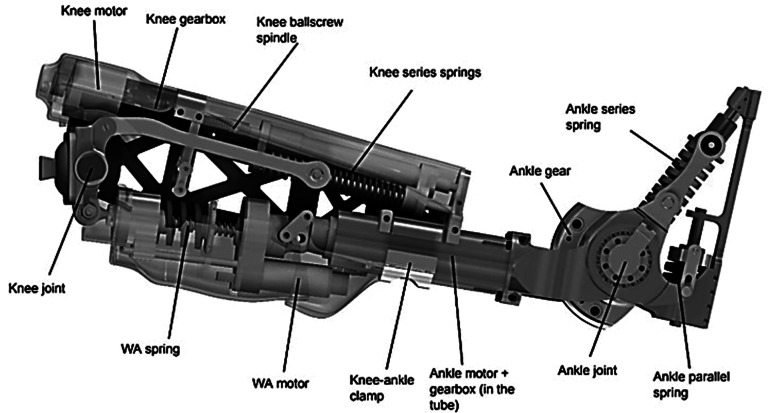
Background: The CYBERLEGs-gamma (CLs-ɣ) prosthesis has been developed to investigate the possibilities of powerful active prosthetics in restoring human gait capabilities after lower limb amputation.
Objective: The objective of this study was to determine the performance of the CLs-ɣ prosthesis during simulated daily activities.
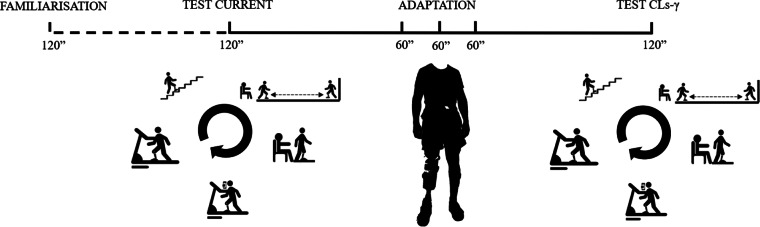
Methods: Eight participants with a transfemoral amputation (age: 55 ± 15 years, K-level 3, registered under: NCT03376919) performed a familiarization session, an experimental session with their current prosthesis, three training sessions with the CLs-ɣ prosthesis and another experimental session with the CLs-ɣ prosthesis. Participants completed a stair-climbing-test, a timed-up-and-go-test, a sit-to stand-test, a 2-min dual-task and a 6-min treadmill walk test.
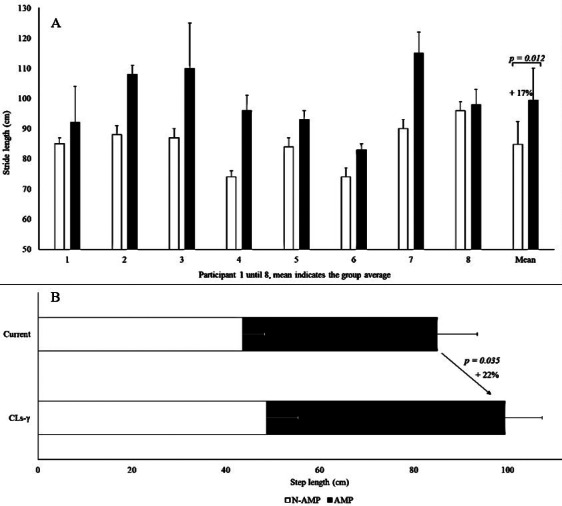
Results: Comparisons between the two experimental sessions showed that stride length significantly increased during walking with the CLs-ɣ prosthesis (p = .012) due to a greater step length of the amputated leg (p = .035). Although a training period with the prototype was included, preferred walking speed was significantly slower (p = .018), the metabolic cost of transport was significantly higher (p = .028) and reaction times significantly worsened (p = .012) when walking with the CLs-ɣ compared to the current prosthesis.
Conclusions: It can be stated that a higher physical and cognitive effort were required when wearing the CLs-ɣ prosthesis. Positive outcomes were observed regarding stride length and stair ambulation. Future prosthetics development should minimize the weight of the device and integrate customized control systems. A recommendation for future research is to include several shorter training periods or a prolonged adaptation period.



 京公网安备 11010802042870号
京ICP备2023020795号-1
京公网安备 11010802042870号
京ICP备2023020795号-1

 分享
分享

 求助内容:
求助内容: 应助结果提醒方式:
 扫码关注我们
