Steven L. Proctor, Gipsy J. Alvarez de la Campa, Lilian Medina-Reyes, Norman G. Hoffmann
{"title":"Clinical and Demographic Correlates of the Type and Frequency of Criminal Behavior Among Jail Inmates with a Substance Use Disorder","authors":"Steven L. Proctor, Gipsy J. Alvarez de la Campa, Lilian Medina-Reyes, Norman G. Hoffmann","doi":"10.1007/s12103-016-9381-3","DOIUrl":null,"url":null,"abstract":"<div><p>This study sought to identify the clinical and demographic correlates of offenders with a violent instant offense as well as those with a history of greater criminal recidivism among a sample of county jail inmates with a substance use disorder. Clinical, demographic, and arrest data from 176 male inmates (76.0% Caucasian) incarcerated in a county jail facility were utilized to address the present study’s objectives. All inmates were repeat offenders and met <i>Diagnostic and Statistical Manual of Mental Disorders, Fourth Edition</i> (DSM-IV; American Psychiatric Association [APA], 1994) diagnostic criteria for dependence on one or more substances based on a structured clinical interview. Clinical variables included patterns and prevalence of various DSM-IV substance-specific dependence diagnoses (i.e., alcohol, cannabis, cocaine, and heroin), as well as several non-substance use disorder psychiatric diagnoses (e.g., posttraumatic stress disorder [PTSD], antisocial personality disorder). Demographic variables included age, race, marital status, employment status, educational attainment, and estimated annual income level. Inmates with a violent instant offense had a higher prevalence of PTSD, antisocial personality disorder, and both major depressive and manic episodes relative to non-violent offenders. The only significant associations between number of prior bookings and all the studied clinical and demographic variables involved the presence of a PTSD diagnosis and income level. Co-occurring psychiatric disorders are prevalent among substance-dependent violent offenders, while very few of the studied variables appear significantly related to the frequency of prior criminal behavior. Research implications and clinical implications for county jail classification procedures are discussed.</p></div>","PeriodicalId":51509,"journal":{"name":"American Journal of Criminal Justice","volume":"42 4","pages":"746 - 758"},"PeriodicalIF":2.0000,"publicationDate":"2016-12-14","publicationTypes":"Journal Article","fieldsOfStudy":null,"isOpenAccess":false,"openAccessPdf":"https://sci-hub-pdf.com/10.1007/s12103-016-9381-3","citationCount":"9","resultStr":null,"platform":"Semanticscholar","paperid":null,"PeriodicalName":"American Journal of Criminal Justice","FirstCategoryId":"90","ListUrlMain":"https://link.springer.com/article/10.1007/s12103-016-9381-3","RegionNum":2,"RegionCategory":"社会学","ArticlePicture":[],"TitleCN":null,"AbstractTextCN":null,"PMCID":null,"EPubDate":"","PubModel":"","JCR":"Q2","JCRName":"CRIMINOLOGY & PENOLOGY","Score":null,"Total":0}
引用次数: 9
Abstract
This study sought to identify the clinical and demographic correlates of offenders with a violent instant offense as well as those with a history of greater criminal recidivism among a sample of county jail inmates with a substance use disorder. Clinical, demographic, and arrest data from 176 male inmates (76.0% Caucasian) incarcerated in a county jail facility were utilized to address the present study’s objectives. All inmates were repeat offenders and met Diagnostic and Statistical Manual of Mental Disorders, Fourth Edition (DSM-IV; American Psychiatric Association [APA], 1994) diagnostic criteria for dependence on one or more substances based on a structured clinical interview. Clinical variables included patterns and prevalence of various DSM-IV substance-specific dependence diagnoses (i.e., alcohol, cannabis, cocaine, and heroin), as well as several non-substance use disorder psychiatric diagnoses (e.g., posttraumatic stress disorder [PTSD], antisocial personality disorder). Demographic variables included age, race, marital status, employment status, educational attainment, and estimated annual income level. Inmates with a violent instant offense had a higher prevalence of PTSD, antisocial personality disorder, and both major depressive and manic episodes relative to non-violent offenders. The only significant associations between number of prior bookings and all the studied clinical and demographic variables involved the presence of a PTSD diagnosis and income level. Co-occurring psychiatric disorders are prevalent among substance-dependent violent offenders, while very few of the studied variables appear significantly related to the frequency of prior criminal behavior. Research implications and clinical implications for county jail classification procedures are discussed.
期刊介绍:
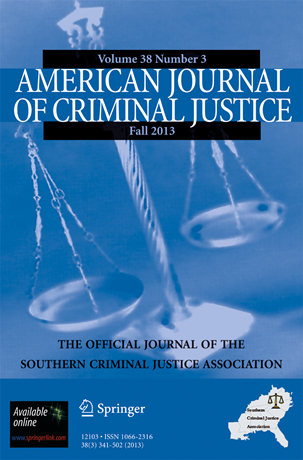
The American Journal of Criminal Justice, the official journal of the Southern Criminal Justice Association, is a peer reviewed publication; manuscripts go through a blind review process. The focus of the Journal is on a wide array of criminal justice topics and issues. Some of these concerns include items pertaining to the criminal justice process, the formal and informal interplay between system components, problems and solutions experienced by various segments, innovative practices, policy development and implementation, evaluative research, the players engaged in these enterprises, and a wide assortment of other related interests. The American Journal of Criminal Justice publishes original articles that utilize a broad range of methodologies and perspectives when examining crime, law, and criminal justice processing.



 京公网安备 11010802042870号
京ICP备2023020795号-1
京公网安备 11010802042870号
京ICP备2023020795号-1

 分享
分享
 求助内容:
求助内容: 应助结果提醒方式:
 扫码关注我们
