Manoj Govindarajulu, Mital Y Patel, Jishnu Krishnan, Joseph B Long, Peethambaran Arun
{"title":"Blast Exposure Induces Acute Alterations in Circadian Clock Genes in the Hypothalamus and Pineal Gland in Rats: An Exploratory Study.","authors":"Manoj Govindarajulu, Mital Y Patel, Jishnu Krishnan, Joseph B Long, Peethambaran Arun","doi":"10.1089/neur.2023.0048","DOIUrl":null,"url":null,"abstract":"<p><p>Blast-induced traumatic brain injury (bTBI) frequently results in sleep and circadian rhythm disturbances. We have investigated whether dysregulation of circadian rhythm after bTBI is mediated by dysregulation of clock genes in the hypothalamus and pineal gland of rats at acute (24 h) and chronic (1 month) time points post-blast. Expression of core circadian genes (<i>Bmal1</i>, <i>Clock</i>, <i>Per1</i>, <i>Per2</i>, <i>Cry1</i>, and <i>Cry2</i>) in the hypothalamus and pineal gland were quantified using quantitative real-time polymerase chain reaction. Hypocretin (<i>Hcrt</i>) and hypocretin receptor (<i>Hcrtr1</i> and <i>Hcrtr2</i>) expression in the hypothalamus were also quantified along with plasma corticosterone levels. Blast-exposed rats showed a statistically significant increase in <i>Bmal1</i> and decreases in <i>Per1</i>, <i>Per2</i>, and <i>Cry2</i> in the pineal gland at 24 h post-blast in rats euthanized at night. In the hypothalamus, increases in <i>Bmal1</i>, <i>Cry1</i>, and <i>Cry2</i> were noted along with decreases in <i>Per1</i> and <i>Per2</i> gene expression at 24 h post-blast in rats euthanized at night. Except for <i>Bmal1</i> in the hypothalamus, no statistically significant changes in expression of any of the clock genes were detected in the hypothalamus or pineal gland samples collected during daylight post-blast. In the hypothalamus, a decrease in <i>Hcrt</i> associated with increases in <i>Hcrtr1</i> and <i>Hcrtr2</i> were noted at 24 h post-blast in rats euthanized during daytime and nighttime. Increased plasma corticosterone was noted at 24 h post-blast in samples collected at night. No statistically significant changes in any of the core circadian genes-hypocretin, hypocretin receptors, or plasma corticosterone-were observed in the samples collected at 1 month post-blast injury. Blast exposure causes differential expression of core circadian genes in the hypothalamus and pineal gland during nighttime, along with dysregulation of hypocretin and its receptors, which might play a key role in the sleep disruptions associated with bTBI.</p>","PeriodicalId":74300,"journal":{"name":"Neurotrauma reports","volume":"1 1","pages":"586-597"},"PeriodicalIF":1.8000,"publicationDate":"2023-08-31","publicationTypes":"Journal Article","fieldsOfStudy":null,"isOpenAccess":false,"openAccessPdf":"https://www.ncbi.nlm.nih.gov/pmc/articles/PMC12538905/pdf/","citationCount":"0","resultStr":null,"platform":"Semanticscholar","paperid":null,"PeriodicalName":"Neurotrauma reports","FirstCategoryId":"1085","ListUrlMain":"https://doi.org/10.1089/neur.2023.0048","RegionNum":0,"RegionCategory":null,"ArticlePicture":[],"TitleCN":null,"AbstractTextCN":null,"PMCID":null,"EPubDate":"2023/1/1 0:00:00","PubModel":"eCollection","JCR":"Q3","JCRName":"CLINICAL NEUROLOGY","Score":null,"Total":0}
引用次数: 0
Abstract
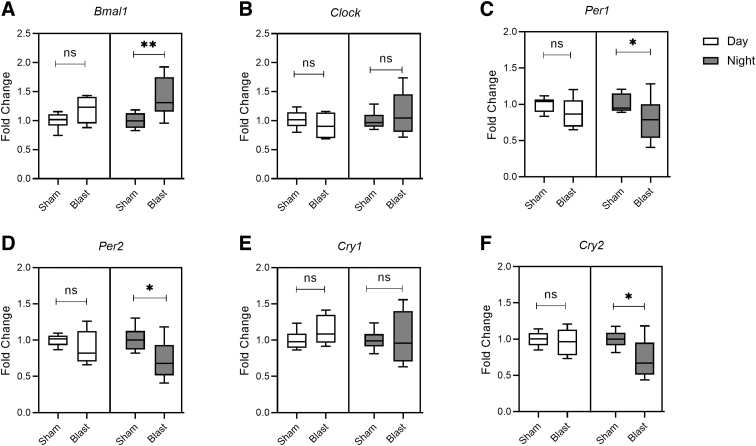
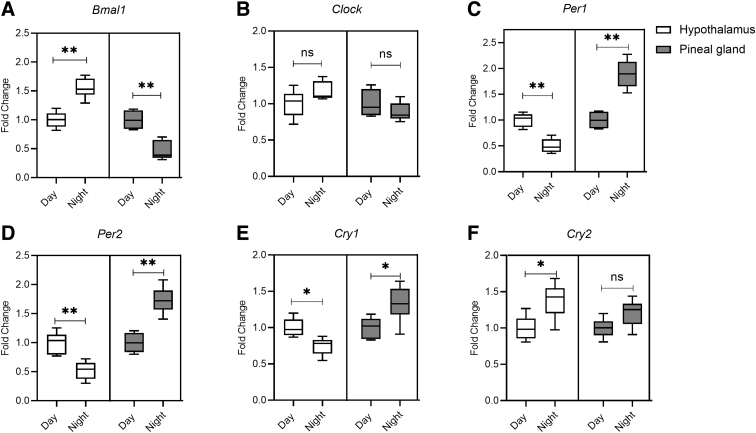
Blast-induced traumatic brain injury (bTBI) frequently results in sleep and circadian rhythm disturbances. We have investigated whether dysregulation of circadian rhythm after bTBI is mediated by dysregulation of clock genes in the hypothalamus and pineal gland of rats at acute (24 h) and chronic (1 month) time points post-blast. Expression of core circadian genes (Bmal1, Clock, Per1, Per2, Cry1, and Cry2) in the hypothalamus and pineal gland were quantified using quantitative real-time polymerase chain reaction. Hypocretin (Hcrt) and hypocretin receptor (Hcrtr1 and Hcrtr2) expression in the hypothalamus were also quantified along with plasma corticosterone levels. Blast-exposed rats showed a statistically significant increase in Bmal1 and decreases in Per1, Per2, and Cry2 in the pineal gland at 24 h post-blast in rats euthanized at night. In the hypothalamus, increases in Bmal1, Cry1, and Cry2 were noted along with decreases in Per1 and Per2 gene expression at 24 h post-blast in rats euthanized at night. Except for Bmal1 in the hypothalamus, no statistically significant changes in expression of any of the clock genes were detected in the hypothalamus or pineal gland samples collected during daylight post-blast. In the hypothalamus, a decrease in Hcrt associated with increases in Hcrtr1 and Hcrtr2 were noted at 24 h post-blast in rats euthanized during daytime and nighttime. Increased plasma corticosterone was noted at 24 h post-blast in samples collected at night. No statistically significant changes in any of the core circadian genes-hypocretin, hypocretin receptors, or plasma corticosterone-were observed in the samples collected at 1 month post-blast injury. Blast exposure causes differential expression of core circadian genes in the hypothalamus and pineal gland during nighttime, along with dysregulation of hypocretin and its receptors, which might play a key role in the sleep disruptions associated with bTBI.




 京公网安备 11010802042870号
京ICP备2023020795号-1
京公网安备 11010802042870号
京ICP备2023020795号-1

 分享
分享

 求助内容:
求助内容: 应助结果提醒方式:
 扫码关注我们
