{"title":"Soil degradation and crop yield declines persist 5 years after pipeline installations","authors":"Theresa Brehm, Steve Culman","doi":"10.1002/saj2.20506","DOIUrl":null,"url":null,"abstract":"<p>Degradation of natural resources, including increased soil compaction, soil horizon mixing, and decreased crop yields have been common outcomes of underground pipeline installation. However, most of the research documenting the impacts of pipeline installation on soil and crops was conducted before contemporary best management practices were developed and implemented. The objective of this study was to evaluate the impact of pipeline installation on soils and field crops after a 4- to 5-year remediation period, coinciding with the end of landowner compensation and when sites are considered fully remediated by pipeline companies. We report soil properties and corn (<i>Zea mays</i> L.) and soybean [<i>Glycine max</i> (L.) Merr.] yields from three independently operated pipelines at 29 sites across 8 Ohio counties. We observed significant degradation in soil physical properties, such as surface penetration resistance (15.3% increase) and mean weight diameter of soil aggregates (13.6% decrease) in right-of-way (ROW) areas compared with adjacent (ADJ) areas, respectively. Soils in ROW showed evidence of soil horizon mixing, with 25.0 g kg<sup>−1</sup> higher clay compared with ADJ areas. Soil degradation resulted in decreases of 23.8% and 19.5% in corn yields and 7.4% and 12.5% in soybean yields during 2020 and 2021, respectively. Widespread disturbance persisted 5 years following pipeline installation in soil physical, chemical, and biological properties. Current best management practices of pipeline installation and remediation employed by three companies were insufficient to combat widespread soil degradation and crop yield loss.</p>","PeriodicalId":101043,"journal":{"name":"Proceedings - Soil Science Society of America","volume":"87 2","pages":"350-364"},"PeriodicalIF":0.0000,"publicationDate":"2022-11-22","publicationTypes":"Journal Article","fieldsOfStudy":null,"isOpenAccess":false,"openAccessPdf":"https://onlinelibrary.wiley.com/doi/epdf/10.1002/saj2.20506","citationCount":"0","resultStr":null,"platform":"Semanticscholar","paperid":null,"PeriodicalName":"Proceedings - Soil Science Society of America","FirstCategoryId":"1085","ListUrlMain":"https://onlinelibrary.wiley.com/doi/10.1002/saj2.20506","RegionNum":0,"RegionCategory":null,"ArticlePicture":[],"TitleCN":null,"AbstractTextCN":null,"PMCID":null,"EPubDate":"","PubModel":"","JCR":"","JCRName":"","Score":null,"Total":0}
引用次数: 0
Abstract
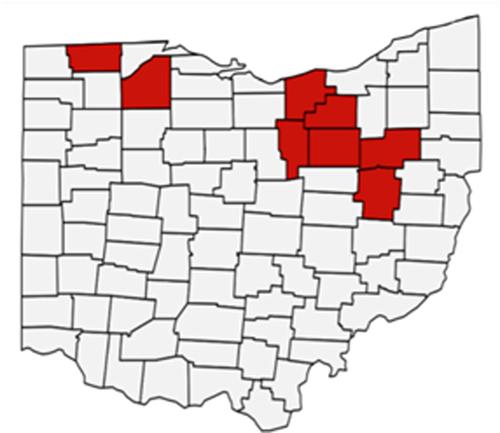
Degradation of natural resources, including increased soil compaction, soil horizon mixing, and decreased crop yields have been common outcomes of underground pipeline installation. However, most of the research documenting the impacts of pipeline installation on soil and crops was conducted before contemporary best management practices were developed and implemented. The objective of this study was to evaluate the impact of pipeline installation on soils and field crops after a 4- to 5-year remediation period, coinciding with the end of landowner compensation and when sites are considered fully remediated by pipeline companies. We report soil properties and corn (Zea mays L.) and soybean [Glycine max (L.) Merr.] yields from three independently operated pipelines at 29 sites across 8 Ohio counties. We observed significant degradation in soil physical properties, such as surface penetration resistance (15.3% increase) and mean weight diameter of soil aggregates (13.6% decrease) in right-of-way (ROW) areas compared with adjacent (ADJ) areas, respectively. Soils in ROW showed evidence of soil horizon mixing, with 25.0 g kg−1 higher clay compared with ADJ areas. Soil degradation resulted in decreases of 23.8% and 19.5% in corn yields and 7.4% and 12.5% in soybean yields during 2020 and 2021, respectively. Widespread disturbance persisted 5 years following pipeline installation in soil physical, chemical, and biological properties. Current best management practices of pipeline installation and remediation employed by three companies were insufficient to combat widespread soil degradation and crop yield loss.
自然资源的退化,包括土壤压实加剧、土壤水平混合和作物产量下降,是地下管道安装的常见后果。然而,大多数记录管道安装对土壤和作物影响的研究都是在制定和实施当代最佳管理实践之前进行的。本研究的目的是评估管道安装对土壤和田间作物的影响,在4至5年的修复期后,恰逢土地所有者补偿结束,当管道公司认为场地完全修复时。我们报道了土壤特性和玉米(Zea mays L.)和大豆(Glycine max (L.))稳定。在俄亥俄州8个县的29个地点,有3条独立运营的管道。我们观察到,与相邻(ADJ)地区相比,路权(ROW)地区的土壤物理性质显著退化,如表面渗透阻力(增加15.3%)和土壤团聚体平均重量直径(减少13.6%)。ROW区土壤表现出土壤水平混合的迹象,粘土含量比ADJ区高25.0 g kg−1。土壤退化导致2020年和2021年玉米产量和大豆产量分别下降23.8%和19.5%和7.4%和12.5%。管道安装5年后,对土壤物理、化学和生物特性的广泛干扰持续存在。三家公司目前采用的管道安装和补救的最佳管理做法不足以对付广泛的土壤退化和作物产量损失。



 京公网安备 11010802042870号
京ICP备2023020795号-1
京公网安备 11010802042870号
京ICP备2023020795号-1

 分享
分享

 求助内容:
求助内容: 应助结果提醒方式:
 扫码关注我们
