{"title":"Nursing profession in Africa: A study on work engagement and talent management practices in South Africa.","authors":"Mpho Lerotholi, Adéle Bezuidenhout","doi":"10.1002/puh2.87","DOIUrl":null,"url":null,"abstract":"<p><strong>Background: </strong>The global shortage of nurses, intensified by nurses migrating to richer countries, creates a health crisis in developing countries. This study investigates how strategic talent management practices can improve the work engagement of professional nurses in public hospitals in South Africa.</p><p><strong>Methods: </strong>A cross-sectional, self-administered survey was conducted among professional nurses employed in three large public hospitals in the Gauteng Province of South Africa. We measured: (1) management commitment, (2) talent review, (3) workforce planning, (4) staffing, (5) talent acquisition, (6) talent development, (7) talent commitment and (8) talent retention. The sub-dimensions of work engagement that were measured included: (1) vigour, (2) absorption and (3) dedication. Descriptive and inferential (multiple regression) analyses were performed. The gap analysis calculated the difference between the current and desired status means talent management item.</p><p><strong>Results: </strong>The gap analysis revealed the biggest discrepancies between the value nurses attach to and the current status of management commitment and the talent review and staffing processes. Multiple regression analyses confirmed that current status-rating talent acquisition impacts dedication and absorption combined (<i>r</i> = 0.112, <i>p</i>-value = 0.012 < 0.05) and management commitment impacts absorption and vigour combined (<i>r</i> = 0.26, <i>p</i>-value = 0.026 < 0.05). The importance-rating revealed talent development and commitment combined influences dedication and absorption combined (<i>r</i> = 0.092, <i>p</i>-value = 0.038 < 0.05), and talent review and planning impacts absorption and vigour combined (<i>r</i> = 0.115, <i>p</i>-value = 0.010 < 0.05). Age and job status had a significant effect on absorption-vigour.</p><p><strong>Conclusion: </strong>Hospital managers can improve the engagement of nurses by demonstrating their commitment to talent development, offering a diverse variety of development opportunities and ensuring a pipeline of new nurses by improving the attractiveness of the profession. The study shows how strategic talent management practices can serve to improve work engagement in the healthcare sector.</p>","PeriodicalId":74613,"journal":{"name":"Public health challenges","volume":" ","pages":"e87"},"PeriodicalIF":0.0000,"publicationDate":"2023-05-04","publicationTypes":"Journal Article","fieldsOfStudy":null,"isOpenAccess":false,"openAccessPdf":"https://www.ncbi.nlm.nih.gov/pmc/articles/PMC12039608/pdf/","citationCount":"0","resultStr":null,"platform":"Semanticscholar","paperid":null,"PeriodicalName":"Public health challenges","FirstCategoryId":"1085","ListUrlMain":"https://doi.org/10.1002/puh2.87","RegionNum":0,"RegionCategory":null,"ArticlePicture":[],"TitleCN":null,"AbstractTextCN":null,"PMCID":null,"EPubDate":"2023/6/1 0:00:00","PubModel":"eCollection","JCR":"","JCRName":"","Score":null,"Total":0}
引用次数: 0
Abstract
Background: The global shortage of nurses, intensified by nurses migrating to richer countries, creates a health crisis in developing countries. This study investigates how strategic talent management practices can improve the work engagement of professional nurses in public hospitals in South Africa.
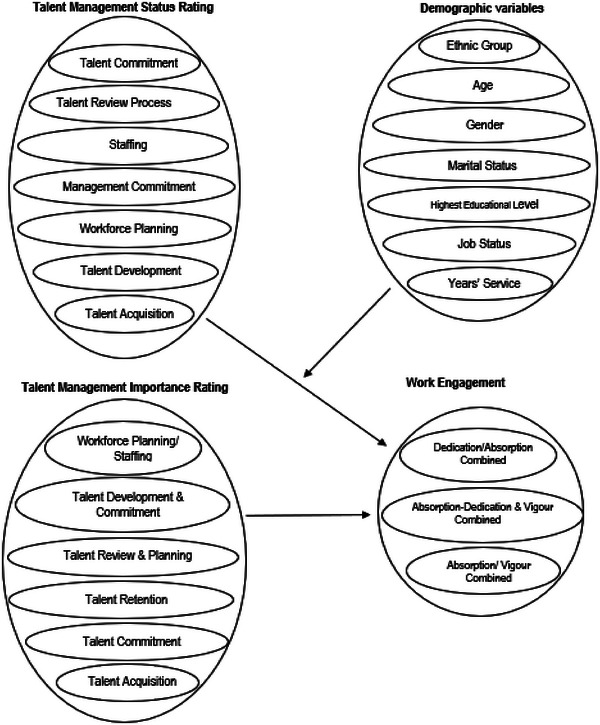
Methods: A cross-sectional, self-administered survey was conducted among professional nurses employed in three large public hospitals in the Gauteng Province of South Africa. We measured: (1) management commitment, (2) talent review, (3) workforce planning, (4) staffing, (5) talent acquisition, (6) talent development, (7) talent commitment and (8) talent retention. The sub-dimensions of work engagement that were measured included: (1) vigour, (2) absorption and (3) dedication. Descriptive and inferential (multiple regression) analyses were performed. The gap analysis calculated the difference between the current and desired status means talent management item.
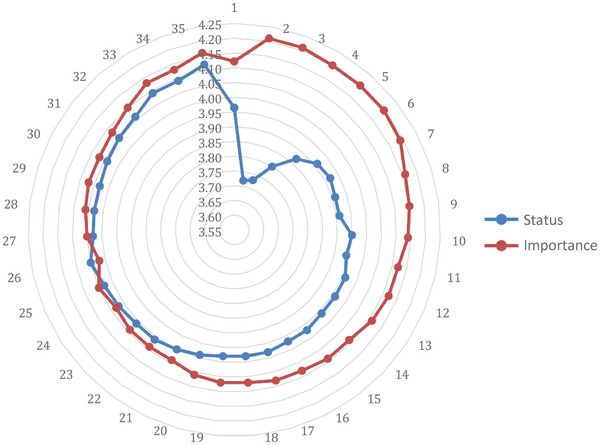
Results: The gap analysis revealed the biggest discrepancies between the value nurses attach to and the current status of management commitment and the talent review and staffing processes. Multiple regression analyses confirmed that current status-rating talent acquisition impacts dedication and absorption combined (r = 0.112, p-value = 0.012 < 0.05) and management commitment impacts absorption and vigour combined (r = 0.26, p-value = 0.026 < 0.05). The importance-rating revealed talent development and commitment combined influences dedication and absorption combined (r = 0.092, p-value = 0.038 < 0.05), and talent review and planning impacts absorption and vigour combined (r = 0.115, p-value = 0.010 < 0.05). Age and job status had a significant effect on absorption-vigour.
Conclusion: Hospital managers can improve the engagement of nurses by demonstrating their commitment to talent development, offering a diverse variety of development opportunities and ensuring a pipeline of new nurses by improving the attractiveness of the profession. The study shows how strategic talent management practices can serve to improve work engagement in the healthcare sector.
背景:全球护士短缺,由于护士向较富裕国家的移徙而加剧,在发展中国家造成了健康危机。本研究探讨策略性人才管理实务如何能改善南非公立医院专业护士的工作投入。方法:对南非豪登省三家大型公立医院的专业护士进行了横断面、自我管理的调查。我们测量了:(1)管理承诺,(2)人才审查,(3)劳动力计划,(4)人员配置,(5)人才获取,(6)人才发展,(7)人才承诺和(8)人才保留。测量的工作投入的子维度包括:(1)活力,(2)吸收和(3)奉献。进行了描述性和推理性(多元回归)分析。差距分析计算了当前和期望状态之间的差距,意味着人才管理项目。结果:差距分析显示护士所重视的价值与管理承诺的现状、人才评审和人员配置流程之间存在最大差异。多元回归分析证实,现状评价型人才获取对敬业和吸收的综合影响(r = 0.112, p = 0.012 r = 0.26, p = 0.026 r = 0.092, p = 0.038 r = 0.115, p = 0.010)。医院管理者可以通过展示他们对人才发展的承诺,提供各种各样的发展机会,并通过提高职业吸引力来确保新护士的管道,从而提高护士的参与度。该研究显示了战略人才管理实践如何有助于提高医疗保健行业的工作敬业度。



 京公网安备 11010802042870号
京ICP备2023020795号-1
京公网安备 11010802042870号
京ICP备2023020795号-1

 分享
分享

 求助内容:
求助内容: 应助结果提醒方式:
 扫码关注我们
