{"title":"Revisiting <i>Eothyrsites holosquamatus</i> Chapman (Trichiuroidea: Gempylidae), an Eocene gemfish from the Burnside Mudstone, Dunedin, New Zealand.","authors":"Seabourne Rust, Jeffrey H Robinson","doi":"10.1080/03036758.2023.2228211","DOIUrl":null,"url":null,"abstract":"<p><p>The remains of a unique fossil bony fish were discovered in late Eocene (39.1-36.7 Ma: NZ Kaiatan stage) mudstone at Burnside near Dunedin, New Zealand in the 1930s and subsequently named and described by Frederick Chapman. He interpreted the type specimen as being a large-scaled relative of the modern <i>Thyrsites</i> of the Gempylidae (Scombroidei: Trichiuroidea), known to be swift, large oceanic predators. However, Chapman is unlikely to have seen all of the fossil, and did not discuss the skull and caudal skeleton. Additional material now allows these to be included in the expanded description herein, including key morphologic features of the fish such as the presence of premaxillary fangs. This study describes the rather complex history of the specimen and re-examines this significant fossil fish in the University of Otago collections, giving a more complete understanding of <i>Eothyrsites</i> morphology, paleoecology and relationships. In summary, we suspect <i>Eothyrsites</i> represents an ancestral form of gempylid, closely related to the gemfish group, an important Southern Hemisphere macrofossil record from the Eocene seas around Zealandia.</p>","PeriodicalId":2,"journal":{"name":"ACS Applied Bio Materials","volume":" ","pages":"584-601"},"PeriodicalIF":4.7000,"publicationDate":"2023-07-12","publicationTypes":"Journal Article","fieldsOfStudy":null,"isOpenAccess":false,"openAccessPdf":"https://www.ncbi.nlm.nih.gov/pmc/articles/PMC11459795/pdf/","citationCount":"0","resultStr":null,"platform":"Semanticscholar","paperid":null,"PeriodicalName":"ACS Applied Bio Materials","FirstCategoryId":"103","ListUrlMain":"https://doi.org/10.1080/03036758.2023.2228211","RegionNum":0,"RegionCategory":null,"ArticlePicture":[],"TitleCN":null,"AbstractTextCN":null,"PMCID":null,"EPubDate":"2024/1/1 0:00:00","PubModel":"eCollection","JCR":"Q2","JCRName":"MATERIALS SCIENCE, BIOMATERIALS","Score":null,"Total":0}
引用次数: 0
Abstract
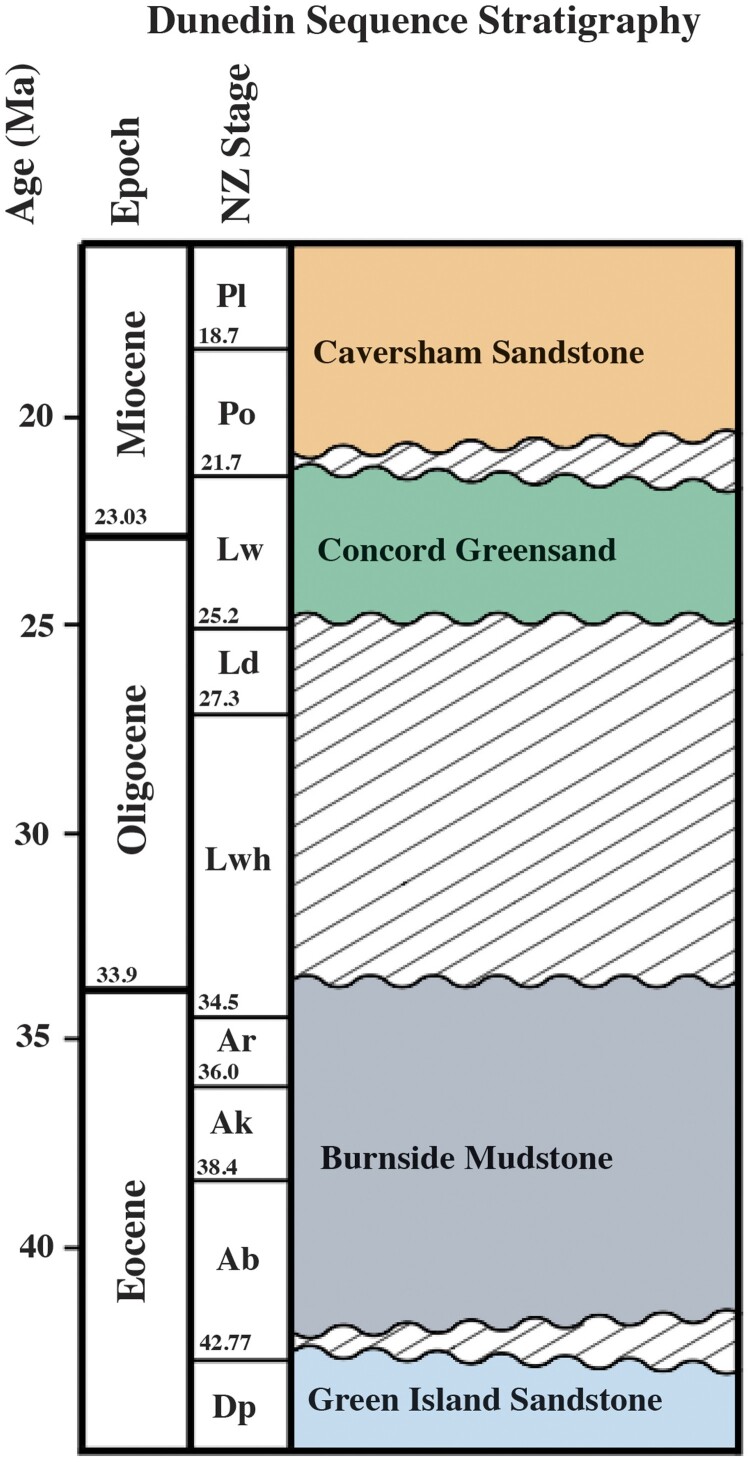
The remains of a unique fossil bony fish were discovered in late Eocene (39.1-36.7 Ma: NZ Kaiatan stage) mudstone at Burnside near Dunedin, New Zealand in the 1930s and subsequently named and described by Frederick Chapman. He interpreted the type specimen as being a large-scaled relative of the modern Thyrsites of the Gempylidae (Scombroidei: Trichiuroidea), known to be swift, large oceanic predators. However, Chapman is unlikely to have seen all of the fossil, and did not discuss the skull and caudal skeleton. Additional material now allows these to be included in the expanded description herein, including key morphologic features of the fish such as the presence of premaxillary fangs. This study describes the rather complex history of the specimen and re-examines this significant fossil fish in the University of Otago collections, giving a more complete understanding of Eothyrsites morphology, paleoecology and relationships. In summary, we suspect Eothyrsites represents an ancestral form of gempylid, closely related to the gemfish group, an important Southern Hemisphere macrofossil record from the Eocene seas around Zealandia.
期刊介绍:
ACS Applied Bio Materials is an interdisciplinary journal publishing original research covering all aspects of biomaterials and biointerfaces including and beyond the traditional biosensing, biomedical and therapeutic applications.
The journal is devoted to reports of new and original experimental and theoretical research of an applied nature that integrates knowledge in the areas of materials, engineering, physics, bioscience, and chemistry into important bio applications. The journal is specifically interested in work that addresses the relationship between structure and function and assesses the stability and degradation of materials under relevant environmental and biological conditions.






 京公网安备 11010802042870号
京ICP备2023020795号-1
京公网安备 11010802042870号
京ICP备2023020795号-1

 分享
分享
 求助内容:
求助内容: 应助结果提醒方式:
 扫码关注我们
