{"title":"Coping strategies and emotional responses adopted by health care workers during COVID-19 pandemic-braving the storm.","authors":"Shruti Sharma, Sarit Sharma, Paul Gunchan, Gautam Lal Parshotam, Namita Bansal, Gurwinder Singh, Arshdeep Kaur","doi":"10.4103/joacp.joacp_196_22","DOIUrl":null,"url":null,"abstract":"<p><strong>Background and aims: </strong>Health care workers (HCWs) are caught in the middle of the COVID-19 pandemic storm and are exposed to a large degree of physical and emotional stress. This study was planned to describe the stressors, stress levels, emotional responses, and coping strategies adopted by HCWs amidst this pandemic.</p><p><strong>Material and methods: </strong>This cross-sectional, web-based survey was conducted after ethics approval, using a structured performa incorporating standardized stress (PSS-10 C), emotional responses (PANAS-10), and coping strategy (Brief COPE) scales. The snowball sampling technique was used to conduct the study and collect data. Data were analyzed using SPSS 26 version (SPSS Inc., Chicago, IL, USA) statistical software. A <i>P</i> value of <0.05 was considered significant.</p><p><strong>Results: </strong>Out of 402 participants (65% doctors and 35% nurses), 87% perceived moderate stress levels, and nearly half of the participants were interns, residents, and medical officers. Infection to self or family members (77.1%), survival of sick patients (75.6%), aggression by patients and relatives (70.3%), and long duty hours (67%) were some of the major stressors as reported by HCWs. The most common positive emotion felt was being alert (19.17 ± 5.57) and negative emotion perceived was being upset (15.6 ± 6.06). Many participants adopted emotion and problem-focused coping strategies such as planning and strategization (68%) and positive reframing (67.6%), whereas dysfunctional coping strategies such as venting and denial were adopted less commonly.</p><p><strong>Conclusion: </strong>Moderate stress levels perceived by HCWs are a cause for concern. Emotional responses of HCWs to stress vary; however, appropriate coping strategies including emotional and problem-focused coping strategies are the need of the hour to tackle pandemic-related stress.</p>","PeriodicalId":1,"journal":{"name":"Accounts of Chemical Research","volume":" ","pages":"628-636"},"PeriodicalIF":17.7000,"publicationDate":"2023-10-01","publicationTypes":"Journal Article","fieldsOfStudy":null,"isOpenAccess":false,"openAccessPdf":"https://www.ncbi.nlm.nih.gov/pmc/articles/PMC10805205/pdf/","citationCount":"0","resultStr":null,"platform":"Semanticscholar","paperid":null,"PeriodicalName":"Accounts of Chemical Research","FirstCategoryId":"1085","ListUrlMain":"https://doi.org/10.4103/joacp.joacp_196_22","RegionNum":1,"RegionCategory":"化学","ArticlePicture":[],"TitleCN":null,"AbstractTextCN":null,"PMCID":null,"EPubDate":"2023/1/12 0:00:00","PubModel":"Epub","JCR":"Q1","JCRName":"CHEMISTRY, MULTIDISCIPLINARY","Score":null,"Total":0}
引用次数: 0
Abstract
Background and aims: Health care workers (HCWs) are caught in the middle of the COVID-19 pandemic storm and are exposed to a large degree of physical and emotional stress. This study was planned to describe the stressors, stress levels, emotional responses, and coping strategies adopted by HCWs amidst this pandemic.
Material and methods: This cross-sectional, web-based survey was conducted after ethics approval, using a structured performa incorporating standardized stress (PSS-10 C), emotional responses (PANAS-10), and coping strategy (Brief COPE) scales. The snowball sampling technique was used to conduct the study and collect data. Data were analyzed using SPSS 26 version (SPSS Inc., Chicago, IL, USA) statistical software. A P value of <0.05 was considered significant.
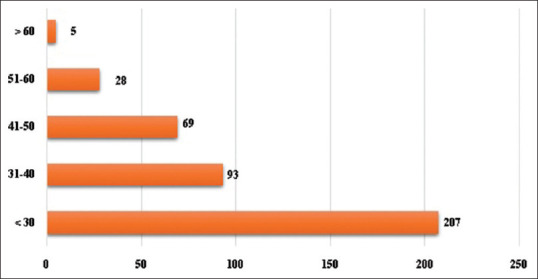
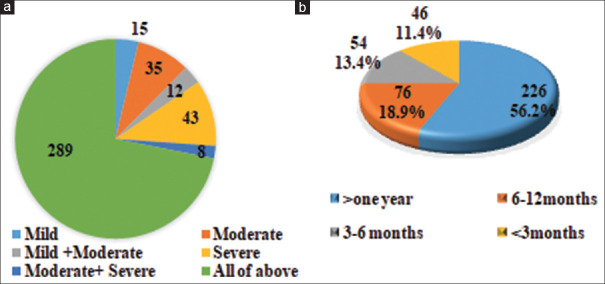
Results: Out of 402 participants (65% doctors and 35% nurses), 87% perceived moderate stress levels, and nearly half of the participants were interns, residents, and medical officers. Infection to self or family members (77.1%), survival of sick patients (75.6%), aggression by patients and relatives (70.3%), and long duty hours (67%) were some of the major stressors as reported by HCWs. The most common positive emotion felt was being alert (19.17 ± 5.57) and negative emotion perceived was being upset (15.6 ± 6.06). Many participants adopted emotion and problem-focused coping strategies such as planning and strategization (68%) and positive reframing (67.6%), whereas dysfunctional coping strategies such as venting and denial were adopted less commonly.
Conclusion: Moderate stress levels perceived by HCWs are a cause for concern. Emotional responses of HCWs to stress vary; however, appropriate coping strategies including emotional and problem-focused coping strategies are the need of the hour to tackle pandemic-related stress.
期刊介绍:
Accounts of Chemical Research presents short, concise and critical articles offering easy-to-read overviews of basic research and applications in all areas of chemistry and biochemistry. These short reviews focus on research from the author’s own laboratory and are designed to teach the reader about a research project. In addition, Accounts of Chemical Research publishes commentaries that give an informed opinion on a current research problem. Special Issues online are devoted to a single topic of unusual activity and significance.
Accounts of Chemical Research replaces the traditional article abstract with an article "Conspectus." These entries synopsize the research affording the reader a closer look at the content and significance of an article. Through this provision of a more detailed description of the article contents, the Conspectus enhances the article's discoverability by search engines and the exposure for the research.





 京公网安备 11010802042870号
京ICP备2023020795号-1
京公网安备 11010802042870号
京ICP备2023020795号-1

 分享
分享
 求助内容:
求助内容: 应助结果提醒方式:
 扫码关注我们
