{"title":"Efficacy of journaling in the management of mental illness: a systematic review and meta-analysis.","authors":"Monika Sohal, Pavneet Singh, Bhupinder Singh Dhillon, Harbir Singh Gill","doi":"10.1136/fmch-2021-001154","DOIUrl":null,"url":null,"abstract":"<p><strong>Objectives: </strong>Journaling is a common non-pharmacological tool in the management of mental illness, however, no clear evidence-based guideline exists informing primary care providers on its use. We seek here to present this synthesis that may begin to inform future research and eventual evidence-based guideline development.</p><p><strong>Design: </strong>Of the 3797 articles retrieved from MEDLINE, EMBASE, PsycINFO, 20 peer-reviewed randomised control trials (31 outcomes) met inclusion criteria. These studies addressed the impact of a journaling intervention on PTSD, other anxiety disorders, depression or a combination of the aforementioned.</p><p><strong>Eligibility criteria: </strong>Peer reviewed, randomised control trials on the impact of journaling on mental illness were included.</p><p><strong>Information sources: </strong>MEDLINE, EMBASE and PsycINFO.</p><p><strong>Results: </strong>The data are highly heterogeneous (control arm=I<sup>2</sup> of 71.2%, intervention arm=I<sup>2</sup> of 83.8%) combined with a B-level Strength of Recommendation Taxonomy recommendation. It was additionally found that there is a significant pre-post psychometric scale difference between control (-0.01, 95% CI -0.03 to 0.00) and intervention arms (-0.06, 95% CI -0.09 to -0.03). This 5% difference between groups indicates that a journaling intervention resulted in a greater reduction in scores on patient health measures. Cohen's d effect size analysis of studies suggests a small to moderate benefit.</p><p><strong>Conclusion: </strong>Further studies are needed to better define the outcomes. Our review suggests that while there is some randomised control data to support the benefit of journaling, high degrees of heterogeneity and methodological flaws limit our ability to definitively draw conclusions about the benefit and effect size of journaling in a wide array of mental illnesses. Given the low risk of adverse effects, low resource requirement and emphasis on self-efficacy, primary care providers should consider this as an adjunct therapy to complement current evidence-based management.</p>","PeriodicalId":2,"journal":{"name":"ACS Applied Bio Materials","volume":" ","pages":""},"PeriodicalIF":4.7000,"publicationDate":"2022-03-01","publicationTypes":"Journal Article","fieldsOfStudy":null,"isOpenAccess":false,"openAccessPdf":"https://www.ncbi.nlm.nih.gov/pmc/articles/PMC8935176/pdf/","citationCount":"0","resultStr":null,"platform":"Semanticscholar","paperid":null,"PeriodicalName":"ACS Applied Bio Materials","FirstCategoryId":"1085","ListUrlMain":"https://doi.org/10.1136/fmch-2021-001154","RegionNum":0,"RegionCategory":null,"ArticlePicture":[],"TitleCN":null,"AbstractTextCN":null,"PMCID":null,"EPubDate":"","PubModel":"","JCR":"Q2","JCRName":"MATERIALS SCIENCE, BIOMATERIALS","Score":null,"Total":0}
引用次数: 0
Abstract
Objectives: Journaling is a common non-pharmacological tool in the management of mental illness, however, no clear evidence-based guideline exists informing primary care providers on its use. We seek here to present this synthesis that may begin to inform future research and eventual evidence-based guideline development.
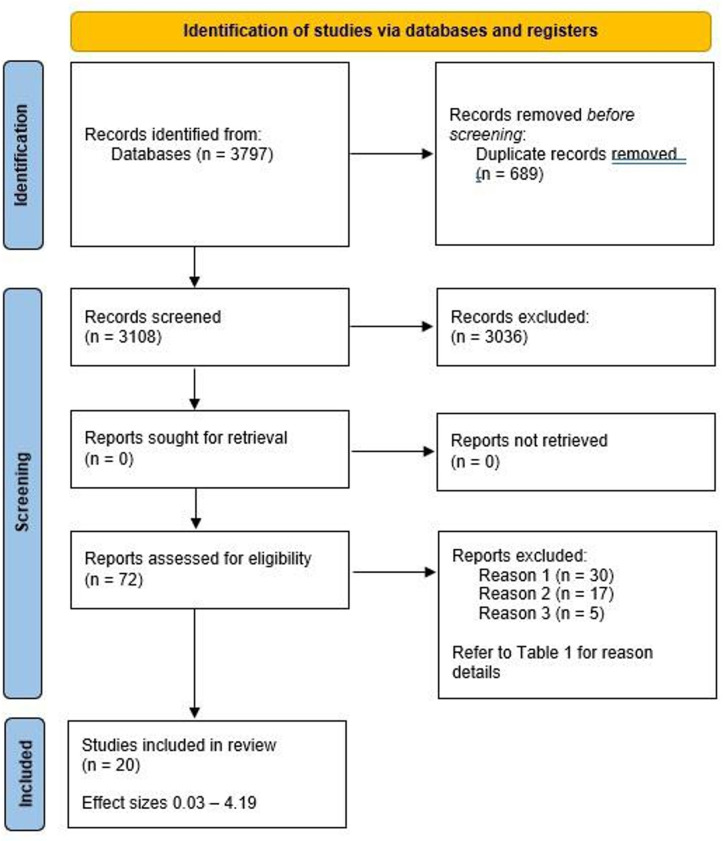
Design: Of the 3797 articles retrieved from MEDLINE, EMBASE, PsycINFO, 20 peer-reviewed randomised control trials (31 outcomes) met inclusion criteria. These studies addressed the impact of a journaling intervention on PTSD, other anxiety disorders, depression or a combination of the aforementioned.
Eligibility criteria: Peer reviewed, randomised control trials on the impact of journaling on mental illness were included.
Information sources: MEDLINE, EMBASE and PsycINFO.
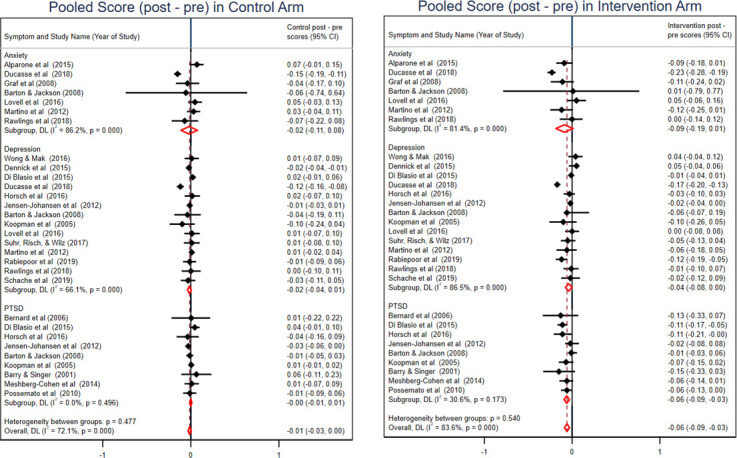
Results: The data are highly heterogeneous (control arm=I2 of 71.2%, intervention arm=I2 of 83.8%) combined with a B-level Strength of Recommendation Taxonomy recommendation. It was additionally found that there is a significant pre-post psychometric scale difference between control (-0.01, 95% CI -0.03 to 0.00) and intervention arms (-0.06, 95% CI -0.09 to -0.03). This 5% difference between groups indicates that a journaling intervention resulted in a greater reduction in scores on patient health measures. Cohen's d effect size analysis of studies suggests a small to moderate benefit.
Conclusion: Further studies are needed to better define the outcomes. Our review suggests that while there is some randomised control data to support the benefit of journaling, high degrees of heterogeneity and methodological flaws limit our ability to definitively draw conclusions about the benefit and effect size of journaling in a wide array of mental illnesses. Given the low risk of adverse effects, low resource requirement and emphasis on self-efficacy, primary care providers should consider this as an adjunct therapy to complement current evidence-based management.
期刊介绍:
ACS Applied Bio Materials is an interdisciplinary journal publishing original research covering all aspects of biomaterials and biointerfaces including and beyond the traditional biosensing, biomedical and therapeutic applications.
The journal is devoted to reports of new and original experimental and theoretical research of an applied nature that integrates knowledge in the areas of materials, engineering, physics, bioscience, and chemistry into important bio applications. The journal is specifically interested in work that addresses the relationship between structure and function and assesses the stability and degradation of materials under relevant environmental and biological conditions.





 京公网安备 11010802042870号
京ICP备2023020795号-1
京公网安备 11010802042870号
京ICP备2023020795号-1

 分享
分享
 求助内容:
求助内容: 应助结果提醒方式:
 扫码关注我们
