Amanda D Boyd, Ashley F Railey, Ying-Chia Hsu, Alex W Kirkpatrick, Amber Fyfe-Johnson, Clemma Muller, Dedra Buchwald
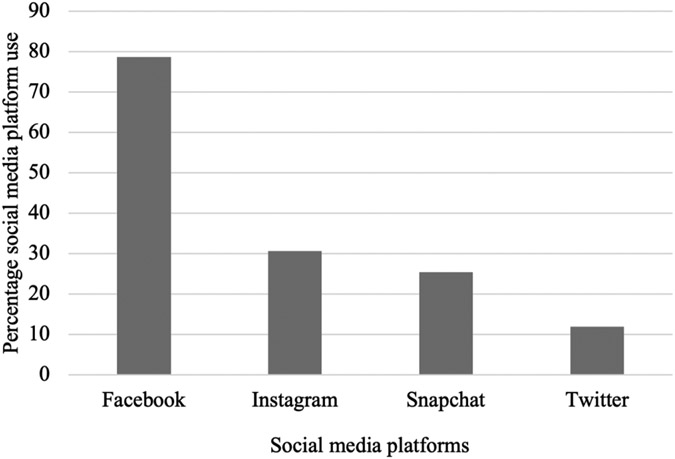
{"title":"Social Media Use among American Indian and Alaska Native People: Implications for Health Communication Strategies.","authors":"Amanda D Boyd, Ashley F Railey, Ying-Chia Hsu, Alex W Kirkpatrick, Amber Fyfe-Johnson, Clemma Muller, Dedra Buchwald","doi":"10.32799/ijih.v18i1.39403","DOIUrl":null,"url":null,"abstract":"<p><p>Patients, health professionals, and communities use social media to communicate information about health determinants and associated risk factors. Studies have highlighted the potential for social media to reach underserved populations, suggesting these platforms can be used to disseminate health information tailored for diverse and hard-to-reach populations. Little is known, however, about the use of social media among American Indian and Alaska Native populations. The objective of this cross-sectional study is to better understand the use of social media platforms to disseminate information across these populations. Our team surveyed 429 American Indian and Alaska Native adults attending cultural events in Washington State on their use of various types of social media. We used logistic regressions to assess participant use of Twitter, Snapchat, Facebook, and Instagram as related to participant demographics, including age, gender, education, and their place of residence (on-reservation, rural off-reservation areas, or large metropolitan areas). Findings showed that Facebook was used by more participants than other platforms (79%), followed by Instagram (31%). Nearly half of participants used only one social media platform (48%). Age was negatively associated with using Instagram (0.8 OR, 95% CI: 0.7, 0.9) and Snapchat (0.6 OR, 95% CI: 0.5, 0.7). College education was associated with higher odds of using an additional social media platform compared to those without any college education (2.0 OR, 95% CI: 1.1, 3.6). Most participants used social media platforms, which suggests these platforms may be a useful tool in disseminating information to American Indian and Alaska Native peoples. Further research should document how social media can be used to effectively disseminate risk and health information and assess whether it can influence health knowledge and behaviors among these populations.</p>","PeriodicalId":1,"journal":{"name":"Accounts of Chemical Research","volume":" ","pages":""},"PeriodicalIF":17.7000,"publicationDate":"2023-06-01","publicationTypes":"Journal Article","fieldsOfStudy":null,"isOpenAccess":false,"openAccessPdf":"https://www.ncbi.nlm.nih.gov/pmc/articles/PMC11293626/pdf/","citationCount":"0","resultStr":null,"platform":"Semanticscholar","paperid":null,"PeriodicalName":"Accounts of Chemical Research","FirstCategoryId":"1085","ListUrlMain":"https://doi.org/10.32799/ijih.v18i1.39403","RegionNum":1,"RegionCategory":"化学","ArticlePicture":[],"TitleCN":null,"AbstractTextCN":null,"PMCID":null,"EPubDate":"2023/7/13 0:00:00","PubModel":"Epub","JCR":"Q1","JCRName":"CHEMISTRY, MULTIDISCIPLINARY","Score":null,"Total":0}
引用次数: 0
Abstract
Patients, health professionals, and communities use social media to communicate information about health determinants and associated risk factors. Studies have highlighted the potential for social media to reach underserved populations, suggesting these platforms can be used to disseminate health information tailored for diverse and hard-to-reach populations. Little is known, however, about the use of social media among American Indian and Alaska Native populations. The objective of this cross-sectional study is to better understand the use of social media platforms to disseminate information across these populations. Our team surveyed 429 American Indian and Alaska Native adults attending cultural events in Washington State on their use of various types of social media. We used logistic regressions to assess participant use of Twitter, Snapchat, Facebook, and Instagram as related to participant demographics, including age, gender, education, and their place of residence (on-reservation, rural off-reservation areas, or large metropolitan areas). Findings showed that Facebook was used by more participants than other platforms (79%), followed by Instagram (31%). Nearly half of participants used only one social media platform (48%). Age was negatively associated with using Instagram (0.8 OR, 95% CI: 0.7, 0.9) and Snapchat (0.6 OR, 95% CI: 0.5, 0.7). College education was associated with higher odds of using an additional social media platform compared to those without any college education (2.0 OR, 95% CI: 1.1, 3.6). Most participants used social media platforms, which suggests these platforms may be a useful tool in disseminating information to American Indian and Alaska Native peoples. Further research should document how social media can be used to effectively disseminate risk and health information and assess whether it can influence health knowledge and behaviors among these populations.
期刊介绍:
Accounts of Chemical Research presents short, concise and critical articles offering easy-to-read overviews of basic research and applications in all areas of chemistry and biochemistry. These short reviews focus on research from the author’s own laboratory and are designed to teach the reader about a research project. In addition, Accounts of Chemical Research publishes commentaries that give an informed opinion on a current research problem. Special Issues online are devoted to a single topic of unusual activity and significance.
Accounts of Chemical Research replaces the traditional article abstract with an article "Conspectus." These entries synopsize the research affording the reader a closer look at the content and significance of an article. Through this provision of a more detailed description of the article contents, the Conspectus enhances the article's discoverability by search engines and the exposure for the research.





 京公网安备 11010802042870号
京ICP备2023020795号-1
京公网安备 11010802042870号
京ICP备2023020795号-1

 分享
分享
 求助内容:
求助内容: 应助结果提醒方式:
 扫码关注我们
