{"title":"Evolving paradigms in antithrombotic therapy for anticoagulated patients undergoing coronary stenting.","authors":"Sergio Buccheri, Dominick J Angiolillo, Davide Capodanno","doi":"10.1177/1753944719891688","DOIUrl":null,"url":null,"abstract":"<p><p>A sizable proportion of coronary artery disease (CAD) patients undergoing percutaneous coronary intervention (PCI) with stent implantation have an indication for treatment with oral anticoagulant therapy (OAC). The coexistence of atrial fibrillation (AF) and the need for PCI expose patients to a higher risk of developing thrombotic complications, and a multitargeted antithrombotic treatment strategy, addressing both platelet- and coagulation-mediated triggering mechanisms of thrombosis, is necessary for ensuring full protection from ischemic hazards. The increased bleeding risk identified with triple antithrombotic therapy has driven the search for alternative treatment modalities and pharmacological combination strategies aimed at achieving an optimal balance between safety and efficacy in this complex clinical scenario. Over a short time period, the paradigms surrounding the management of patients undergoing PCI who require OAC have substantially evolved. In this review, we summarize and critically evaluate the results of recent randomized clinical trials investigating the pharmacological management of patients who, in addition to antiplatelet therapy, have an indication for OAC treatment before or at the time of a PCI procedure.</p>","PeriodicalId":2,"journal":{"name":"ACS Applied Bio Materials","volume":" ","pages":"1753944719891688"},"PeriodicalIF":4.7000,"publicationDate":"2019-01-01","publicationTypes":"Journal Article","fieldsOfStudy":null,"isOpenAccess":false,"openAccessPdf":"https://www.ncbi.nlm.nih.gov/pmc/articles/PMC6902384/pdf/","citationCount":"0","resultStr":null,"platform":"Semanticscholar","paperid":null,"PeriodicalName":"ACS Applied Bio Materials","FirstCategoryId":"1085","ListUrlMain":"https://doi.org/10.1177/1753944719891688","RegionNum":0,"RegionCategory":null,"ArticlePicture":[],"TitleCN":null,"AbstractTextCN":null,"PMCID":null,"EPubDate":"","PubModel":"","JCR":"Q2","JCRName":"MATERIALS SCIENCE, BIOMATERIALS","Score":null,"Total":0}
引用次数: 0
Abstract
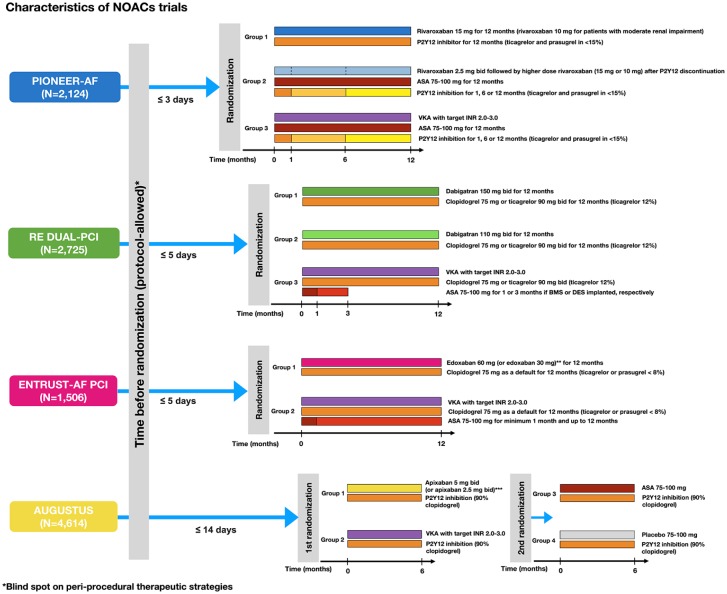
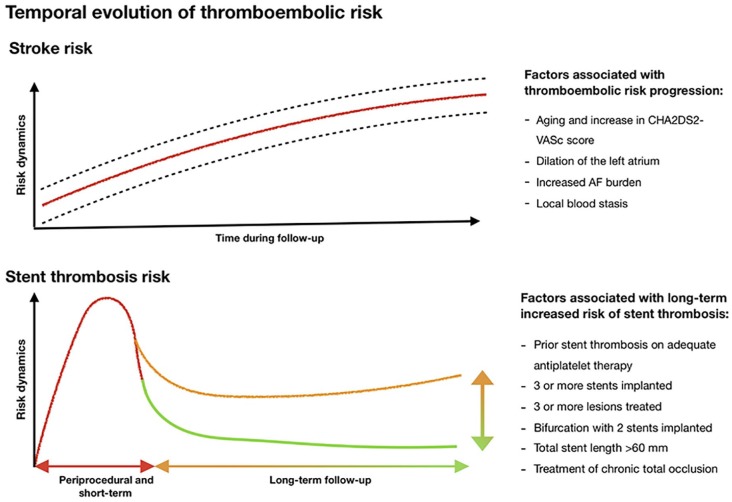
A sizable proportion of coronary artery disease (CAD) patients undergoing percutaneous coronary intervention (PCI) with stent implantation have an indication for treatment with oral anticoagulant therapy (OAC). The coexistence of atrial fibrillation (AF) and the need for PCI expose patients to a higher risk of developing thrombotic complications, and a multitargeted antithrombotic treatment strategy, addressing both platelet- and coagulation-mediated triggering mechanisms of thrombosis, is necessary for ensuring full protection from ischemic hazards. The increased bleeding risk identified with triple antithrombotic therapy has driven the search for alternative treatment modalities and pharmacological combination strategies aimed at achieving an optimal balance between safety and efficacy in this complex clinical scenario. Over a short time period, the paradigms surrounding the management of patients undergoing PCI who require OAC have substantially evolved. In this review, we summarize and critically evaluate the results of recent randomized clinical trials investigating the pharmacological management of patients who, in addition to antiplatelet therapy, have an indication for OAC treatment before or at the time of a PCI procedure.
期刊介绍:
ACS Applied Bio Materials is an interdisciplinary journal publishing original research covering all aspects of biomaterials and biointerfaces including and beyond the traditional biosensing, biomedical and therapeutic applications.
The journal is devoted to reports of new and original experimental and theoretical research of an applied nature that integrates knowledge in the areas of materials, engineering, physics, bioscience, and chemistry into important bio applications. The journal is specifically interested in work that addresses the relationship between structure and function and assesses the stability and degradation of materials under relevant environmental and biological conditions.





 京公网安备 11010802042870号
京ICP备2023020795号-1
京公网安备 11010802042870号
京ICP备2023020795号-1

 分享
分享
 求助内容:
求助内容: 应助结果提醒方式:
 扫码关注我们
