Bettycopa Amit, Wauter Ralph Klok, Peter J Van Der Meer, Nik Sasha Khatrina Khairuddin, Ivan Chiron Yaman, Kho Lip Khoon
{"title":"The Effects of Peat Swamp Forest Patches and Riparian Areas within Large Scale Oil Palm Plantations on Bird Species Richness.","authors":"Bettycopa Amit, Wauter Ralph Klok, Peter J Van Der Meer, Nik Sasha Khatrina Khairuddin, Ivan Chiron Yaman, Kho Lip Khoon","doi":"10.21315/tlsr2023.34.2.7","DOIUrl":null,"url":null,"abstract":"<p><p>It is well established that oil palm is one of the most efficient and productive oil crops. However, oil palm agriculture is also one of the threats to tropical biodiversity. This study aims to investigate how set-aside areas in an oil palm plantation affect bird biodiversity. The research area includes two set-asides areas: peat swamp forest and riparian reserves and two oil palm sites adjacent to reserved forest sites. A total of 3,074 birds comprising 100 species from 34 families were observed in an oil palm plantation landscape on peatland located in the northern part of Borneo, Sarawak, Malaysia. Results showed that efforts by set-asides forest areas in large scale of oil palm dominated landscapes supported distinct bird species richness. High percentage of the canopies and shrub covers had a positive effect on bird species richness at area between oil palm and peat swamp forest. Herbaceous cover with height less than 1 m influenced the abundance of birds in the plantation closed to the peat swamp forest. The set-aside areas in oil palm plantations are essential in supporting bird's refuges and should be part of oil palm landscape management to improve biodiversity conservation. Thus, provided the forest set-aside areas are large enough and risks to biodiversity and habitat are successfully managed, oil palm can play an important role in biodiversity conservation.</p>","PeriodicalId":1,"journal":{"name":"Accounts of Chemical Research","volume":" ","pages":"131-160"},"PeriodicalIF":17.7000,"publicationDate":"2023-06-01","publicationTypes":"Journal Article","fieldsOfStudy":null,"isOpenAccess":false,"openAccessPdf":"https://www.ncbi.nlm.nih.gov/pmc/articles/PMC10735258/pdf/","citationCount":"0","resultStr":null,"platform":"Semanticscholar","paperid":null,"PeriodicalName":"Accounts of Chemical Research","FirstCategoryId":"1085","ListUrlMain":"https://doi.org/10.21315/tlsr2023.34.2.7","RegionNum":1,"RegionCategory":"化学","ArticlePicture":[],"TitleCN":null,"AbstractTextCN":null,"PMCID":null,"EPubDate":"2023/7/21 0:00:00","PubModel":"Epub","JCR":"Q1","JCRName":"CHEMISTRY, MULTIDISCIPLINARY","Score":null,"Total":0}
引用次数: 0
Abstract
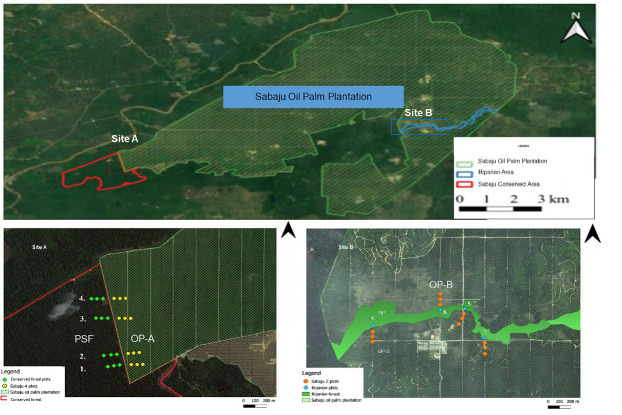
It is well established that oil palm is one of the most efficient and productive oil crops. However, oil palm agriculture is also one of the threats to tropical biodiversity. This study aims to investigate how set-aside areas in an oil palm plantation affect bird biodiversity. The research area includes two set-asides areas: peat swamp forest and riparian reserves and two oil palm sites adjacent to reserved forest sites. A total of 3,074 birds comprising 100 species from 34 families were observed in an oil palm plantation landscape on peatland located in the northern part of Borneo, Sarawak, Malaysia. Results showed that efforts by set-asides forest areas in large scale of oil palm dominated landscapes supported distinct bird species richness. High percentage of the canopies and shrub covers had a positive effect on bird species richness at area between oil palm and peat swamp forest. Herbaceous cover with height less than 1 m influenced the abundance of birds in the plantation closed to the peat swamp forest. The set-aside areas in oil palm plantations are essential in supporting bird's refuges and should be part of oil palm landscape management to improve biodiversity conservation. Thus, provided the forest set-aside areas are large enough and risks to biodiversity and habitat are successfully managed, oil palm can play an important role in biodiversity conservation.
期刊介绍:
Accounts of Chemical Research presents short, concise and critical articles offering easy-to-read overviews of basic research and applications in all areas of chemistry and biochemistry. These short reviews focus on research from the author’s own laboratory and are designed to teach the reader about a research project. In addition, Accounts of Chemical Research publishes commentaries that give an informed opinion on a current research problem. Special Issues online are devoted to a single topic of unusual activity and significance.
Accounts of Chemical Research replaces the traditional article abstract with an article "Conspectus." These entries synopsize the research affording the reader a closer look at the content and significance of an article. Through this provision of a more detailed description of the article contents, the Conspectus enhances the article's discoverability by search engines and the exposure for the research.






 京公网安备 11010802042870号
京ICP备2023020795号-1
京公网安备 11010802042870号
京ICP备2023020795号-1

 分享
分享
 求助内容:
求助内容: 应助结果提醒方式:
 扫码关注我们
