{"title":"A Single Bout of High Heels Dancing Causes an Increase in Circulating Markers of Muscle Tissue Degradation and MMP-3 in Young Healthy Women.","authors":"Jamila Silva, Leandro Borges, Eleine Weimann, Beatriz Belmiro Dias, Flavio Gomes Faria, Beatriz Ferreira Salgado, Paulo de Freitas, Tania Cristina Pithon-Curi, Elaine Hatanaka","doi":"10.1155/2023/8852889","DOIUrl":null,"url":null,"abstract":"<p><p>Prolonged wearing of high heels can cause chronic injury and inflammation. Herein, we investigated the presence of muscle injury, inflammation, and neutrophil function in young women after a single bout of stiletto dance class. Sixteen volunteers (23.4 ± 3.8 years; 61.7 ± 8.1 kg; 23.4 ± 2.3 kg/m<sup>2</sup>; and 27.2 ± 3.8% body fat) participated in the study. The plasma biomarkers matrix metalloproteinase 3 (MMP-3), muscle damage (myoglobin (Mb), total creatine kinase (CK), and lactate dehydrogenase (LDH)), and inflammation (interleukin 8 (IL-8), tumour necrosis factor-alpha (TNF-<i>α</i>), interleukin (IL]-1<i>β</i>, and IL-6) were quantified before and immediately after a single stiletto class (60 min) of moderate intensity. After class, our data showed that the plasma concentration of MMP-3, Mb, and CK increased by 56% (<i>p</i> = 0.04; <i>d</i> = 0.8), 113% (<i>p</i> = 0.007; <i>d</i> = 1.1), and 21% (<i>p</i> < 0.001; <i>d</i> = 0.4), respectively. Reactive oxygen species produced by neutrophils and the plasma concentration of IL-8, TNF-<i>α</i>, IL-1<i>β</i>, and IL-6 were not affected under the study conditions. We concluded that a single bout of stiletto dance class caused muscle damage but did not alter the plasma concentration of proinflammatory cytokines. These findings are crucial in preventing the progress of chronic injuries that are often noted in dancers with synovitis and arthritis.</p>","PeriodicalId":1,"journal":{"name":"Accounts of Chemical Research","volume":" ","pages":"8852889"},"PeriodicalIF":17.7000,"publicationDate":"2023-06-01","publicationTypes":"Journal Article","fieldsOfStudy":null,"isOpenAccess":false,"openAccessPdf":"https://www.ncbi.nlm.nih.gov/pmc/articles/PMC11022759/pdf/","citationCount":"0","resultStr":null,"platform":"Semanticscholar","paperid":null,"PeriodicalName":"Accounts of Chemical Research","FirstCategoryId":"1085","ListUrlMain":"https://doi.org/10.1155/2023/8852889","RegionNum":1,"RegionCategory":"化学","ArticlePicture":[],"TitleCN":null,"AbstractTextCN":null,"PMCID":null,"EPubDate":"2023/1/1 0:00:00","PubModel":"eCollection","JCR":"Q1","JCRName":"CHEMISTRY, MULTIDISCIPLINARY","Score":null,"Total":0}
引用次数: 0
Abstract
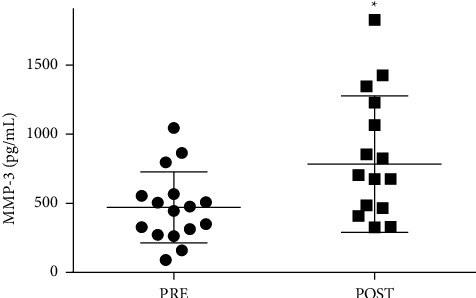
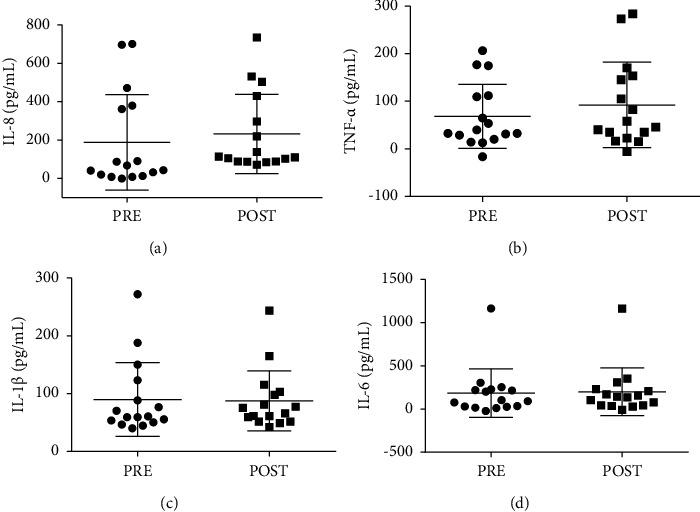
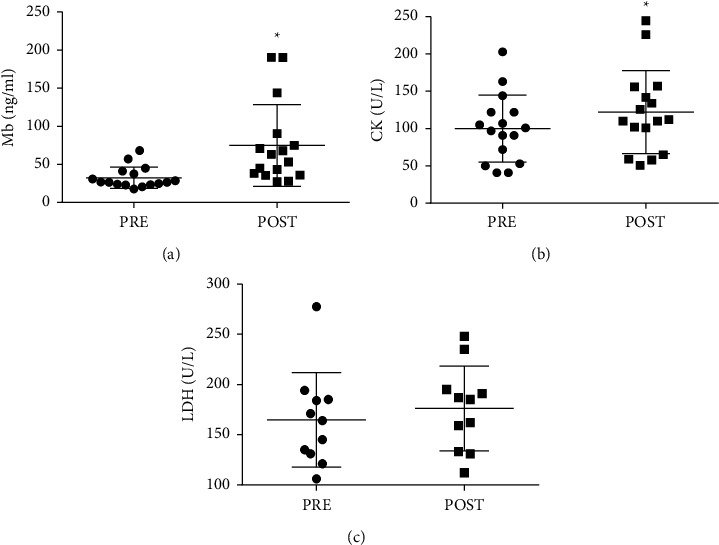
Prolonged wearing of high heels can cause chronic injury and inflammation. Herein, we investigated the presence of muscle injury, inflammation, and neutrophil function in young women after a single bout of stiletto dance class. Sixteen volunteers (23.4 ± 3.8 years; 61.7 ± 8.1 kg; 23.4 ± 2.3 kg/m2; and 27.2 ± 3.8% body fat) participated in the study. The plasma biomarkers matrix metalloproteinase 3 (MMP-3), muscle damage (myoglobin (Mb), total creatine kinase (CK), and lactate dehydrogenase (LDH)), and inflammation (interleukin 8 (IL-8), tumour necrosis factor-alpha (TNF-α), interleukin (IL]-1β, and IL-6) were quantified before and immediately after a single stiletto class (60 min) of moderate intensity. After class, our data showed that the plasma concentration of MMP-3, Mb, and CK increased by 56% (p = 0.04; d = 0.8), 113% (p = 0.007; d = 1.1), and 21% (p < 0.001; d = 0.4), respectively. Reactive oxygen species produced by neutrophils and the plasma concentration of IL-8, TNF-α, IL-1β, and IL-6 were not affected under the study conditions. We concluded that a single bout of stiletto dance class caused muscle damage but did not alter the plasma concentration of proinflammatory cytokines. These findings are crucial in preventing the progress of chronic injuries that are often noted in dancers with synovitis and arthritis.
期刊介绍:
Accounts of Chemical Research presents short, concise and critical articles offering easy-to-read overviews of basic research and applications in all areas of chemistry and biochemistry. These short reviews focus on research from the author’s own laboratory and are designed to teach the reader about a research project. In addition, Accounts of Chemical Research publishes commentaries that give an informed opinion on a current research problem. Special Issues online are devoted to a single topic of unusual activity and significance.
Accounts of Chemical Research replaces the traditional article abstract with an article "Conspectus." These entries synopsize the research affording the reader a closer look at the content and significance of an article. Through this provision of a more detailed description of the article contents, the Conspectus enhances the article's discoverability by search engines and the exposure for the research.




 京公网安备 11010802042870号
京ICP备2023020795号-1
京公网安备 11010802042870号
京ICP备2023020795号-1

 分享
分享
 求助内容:
求助内容: 应助结果提醒方式:
 扫码关注我们
