J C Farris, N B Razavian, M K Farris, J D Ververs, B A Frizzell, C M Leyrer, L F Allen, K M Greven, R T Hughes
{"title":"Head and neck radiotherapy quality assurance conference for dedicated review of delineated targets and organs at risk: results of a prospective study.","authors":"J C Farris, N B Razavian, M K Farris, J D Ververs, B A Frizzell, C M Leyrer, L F Allen, K M Greven, R T Hughes","doi":"10.1017/s1460396922000309","DOIUrl":null,"url":null,"abstract":"<p><strong>Purpose: </strong>Head and neck (HN) radiotherapy (RT) is complex, involving multiple target and organ at risk (OAR) structures delineated by the radiation oncologist. Site-agnostic peer review after RT plan completion is often inadequate for thorough review of these structures. In-depth review of RT contours is critical to maintain high-quality RT and optimal patient outcomes.</p><p><strong>Materials and methods: </strong>In August 2020, the HN RT Quality Assurance Conference, a weekly teleconference that included at least one radiation oncology HN specialist, was activated at our institution. Targets and OARs were reviewed in detail prior to RT plan creation. A parallel implementation study recorded patient factors and outcomes of these reviews. A major change was any modification to the high-dose planning target volume (PTV) or the prescription dose/fractionation; a minor change was modification to the intermediate-dose PTV, low-dose PTV, or any OAR. We analysed the results of consecutive RT contour review in the first 20 months since its initiation.</p><p><strong>Results: </strong>A total of 208 patients treated by 8 providers were reviewed: 86·5% from the primary tertiary care hospital and 13·5% from regional practices. A major change was recommended in 14·4% and implemented in 25 of 30 cases (83·3%). A minor change was recommended in 17·3% and implemented in 32 of 36 cases (88·9%). A survey of participants found that all (<i>n</i> = 11) strongly agreed or agreed that the conference was useful.</p><p><strong>Conclusion: </strong>Dedicated review of RT targets/OARs with a HN subspecialist is associated with substantial rates of suggested and implemented modifications to the contours.</p>","PeriodicalId":0,"journal":{"name":"","volume":" ","pages":""},"PeriodicalIF":0.0,"publicationDate":"2023-01-01","publicationTypes":"Journal Article","fieldsOfStudy":null,"isOpenAccess":false,"openAccessPdf":"https://www.ncbi.nlm.nih.gov/pmc/articles/PMC10827337/pdf/","citationCount":"0","resultStr":null,"platform":"Semanticscholar","paperid":null,"PeriodicalName":"","FirstCategoryId":"1085","ListUrlMain":"https://doi.org/10.1017/s1460396922000309","RegionNum":0,"RegionCategory":null,"ArticlePicture":[],"TitleCN":null,"AbstractTextCN":null,"PMCID":null,"EPubDate":"2022/11/4 0:00:00","PubModel":"Epub","JCR":"","JCRName":"","Score":null,"Total":0}
引用次数: 0
Abstract
Purpose: Head and neck (HN) radiotherapy (RT) is complex, involving multiple target and organ at risk (OAR) structures delineated by the radiation oncologist. Site-agnostic peer review after RT plan completion is often inadequate for thorough review of these structures. In-depth review of RT contours is critical to maintain high-quality RT and optimal patient outcomes.
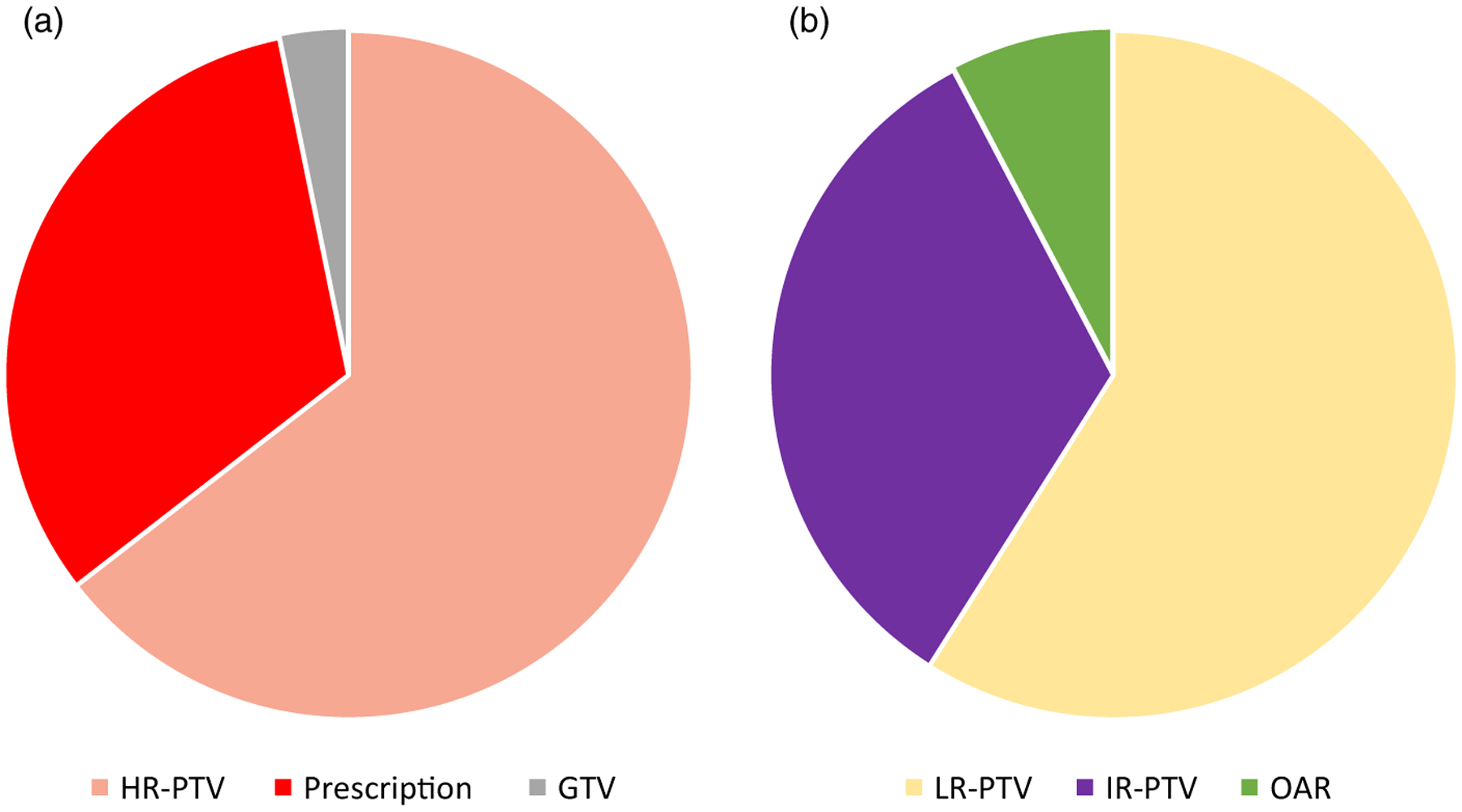
Materials and methods: In August 2020, the HN RT Quality Assurance Conference, a weekly teleconference that included at least one radiation oncology HN specialist, was activated at our institution. Targets and OARs were reviewed in detail prior to RT plan creation. A parallel implementation study recorded patient factors and outcomes of these reviews. A major change was any modification to the high-dose planning target volume (PTV) or the prescription dose/fractionation; a minor change was modification to the intermediate-dose PTV, low-dose PTV, or any OAR. We analysed the results of consecutive RT contour review in the first 20 months since its initiation.
Results: A total of 208 patients treated by 8 providers were reviewed: 86·5% from the primary tertiary care hospital and 13·5% from regional practices. A major change was recommended in 14·4% and implemented in 25 of 30 cases (83·3%). A minor change was recommended in 17·3% and implemented in 32 of 36 cases (88·9%). A survey of participants found that all (n = 11) strongly agreed or agreed that the conference was useful.
Conclusion: Dedicated review of RT targets/OARs with a HN subspecialist is associated with substantial rates of suggested and implemented modifications to the contours.

 分享
分享



 京公网安备 11010802042870号
京ICP备2023020795号-1
京公网安备 11010802042870号
京ICP备2023020795号-1

 求助内容:
求助内容: 应助结果提醒方式:
 扫码关注我们
