Marilyn N. Martinez , Jonathan P. Mochel , Devendra Pade
{"title":"Considerations in the extrapolation of drug toxicity between humans and dogs","authors":"Marilyn N. Martinez , Jonathan P. Mochel , Devendra Pade","doi":"10.1016/j.cotox.2020.05.005","DOIUrl":null,"url":null,"abstract":"<div><p>The dog is an important species used in preclinical studies<span> in support of human drug product development. Likewise, because of the many active pharmaceutical ingredients with therapeutic relevance to both humans and dogs, extrapolation can also occur in the reverse, from human to dog. In either situation, it is important to appreciate species-specific factors influencing drug pharmacokinetics (absorption, metabolism, disposition, and elimination) and the potential impact of disease on the applicability of these extrapolations. Furthermore, tools such as physiologically based pharmacokinetic models not only enable investigators to extrapolate species-specific data on systemic or organ exposure to the parent compound and metabolite(s) but also facilitate an interrogation of factors that can lead to species-specific differences in drug effectiveness and toxicity. In this review, we explore the factors and tools that comprise our current arsenal for understanding and predicting human–canine comparative toxicity.</span></p></div>","PeriodicalId":37736,"journal":{"name":"Current Opinion in Toxicology","volume":"23 ","pages":"Pages 98-105"},"PeriodicalIF":3.6000,"publicationDate":"2020-10-01","publicationTypes":"Journal Article","fieldsOfStudy":null,"isOpenAccess":false,"openAccessPdf":"https://sci-hub-pdf.com/10.1016/j.cotox.2020.05.005","citationCount":"3","resultStr":null,"platform":"Semanticscholar","paperid":null,"PeriodicalName":"Current Opinion in Toxicology","FirstCategoryId":"1085","ListUrlMain":"https://www.sciencedirect.com/science/article/pii/S2468202020300395","RegionNum":0,"RegionCategory":null,"ArticlePicture":[],"TitleCN":null,"AbstractTextCN":null,"PMCID":null,"EPubDate":"2020/6/6 0:00:00","PubModel":"Epub","JCR":"Q1","JCRName":"TOXICOLOGY","Score":null,"Total":0}
引用次数: 3
Abstract
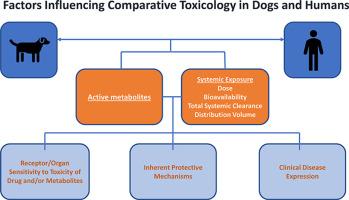
The dog is an important species used in preclinical studies in support of human drug product development. Likewise, because of the many active pharmaceutical ingredients with therapeutic relevance to both humans and dogs, extrapolation can also occur in the reverse, from human to dog. In either situation, it is important to appreciate species-specific factors influencing drug pharmacokinetics (absorption, metabolism, disposition, and elimination) and the potential impact of disease on the applicability of these extrapolations. Furthermore, tools such as physiologically based pharmacokinetic models not only enable investigators to extrapolate species-specific data on systemic or organ exposure to the parent compound and metabolite(s) but also facilitate an interrogation of factors that can lead to species-specific differences in drug effectiveness and toxicity. In this review, we explore the factors and tools that comprise our current arsenal for understanding and predicting human–canine comparative toxicity.
期刊介绍:
The aims and scope of Current Opinion in Toxicology is to systematically provide the reader with timely and provocative views and opinions of the highest qualified and recognized experts on current advances in selected topics within the field of toxicology. The goal is that Current Opinion in Toxicology will be an invaluable source of information and perspective for researchers, teachers, managers and administrators, policy makers and students. Division of the subject into sections: For this purpose, the scope of Toxicology is divided into six selected high impact themed sections, each of which is reviewed once a year: Mechanistic Toxicology, Metabolic Toxicology, Risk assessment in Toxicology, Genomic Toxicology, Systems Toxicology, Translational Toxicology.




 京公网安备 11010802042870号
京ICP备2023020795号-1
京公网安备 11010802042870号
京ICP备2023020795号-1

 分享
分享
 求助内容:
求助内容: 应助结果提醒方式:
 扫码关注我们
