Construction of Novel Yeast Strains from Candida tropicalis KBKTI 10.5.1 and Saccharomyces cerevisiae DBY1 to Improve the Performance of Ethanol Production Using Lignocellulosic Hydrolysate.
Jamaluddin, Eny Ida Riyanti, Nisa Rachmania Mubarik, Edy Listanto
{"title":"Construction of Novel Yeast Strains from <i>Candida tropicalis</i> KBKTI 10.5.1 and <i>Saccharomyces cerevisiae</i> DBY1 to Improve the Performance of Ethanol Production Using Lignocellulosic Hydrolysate.","authors":"Jamaluddin, Eny Ida Riyanti, Nisa Rachmania Mubarik, Edy Listanto","doi":"10.21315/tlsr2023.34.2.5","DOIUrl":null,"url":null,"abstract":"<p><p>Increased consumption of xylose-glucose and yeast tolerance to lignocellulosic hydrolysate are the keys to the success of second-generation bioethanol production. <i>Candida tropicalis</i> KBKTI 10.5.1 is a new isolated strain that has the ability to ferment xylose. In contrast to <i>Saccharomyces cerevisiae</i> DBY1 which only can produce ethanol from glucose fermentation. The research objective is the application of the genome shuffling method to increase the performance of ethanol production using lignocellulosic hydrolysate. Mutants were selected on xylose and glucose substrates separately and using random amplified polymorphic DNA (RAPD) analysis. The ethanol production using lignocellulosic hydrolysate by parents and mutants was evaluated using a batch fermentation system. Concentrations of ethanol, residual sugars, and by-products such as glycerol, lactate and acetate were measured using HPLC machine equipped with Hiplex H for carbohydrate column and a refraction index detector (RID). Ethanol produced by Fcs1 and Fcs4 mutants on acid hydrolysate increased by 26.58% and 24.17% from parent DBY1, by 14.94% and 21.84% from parent KBKTI 10.5.1. In contrast to the increase in ethanol production on alkaline hydrolysate, Fcs1 and Fcs4 mutants only experienced an increase in ethanol production by 1.35% from the parent KBKTI 10.5.1. Ethanol productivity by Fcs1 and Fcs4 mutants on acid hydrolysate reached 0.042 g/L/h and 0.044 g/L/h. The recombination of the genomes of different yeast species resulted in novel yeast strains that improved resistance performance and ethanol production on lignocellulosic hydrolysates.</p>","PeriodicalId":1,"journal":{"name":"Accounts of Chemical Research","volume":" ","pages":"81-107"},"PeriodicalIF":17.7000,"publicationDate":"2023-06-01","publicationTypes":"Journal Article","fieldsOfStudy":null,"isOpenAccess":false,"openAccessPdf":"https://www.ncbi.nlm.nih.gov/pmc/articles/PMC10735269/pdf/","citationCount":"0","resultStr":null,"platform":"Semanticscholar","paperid":null,"PeriodicalName":"Accounts of Chemical Research","FirstCategoryId":"1085","ListUrlMain":"https://doi.org/10.21315/tlsr2023.34.2.5","RegionNum":1,"RegionCategory":"化学","ArticlePicture":[],"TitleCN":null,"AbstractTextCN":null,"PMCID":null,"EPubDate":"2023/7/21 0:00:00","PubModel":"Epub","JCR":"Q1","JCRName":"CHEMISTRY, MULTIDISCIPLINARY","Score":null,"Total":0}
引用次数: 0
Abstract
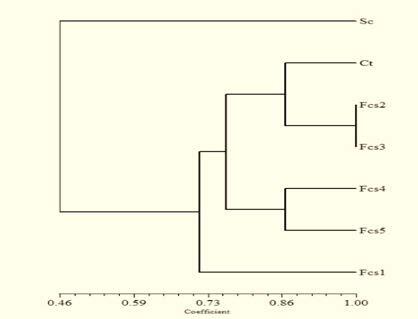
Increased consumption of xylose-glucose and yeast tolerance to lignocellulosic hydrolysate are the keys to the success of second-generation bioethanol production. Candida tropicalis KBKTI 10.5.1 is a new isolated strain that has the ability to ferment xylose. In contrast to Saccharomyces cerevisiae DBY1 which only can produce ethanol from glucose fermentation. The research objective is the application of the genome shuffling method to increase the performance of ethanol production using lignocellulosic hydrolysate. Mutants were selected on xylose and glucose substrates separately and using random amplified polymorphic DNA (RAPD) analysis. The ethanol production using lignocellulosic hydrolysate by parents and mutants was evaluated using a batch fermentation system. Concentrations of ethanol, residual sugars, and by-products such as glycerol, lactate and acetate were measured using HPLC machine equipped with Hiplex H for carbohydrate column and a refraction index detector (RID). Ethanol produced by Fcs1 and Fcs4 mutants on acid hydrolysate increased by 26.58% and 24.17% from parent DBY1, by 14.94% and 21.84% from parent KBKTI 10.5.1. In contrast to the increase in ethanol production on alkaline hydrolysate, Fcs1 and Fcs4 mutants only experienced an increase in ethanol production by 1.35% from the parent KBKTI 10.5.1. Ethanol productivity by Fcs1 and Fcs4 mutants on acid hydrolysate reached 0.042 g/L/h and 0.044 g/L/h. The recombination of the genomes of different yeast species resulted in novel yeast strains that improved resistance performance and ethanol production on lignocellulosic hydrolysates.
期刊介绍:
Accounts of Chemical Research presents short, concise and critical articles offering easy-to-read overviews of basic research and applications in all areas of chemistry and biochemistry. These short reviews focus on research from the author’s own laboratory and are designed to teach the reader about a research project. In addition, Accounts of Chemical Research publishes commentaries that give an informed opinion on a current research problem. Special Issues online are devoted to a single topic of unusual activity and significance.
Accounts of Chemical Research replaces the traditional article abstract with an article "Conspectus." These entries synopsize the research affording the reader a closer look at the content and significance of an article. Through this provision of a more detailed description of the article contents, the Conspectus enhances the article's discoverability by search engines and the exposure for the research.






 京公网安备 11010802042870号
京ICP备2023020795号-1
京公网安备 11010802042870号
京ICP备2023020795号-1

 分享
分享
 求助内容:
求助内容: 应助结果提醒方式:
 扫码关注我们
