Dylon Zeng, Ivy Liu, Ying Bi, Ross Vennell, Dana Briscoe, Bing Xue, Mengjie Zhang
{"title":"A new multi-object tracking pipeline based on computer vision techniques for mussel farms.","authors":"Dylon Zeng, Ivy Liu, Ying Bi, Ross Vennell, Dana Briscoe, Bing Xue, Mengjie Zhang","doi":"10.1080/03036758.2023.2240466","DOIUrl":null,"url":null,"abstract":"<p><p>Mussel farming is a thriving industry in New Zealand and is crucial to local communities. Currently, farmers keep track of their mussel floats by taking regular boat trips to the farm. This is a labour-intensive assignment. Integrating computer vision techniques into aquafarms will significantly alleviate the pressure on mussel farmers. However, tracking a large number of identical targets under various image conditions raises a considerable challenge. This paper proposes a new computer vision-based pipeline to automatically detect and track mussel floats in images. The proposed pipeline consists of three steps, i.e. float detection, float description, and float matching. In the first step, a new detector based on several image processing operators is used to detect mussel floats of all sizes in the images. Then a new descriptor is employed to provide unique identity markers to mussel floats based on the relative positions of their neighbours. Finally, float matching across adjacent frames is done by image registration. Experimental results on the images taken in Marlborough Sounds New Zealand have shown that the proposed pipeline achieves an 82.9% MOTA - 18% higher than current deep learning-based approaches - without the need for training.</p>","PeriodicalId":49984,"journal":{"name":"Journal of the Royal Society of New Zealand","volume":" ","pages":"62-81"},"PeriodicalIF":2.1000,"publicationDate":"2023-07-30","publicationTypes":"Journal Article","fieldsOfStudy":null,"isOpenAccess":false,"openAccessPdf":"https://www.ncbi.nlm.nih.gov/pmc/articles/PMC11619019/pdf/","citationCount":"0","resultStr":null,"platform":"Semanticscholar","paperid":null,"PeriodicalName":"Journal of the Royal Society of New Zealand","FirstCategoryId":"103","ListUrlMain":"https://doi.org/10.1080/03036758.2023.2240466","RegionNum":4,"RegionCategory":"综合性期刊","ArticlePicture":[],"TitleCN":null,"AbstractTextCN":null,"PMCID":null,"EPubDate":"2025/1/1 0:00:00","PubModel":"eCollection","JCR":"Q2","JCRName":"MULTIDISCIPLINARY SCIENCES","Score":null,"Total":0}
引用次数: 0
Abstract
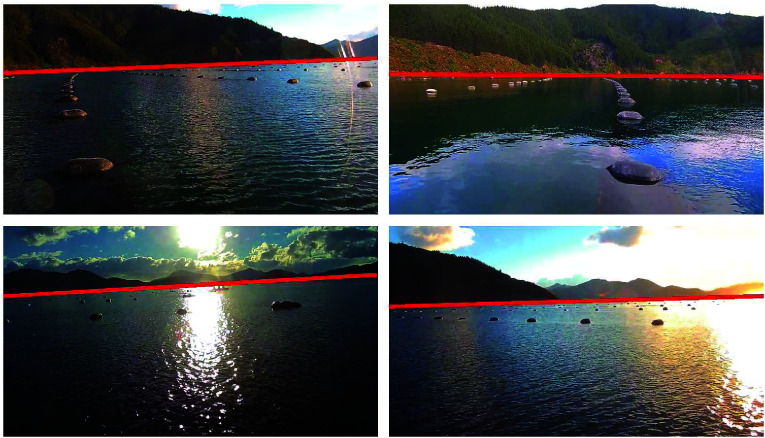
Mussel farming is a thriving industry in New Zealand and is crucial to local communities. Currently, farmers keep track of their mussel floats by taking regular boat trips to the farm. This is a labour-intensive assignment. Integrating computer vision techniques into aquafarms will significantly alleviate the pressure on mussel farmers. However, tracking a large number of identical targets under various image conditions raises a considerable challenge. This paper proposes a new computer vision-based pipeline to automatically detect and track mussel floats in images. The proposed pipeline consists of three steps, i.e. float detection, float description, and float matching. In the first step, a new detector based on several image processing operators is used to detect mussel floats of all sizes in the images. Then a new descriptor is employed to provide unique identity markers to mussel floats based on the relative positions of their neighbours. Finally, float matching across adjacent frames is done by image registration. Experimental results on the images taken in Marlborough Sounds New Zealand have shown that the proposed pipeline achieves an 82.9% MOTA - 18% higher than current deep learning-based approaches - without the need for training.
期刊介绍:
Aims: The Journal of the Royal Society of New Zealand reflects the role of Royal Society Te Aparangi in fostering research and debate across natural sciences, social sciences, and the humanities in New Zealand/Aotearoa and the surrounding Pacific. Research published in Journal of the Royal Society of New Zealand advances scientific knowledge, informs government policy, public awareness and broader society, and is read by researchers worldwide.





 京公网安备 11010802042870号
京ICP备2023020795号-1
京公网安备 11010802042870号
京ICP备2023020795号-1

 分享
分享
 求助内容:
求助内容: 应助结果提醒方式:
 扫码关注我们
