{"title":"Current Strategies in Treating Cytokine Release Syndrome Triggered by Coronavirus SARS-CoV-2.","authors":"Long G Wang, Luxi Wang","doi":"10.2147/ITT.S360151","DOIUrl":null,"url":null,"abstract":"<p><p>Since the beginning of the SARS-CoV-2 pandemic, the treatments and management of the deadly COVID-19 disease have made great progress. The strategies for developing novel treatments against COVID-19 include antiviral small molecule drugs, cell and gene therapies, immunomodulators, neutralizing antibodies, and combination therapies. Among them, immunomodulators are the most studied treatments. The small molecule antiviral drugs and immunoregulators are expected to be effective against viral variants of SARS-CoV-2 as these drugs target either conservative parts of the virus or common pathways of inflammation. Although the immunoregulators have shown benefits in reducing mortality of cytokine release syndrome (CRS) triggered by SARS-CoV-2 infections, extensive investigations on this class of treatment to launch novel therapies that substantially improve efficacy and reduce side effects are still warranted. Moreover, great challenges have emerged as the SARS-CoV-2 virus quickly, frequently, and continuously evolved. This review provides an update and summarizes the recent advances in the treatment of COVID-19 and in particular emphasized the strategies in managing CRS triggered by SARS-CoV-2. A brief perspective in the battle against the deadly disease was also provided.</p>","PeriodicalId":30986,"journal":{"name":"ImmunoTargets and Therapy","volume":"11 1","pages":"23-35"},"PeriodicalIF":4.4000,"publicationDate":"2022-05-18","publicationTypes":"Journal Article","fieldsOfStudy":null,"isOpenAccess":false,"openAccessPdf":"https://www.ncbi.nlm.nih.gov/pmc/articles/PMC9124488/pdf/","citationCount":"0","resultStr":null,"platform":"Semanticscholar","paperid":null,"PeriodicalName":"ImmunoTargets and Therapy","FirstCategoryId":"1085","ListUrlMain":"https://doi.org/10.2147/ITT.S360151","RegionNum":0,"RegionCategory":null,"ArticlePicture":[],"TitleCN":null,"AbstractTextCN":null,"PMCID":null,"EPubDate":"2022/1/1 0:00:00","PubModel":"eCollection","JCR":"Q1","JCRName":"IMMUNOLOGY","Score":null,"Total":0}
引用次数: 0
Abstract
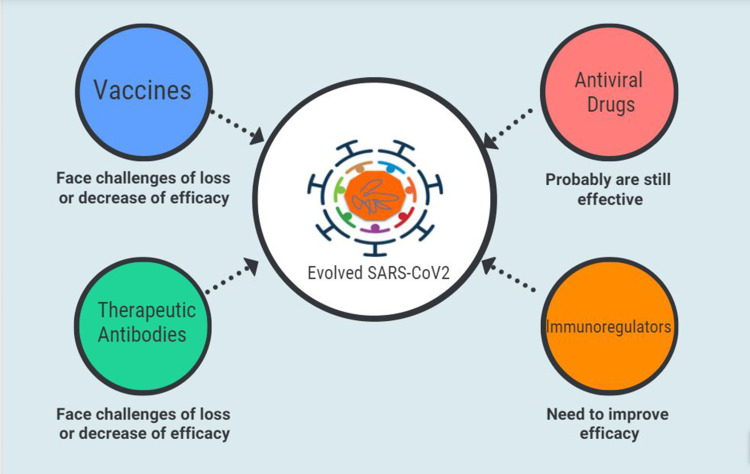
Since the beginning of the SARS-CoV-2 pandemic, the treatments and management of the deadly COVID-19 disease have made great progress. The strategies for developing novel treatments against COVID-19 include antiviral small molecule drugs, cell and gene therapies, immunomodulators, neutralizing antibodies, and combination therapies. Among them, immunomodulators are the most studied treatments. The small molecule antiviral drugs and immunoregulators are expected to be effective against viral variants of SARS-CoV-2 as these drugs target either conservative parts of the virus or common pathways of inflammation. Although the immunoregulators have shown benefits in reducing mortality of cytokine release syndrome (CRS) triggered by SARS-CoV-2 infections, extensive investigations on this class of treatment to launch novel therapies that substantially improve efficacy and reduce side effects are still warranted. Moreover, great challenges have emerged as the SARS-CoV-2 virus quickly, frequently, and continuously evolved. This review provides an update and summarizes the recent advances in the treatment of COVID-19 and in particular emphasized the strategies in managing CRS triggered by SARS-CoV-2. A brief perspective in the battle against the deadly disease was also provided.
期刊介绍:
Immuno Targets and Therapy is an international, peer-reviewed open access journal focusing on the immunological basis of diseases, potential targets for immune based therapy and treatment protocols employed to improve patient management. Basic immunology and physiology of the immune system in health, and disease will be also covered.In addition, the journal will focus on the impact of management programs and new therapeutic agents and protocols on patient perspectives such as quality of life, adherence and satisfaction.




 京公网安备 11010802042870号
京ICP备2023020795号-1
京公网安备 11010802042870号
京ICP备2023020795号-1

 分享
分享
 求助内容:
求助内容: 应助结果提醒方式:
 扫码关注我们
