Gillianne Geet Yi Lai, Xin Min Cheng, Yvonne Li'en Ang, Kevin Lee Min Chua, Jens Samol, Ross Soo, Daniel Shao Weng Tan, Tony Kiat Hon Lim, Darren Wan Teck Lim
{"title":"Molecular testing in non-small cell lung cancer: A consensus recommendation.","authors":"Gillianne Geet Yi Lai, Xin Min Cheng, Yvonne Li'en Ang, Kevin Lee Min Chua, Jens Samol, Ross Soo, Daniel Shao Weng Tan, Tony Kiat Hon Lim, Darren Wan Teck Lim","doi":"10.47102/annals-acadmedsg.2022473","DOIUrl":null,"url":null,"abstract":"<p><strong>Introduction: </strong>Lung cancer remains an important cause of cancer-related mortality in Singapore, with a greater proportion of non-smokers diagnosed with non-small cell lung cancer (NSCLC) in the past 2 decades. The higher prevalence of targetable genomic alterations in lung cancer diagnosed in Singapore compared with countries in the West, as well as the expanding therapeutic landscape for NSCLC in the era of precision medicine, are both factors that underscore the importance of efficient and effective molecular profiling.</p><p><strong>Method: </strong>This article provides consensus recommendations for biomarker testing for early-stage to advanced NSCLC. These recommendations are made from a multidisciplinary group of lung cancer experts in Singapore with the aim of improving patient care and long-term outcomes.</p><p><strong>Results: </strong>The recommendations address the considerations in both the advanced and early-stage settings, and take into account challenges in the implementation of biomarker testing as well as the limitations of available data. Biomarker testing for both tumour tissue and liquid biopsy are discussed.</p><p><strong>Conclusion: </strong>This consensus statement discusses the approaches and challenges of integrating molecular testing into clinical practice for patients with early- to late-stage NSCLC, and provides practical recommendations for biomarker testing for NSCLC patients in Singapore.</p>","PeriodicalId":5,"journal":{"name":"ACS Applied Materials & Interfaces","volume":" ","pages":"364-373"},"PeriodicalIF":8.2000,"publicationDate":"2023-07-28","publicationTypes":"Journal Article","fieldsOfStudy":null,"isOpenAccess":false,"openAccessPdf":"","citationCount":"0","resultStr":null,"platform":"Semanticscholar","paperid":null,"PeriodicalName":"ACS Applied Materials & Interfaces","FirstCategoryId":"88","ListUrlMain":"https://doi.org/10.47102/annals-acadmedsg.2022473","RegionNum":2,"RegionCategory":"材料科学","ArticlePicture":[],"TitleCN":null,"AbstractTextCN":null,"PMCID":null,"EPubDate":"","PubModel":"","JCR":"Q1","JCRName":"MATERIALS SCIENCE, MULTIDISCIPLINARY","Score":null,"Total":0}
引用次数: 0
Abstract
Introduction: Lung cancer remains an important cause of cancer-related mortality in Singapore, with a greater proportion of non-smokers diagnosed with non-small cell lung cancer (NSCLC) in the past 2 decades. The higher prevalence of targetable genomic alterations in lung cancer diagnosed in Singapore compared with countries in the West, as well as the expanding therapeutic landscape for NSCLC in the era of precision medicine, are both factors that underscore the importance of efficient and effective molecular profiling.
Method: This article provides consensus recommendations for biomarker testing for early-stage to advanced NSCLC. These recommendations are made from a multidisciplinary group of lung cancer experts in Singapore with the aim of improving patient care and long-term outcomes.
Results: The recommendations address the considerations in both the advanced and early-stage settings, and take into account challenges in the implementation of biomarker testing as well as the limitations of available data. Biomarker testing for both tumour tissue and liquid biopsy are discussed.
Conclusion: This consensus statement discusses the approaches and challenges of integrating molecular testing into clinical practice for patients with early- to late-stage NSCLC, and provides practical recommendations for biomarker testing for NSCLC patients in Singapore.
期刊介绍:
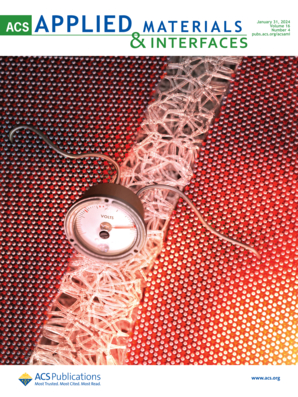
ACS Applied Materials & Interfaces is a leading interdisciplinary journal that brings together chemists, engineers, physicists, and biologists to explore the development and utilization of newly-discovered materials and interfacial processes for specific applications. Our journal has experienced remarkable growth since its establishment in 2009, both in terms of the number of articles published and the impact of the research showcased. We are proud to foster a truly global community, with the majority of published articles originating from outside the United States, reflecting the rapid growth of applied research worldwide.



 京公网安备 11010802042870号
京ICP备2023020795号-1
京公网安备 11010802042870号
京ICP备2023020795号-1

 分享
分享
 求助内容:
求助内容: 应助结果提醒方式:
 扫码关注我们
