{"title":"Ko te mana o te tamaiti te aro o tātou mahi: Listening to voices from Tai Tokerau to re-frame literacies.","authors":"Maia Hetaraka, Selena Meiklejohn-Whiu, Melinda Webber, Rebecca Jesson","doi":"10.1007/s40841-023-00290-7","DOIUrl":null,"url":null,"abstract":"<p><p>Western literacy theories and models often reflect Eurocentric notions of literacy and literacy practices. In Aotearoa New Zealand, the prevalence of these conceptualisations is linked to issues of power and result in a narrow and inaccurate framing of Māori tamariki (children). In this article Tiritiria, a Māori philosophical view of knowledge, knowledge generation and knowledge exchange is used alongside Webber and Macfarlane's (2020) Mana Model to challenge this dominant framing of literacy. Using the whakataukī 'Ko te mana o te tamaiti te aro o tātou mahi', translated literally as 'Let the mana of the child guide our work', tamariki Māori are (re)positioned as maurea (treasures) to further support the (re)framing of literacies. In this study we focus on listening to the voices of whānau Māori from Te Tai Tokerau (Northland, New Zealand), including the voices of tūpuna (ancestors). Through a developing understanding of tiritiria and an analysis of data sets from Tai Tokerau a nascent definition of literacies, as multitudinous, practical enactments of tirititia, emerged. Findings indicated that Māori literacy practices (both traditional and contemporary) move beyond subject learning, to incorporate multiple interpersonal, cultural, environmental and textual processes of knowledge transfer which affirm the inherent and inherited mana of tamariki.</p>","PeriodicalId":1,"journal":{"name":"Accounts of Chemical Research","volume":" ","pages":"291-307"},"PeriodicalIF":17.7000,"publicationDate":"2023-01-01","publicationTypes":"Journal Article","fieldsOfStudy":null,"isOpenAccess":false,"openAccessPdf":"https://www.ncbi.nlm.nih.gov/pmc/articles/PMC10661808/pdf/","citationCount":"0","resultStr":null,"platform":"Semanticscholar","paperid":null,"PeriodicalName":"Accounts of Chemical Research","FirstCategoryId":"1085","ListUrlMain":"https://doi.org/10.1007/s40841-023-00290-7","RegionNum":1,"RegionCategory":"化学","ArticlePicture":[],"TitleCN":null,"AbstractTextCN":null,"PMCID":null,"EPubDate":"2023/6/6 0:00:00","PubModel":"Epub","JCR":"Q1","JCRName":"CHEMISTRY, MULTIDISCIPLINARY","Score":null,"Total":0}
引用次数: 0
Abstract
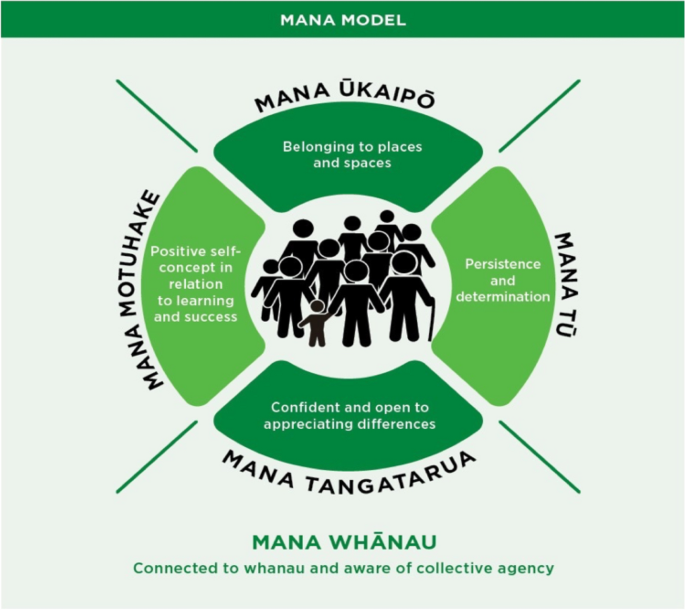
Western literacy theories and models often reflect Eurocentric notions of literacy and literacy practices. In Aotearoa New Zealand, the prevalence of these conceptualisations is linked to issues of power and result in a narrow and inaccurate framing of Māori tamariki (children). In this article Tiritiria, a Māori philosophical view of knowledge, knowledge generation and knowledge exchange is used alongside Webber and Macfarlane's (2020) Mana Model to challenge this dominant framing of literacy. Using the whakataukī 'Ko te mana o te tamaiti te aro o tātou mahi', translated literally as 'Let the mana of the child guide our work', tamariki Māori are (re)positioned as maurea (treasures) to further support the (re)framing of literacies. In this study we focus on listening to the voices of whānau Māori from Te Tai Tokerau (Northland, New Zealand), including the voices of tūpuna (ancestors). Through a developing understanding of tiritiria and an analysis of data sets from Tai Tokerau a nascent definition of literacies, as multitudinous, practical enactments of tirititia, emerged. Findings indicated that Māori literacy practices (both traditional and contemporary) move beyond subject learning, to incorporate multiple interpersonal, cultural, environmental and textual processes of knowledge transfer which affirm the inherent and inherited mana of tamariki.
西方的扫盲理论和模式往往反映了以欧洲为中心的扫盲观念和扫盲实践。在新西兰奥特罗阿,这些概念的流行与权力问题有关,并导致对Māori tamariki(儿童)的狭隘和不准确的框架。在本文Tiritiria中,Māori关于知识、知识生成和知识交换的哲学观点与韦伯和麦克法兰(2020)的Mana模型一起使用,以挑战这种占主导地位的识字框架。使用whakatauk 'Ko te mana o te tamaiti te aro o tātou mahi',直译为“让儿童的mana指导我们的工作”,tamariki Māori被(重新)定位为maurea(宝藏),以进一步支持(重新)构建识字能力。在这项研究中,我们重点听取了来自新西兰北部泰托克劳岛whānau Māori的声音,包括tūpuna(祖先)的声音。通过对识字的不断发展的理解和对来自大托克劳的数据集的分析,出现了对识字的初步定义,即大量实际的识字颁布。研究结果表明Māori识字实践(传统和现代)超越了学科学习,纳入了多种人际、文化、环境和文本的知识转移过程,这些过程肯定了tamariki的固有和继承的mana。
期刊介绍:
Accounts of Chemical Research presents short, concise and critical articles offering easy-to-read overviews of basic research and applications in all areas of chemistry and biochemistry. These short reviews focus on research from the author’s own laboratory and are designed to teach the reader about a research project. In addition, Accounts of Chemical Research publishes commentaries that give an informed opinion on a current research problem. Special Issues online are devoted to a single topic of unusual activity and significance.
Accounts of Chemical Research replaces the traditional article abstract with an article "Conspectus." These entries synopsize the research affording the reader a closer look at the content and significance of an article. Through this provision of a more detailed description of the article contents, the Conspectus enhances the article's discoverability by search engines and the exposure for the research.




 京公网安备 11010802042870号
京ICP备2023020795号-1
京公网安备 11010802042870号
京ICP备2023020795号-1

 分享
分享
 求助内容:
求助内容: 应助结果提醒方式:
 扫码关注我们
