The analgesic efficacy of ultrasound-guided transversus abdominis plane block vs. local anesthetic infiltration technique in major gynecologic surgery: A randomized controlled trial.
Samina Ismail, Akbar A Mistry, Ali S Siddiqui, Aliya Aziz, Nadeem F Zuberi
{"title":"The analgesic efficacy of ultrasound-guided transversus abdominis plane block vs. local anesthetic infiltration technique in major gynecologic surgery: A randomized controlled trial.","authors":"Samina Ismail, Akbar A Mistry, Ali S Siddiqui, Aliya Aziz, Nadeem F Zuberi","doi":"10.4103/joacp.joacp_78_22","DOIUrl":null,"url":null,"abstract":"<p><strong>Background and aim: </strong>Transversus abdominis plane (TAP) block and local anesthetic infiltration (LAI) technique are used as part of the multimodal analgesic regimen after abdominal surgery. Postoperative opioid consumption and analgesic efficacy was compared using TAP and LAI techniques in patients undergoing gynecologic surgery in a randomized, controlled clinical trial.</p><p><strong>Material and methods: </strong>Total of 135 patients scheduled for major gynecological surgeries were allocated into three groups: group T received bilateral TAP block with bupivacaine 0.25%; group I received LAI with 0.25% bupivacaine with epinephrine 5 μ/mL in the peritoneum and abdominal wall, and group C was control group. Anesthesia and postoperative analgesia were standardized. Outcome measures were cumulative and rescue tramadol consumption, numerical rating score (NRS) for pain and side effects in post-anesthesia care unit (PACU) at 4, 8, 12 hours postoperatively.</p><p><strong>Results: </strong>Tramadol consumption, need for rescue analgesia, and NRS for pain between three groups at 4, 8, and 12 hours postoperatively had no statistically significant difference (<i>P</i> < 0.05). In PACU, median tramadol consumption used for rescue analgesia between group T (15 (15-30)) and group C (30 (15-45)) (<i>P</i> = 0.035), and between group T (15 (15-30)) and group I (30 (15-52)) was statistically significant (<i>P</i> = 0.034). In PACU, the percentage of patients having NRS >4 on movement in group C (72%) compared to group T (46.5%) and group I (46.5%) was significant (<i>P</i> = 0.034). No statistically significant difference was observed in the incidence of side effects among study groups (<i>P</i> > 0.05).</p><p><strong>Conclusion: </strong>Except for the immediate postoperative period, neither TAP block nor LAI had added benefit to the multimodal analgesia regimen in patients undergoing gynecological surgeries.</p>","PeriodicalId":1,"journal":{"name":"Accounts of Chemical Research","volume":" ","pages":"557-564"},"PeriodicalIF":17.7000,"publicationDate":"2023-10-01","publicationTypes":"Journal Article","fieldsOfStudy":null,"isOpenAccess":false,"openAccessPdf":"https://www.ncbi.nlm.nih.gov/pmc/articles/PMC10805223/pdf/","citationCount":"0","resultStr":null,"platform":"Semanticscholar","paperid":null,"PeriodicalName":"Accounts of Chemical Research","FirstCategoryId":"1085","ListUrlMain":"https://doi.org/10.4103/joacp.joacp_78_22","RegionNum":1,"RegionCategory":"化学","ArticlePicture":[],"TitleCN":null,"AbstractTextCN":null,"PMCID":null,"EPubDate":"2022/8/31 0:00:00","PubModel":"Epub","JCR":"Q1","JCRName":"CHEMISTRY, MULTIDISCIPLINARY","Score":null,"Total":0}
引用次数: 0
Abstract
Background and aim: Transversus abdominis plane (TAP) block and local anesthetic infiltration (LAI) technique are used as part of the multimodal analgesic regimen after abdominal surgery. Postoperative opioid consumption and analgesic efficacy was compared using TAP and LAI techniques in patients undergoing gynecologic surgery in a randomized, controlled clinical trial.
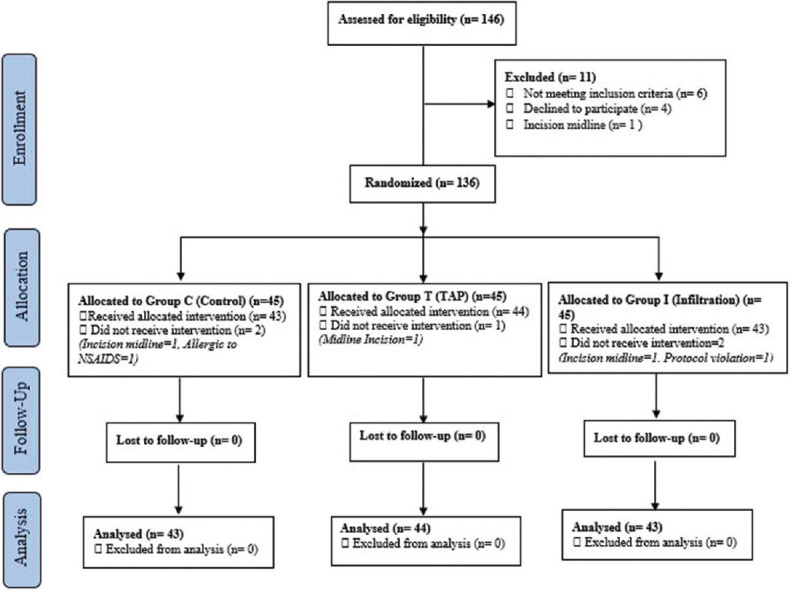
Material and methods: Total of 135 patients scheduled for major gynecological surgeries were allocated into three groups: group T received bilateral TAP block with bupivacaine 0.25%; group I received LAI with 0.25% bupivacaine with epinephrine 5 μ/mL in the peritoneum and abdominal wall, and group C was control group. Anesthesia and postoperative analgesia were standardized. Outcome measures were cumulative and rescue tramadol consumption, numerical rating score (NRS) for pain and side effects in post-anesthesia care unit (PACU) at 4, 8, 12 hours postoperatively.
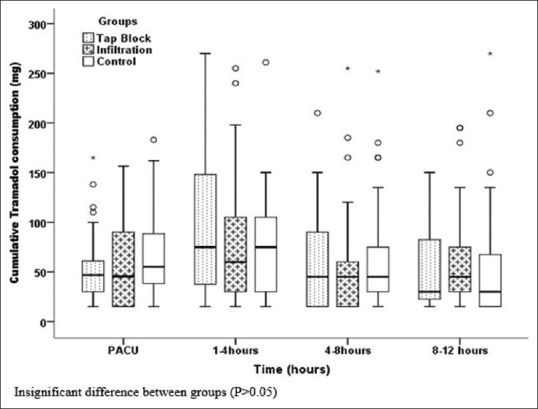
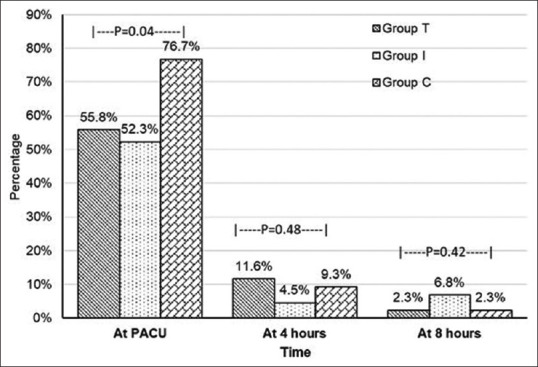
Results: Tramadol consumption, need for rescue analgesia, and NRS for pain between three groups at 4, 8, and 12 hours postoperatively had no statistically significant difference (P < 0.05). In PACU, median tramadol consumption used for rescue analgesia between group T (15 (15-30)) and group C (30 (15-45)) (P = 0.035), and between group T (15 (15-30)) and group I (30 (15-52)) was statistically significant (P = 0.034). In PACU, the percentage of patients having NRS >4 on movement in group C (72%) compared to group T (46.5%) and group I (46.5%) was significant (P = 0.034). No statistically significant difference was observed in the incidence of side effects among study groups (P > 0.05).
Conclusion: Except for the immediate postoperative period, neither TAP block nor LAI had added benefit to the multimodal analgesia regimen in patients undergoing gynecological surgeries.
期刊介绍:
Accounts of Chemical Research presents short, concise and critical articles offering easy-to-read overviews of basic research and applications in all areas of chemistry and biochemistry. These short reviews focus on research from the author’s own laboratory and are designed to teach the reader about a research project. In addition, Accounts of Chemical Research publishes commentaries that give an informed opinion on a current research problem. Special Issues online are devoted to a single topic of unusual activity and significance.
Accounts of Chemical Research replaces the traditional article abstract with an article "Conspectus." These entries synopsize the research affording the reader a closer look at the content and significance of an article. Through this provision of a more detailed description of the article contents, the Conspectus enhances the article's discoverability by search engines and the exposure for the research.




 京公网安备 11010802042870号
京ICP备2023020795号-1
京公网安备 11010802042870号
京ICP备2023020795号-1

 分享
分享
 求助内容:
求助内容: 应助结果提醒方式:
 扫码关注我们
