Ali Sayadmanesh, Mohamad Azadbakht, Kheirollah Yari, Ali Abedelahi, Hajar Shafaei, Dariush Shanehbandi, Behzad Baradaran, Mohsen Basiri
{"title":"Characterization of CAR T Cells Manufactured Using Genetically Engineered Artificial Antigen Presenting Cells.","authors":"Ali Sayadmanesh, Mohamad Azadbakht, Kheirollah Yari, Ali Abedelahi, Hajar Shafaei, Dariush Shanehbandi, Behzad Baradaran, Mohsen Basiri","doi":"10.22074/cellj.2023.2001712.1304","DOIUrl":null,"url":null,"abstract":"<p><strong>Objective: </strong>Chimeric antigen receptor (CAR) T cell therapy has recently emerged as a promising approach for the treatment of different types of cancer. Improving CAR T cell manufacturing in terms of costs and product quality is an important concern for expanding the accessibility of this therapy. One proposed strategy for improving T cell expansion is to use genetically engineered artificial antigen presenting cells (aAPC) expressing a membrane-bound anti-CD3 for T cell activation. The aim of this study was to characterize CAR T cells generated using this aAPC-mediated approach in terms of expansion efficiency, immunophenotype, and cytotoxicity.</p><p><strong>Materials and methods: </strong>In this experimental study, we generated an aAPC line by engineering K562 cells to express a membrane-bound anti-CD3 (mOKT3). T cell activation was performed by co-culturing PBMCs with either mitomycin C-treated aAPCs or surface-immobilized anti-CD3 and anti-CD28 antibodies. Untransduced and CD19-CARtransduced T cells were characterized in terms of expansion, activation markers, interferon gamma (IFN-γ) secretion, CD4/CD8 ratio, memory phenotype, and exhaustion markers. Cytotoxicity of CD19-CAR T cells generated by aAPCs and antibodies were also investigated using a bioluminescence-based co-culture assay.</p><p><strong>Results: </strong>Our findings showed that the engineered aAPC line has the potential to expand CAR T cells similar to that using the antibody-based method. Although activation with aAPCs leads to a higher ratio of CD8+ and effector memory T cells in the final product, we did not observe a significant difference in IFN-γ secretion, cytotoxic activity or exhaustion between CAR T cells generated with aAPC or antibodies.</p><p><strong>Conclusion: </strong>Our results show that despite the differences in the immunophenotypes of aAPC and antibody-based CAR T cells, both methods can be used to manufacture potent CAR T cells. These findings are instrumental for the improvement of the CAR T cell manufacturing process and future applications of aAPC-mediated expansion of CAR T cells.</p>","PeriodicalId":49224,"journal":{"name":"Cell Journal","volume":"25 10","pages":"674-687"},"PeriodicalIF":1.7000,"publicationDate":"2023-10-09","publicationTypes":"Journal Article","fieldsOfStudy":null,"isOpenAccess":false,"openAccessPdf":"https://ftp.ncbi.nlm.nih.gov/pub/pmc/oa_pdf/75/fa/Cell-J-25-674.PMC10591261.pdf","citationCount":"0","resultStr":null,"platform":"Semanticscholar","paperid":null,"PeriodicalName":"Cell Journal","FirstCategoryId":"99","ListUrlMain":"https://doi.org/10.22074/cellj.2023.2001712.1304","RegionNum":4,"RegionCategory":"生物学","ArticlePicture":[],"TitleCN":null,"AbstractTextCN":null,"PMCID":null,"EPubDate":"","PubModel":"","JCR":"Q4","JCRName":"CELL BIOLOGY","Score":null,"Total":0}
引用次数: 0
Abstract
Objective: Chimeric antigen receptor (CAR) T cell therapy has recently emerged as a promising approach for the treatment of different types of cancer. Improving CAR T cell manufacturing in terms of costs and product quality is an important concern for expanding the accessibility of this therapy. One proposed strategy for improving T cell expansion is to use genetically engineered artificial antigen presenting cells (aAPC) expressing a membrane-bound anti-CD3 for T cell activation. The aim of this study was to characterize CAR T cells generated using this aAPC-mediated approach in terms of expansion efficiency, immunophenotype, and cytotoxicity.
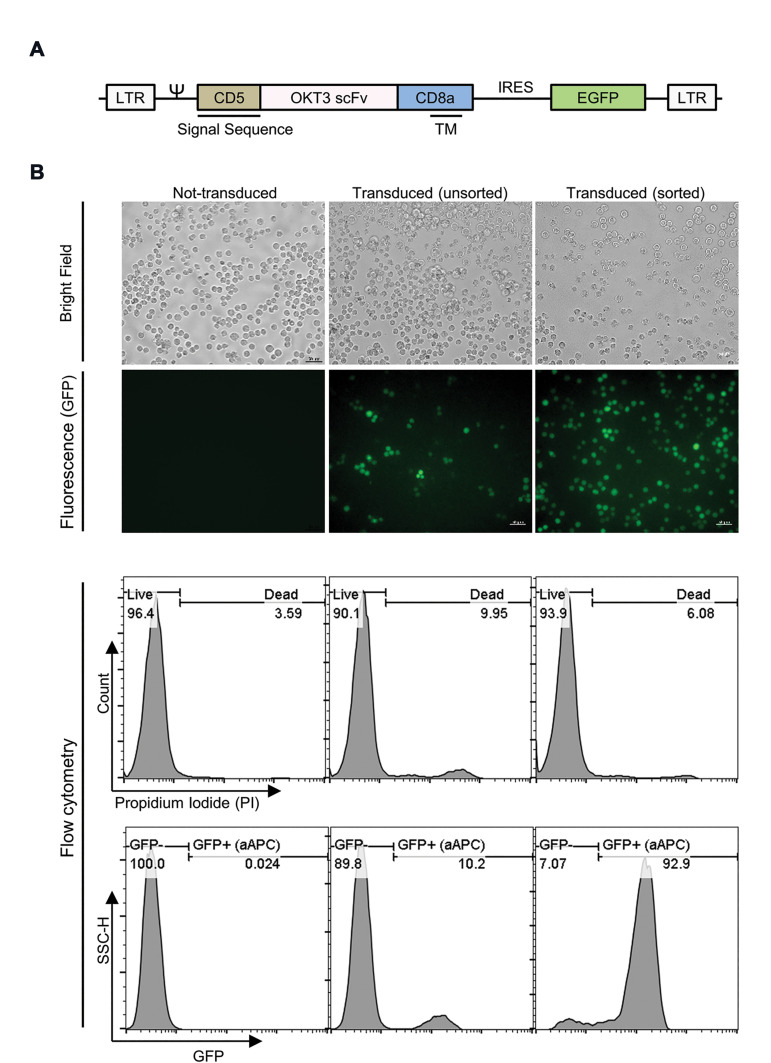
Materials and methods: In this experimental study, we generated an aAPC line by engineering K562 cells to express a membrane-bound anti-CD3 (mOKT3). T cell activation was performed by co-culturing PBMCs with either mitomycin C-treated aAPCs or surface-immobilized anti-CD3 and anti-CD28 antibodies. Untransduced and CD19-CARtransduced T cells were characterized in terms of expansion, activation markers, interferon gamma (IFN-γ) secretion, CD4/CD8 ratio, memory phenotype, and exhaustion markers. Cytotoxicity of CD19-CAR T cells generated by aAPCs and antibodies were also investigated using a bioluminescence-based co-culture assay.
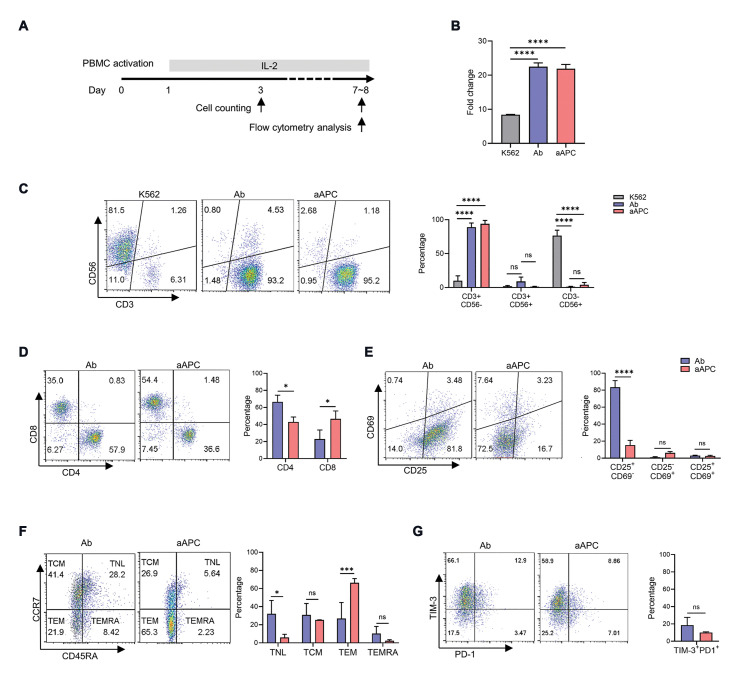
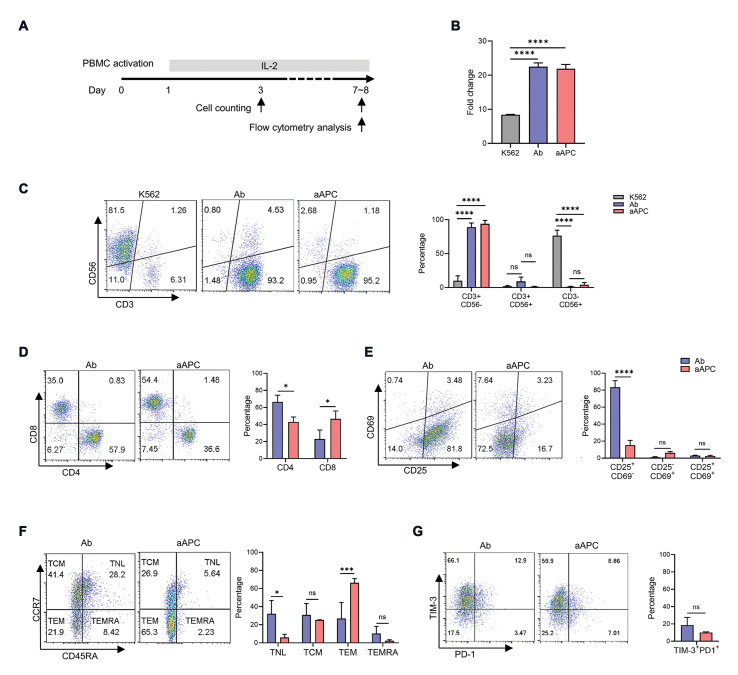
Results: Our findings showed that the engineered aAPC line has the potential to expand CAR T cells similar to that using the antibody-based method. Although activation with aAPCs leads to a higher ratio of CD8+ and effector memory T cells in the final product, we did not observe a significant difference in IFN-γ secretion, cytotoxic activity or exhaustion between CAR T cells generated with aAPC or antibodies.
Conclusion: Our results show that despite the differences in the immunophenotypes of aAPC and antibody-based CAR T cells, both methods can be used to manufacture potent CAR T cells. These findings are instrumental for the improvement of the CAR T cell manufacturing process and future applications of aAPC-mediated expansion of CAR T cells.
期刊介绍:
The “Cell Journal (Yakhteh)“, formerly published as “Yakhteh Medical Journal”, is a quarterly English publication of Royan Institute. This journal focuses on topics relevant to cellular and molecular scientific areas, besides other related fields. The Cell J has been certified by Ministry of Culture and Islamic Guidance in 1999 and was accredited as a scientific and research journal by HBI (Health and Biomedical Information) Journal Accreditation Commission in 2000 which is an open access journal.



 京公网安备 11010802042870号
京ICP备2023020795号-1
京公网安备 11010802042870号
京ICP备2023020795号-1

 分享
分享
 求助内容:
求助内容: 应助结果提醒方式:
 扫码关注我们
