{"title":"Diabetes mellitus: Preventive and curative therapies with aqueous extract of Rytigynia senegalensis Blume (Rubiaceae) in Wistar rats","authors":"Barthelemy Maidadi , Fidèle Ntchapda , David Miaffo , Abba Talba Mahamad","doi":"10.1016/j.jtcme.2023.03.001","DOIUrl":null,"url":null,"abstract":"<div><h3>Background and aim</h3><p>African traditional healers use <em>Rytigynia senegalensis</em> Blume to treat diseases such as diabetes mellitus, malaria, dysentery, constipation, and hemorrhoids. This study aimed to assess the hypoglycemic, lipid-lowering, and antioxidant properties of <em>R. senegalensis</em> extract (AERS) in type 1 diabetic (T1D) and insulin-resistant (T2D) rats.</p></div><div><h3>Experimental procedure</h3><p>The induction of T1D was made by intraperitoneal administration of streptozotocin (55 mg/kg b.w). As for T2D, it was induced for 10 days by daily subcutaneous administration of dexamethasone (1 mg/kg b.w). Diabetic animals were divided and treated with AERS (50, 100, and 200 mg/kg b.w) for 28 and 10 days for T1D and T2D, respectively. Glycaemia, food and water consumption, relative body weight, insulinemia, lipid profile, and oxidative stress parameters were evaluated. Histological sections were made on the pancreas of T1D rats.</p></div><div><h3>Results and conclusion</h3><p>AERS (100 and/or 200 mg/kg) prevented (p < 0.05 to p < 0.001) weight loss, polyphagia, and polysipsia in diabetic rats. AERS significantly lowered (p < 0.05 to p < 0.001) insulinemia, hyperglycemia, triglycerides (TG), low-density lipoprotein cholesterol (LDL-c) total cholesterol (TC),and malondialdehyde (MDA). In contrast, a significant increase (p < 0.05 to p < 0.001) in high-density lipoprotein cholesterol (HDL-c) levels, reduced glutathione levels, and superoxide dismutase (SOD) and catalase (CAT) activities were observed with all doses of AERS. Histopathological analysis showed an increase in the number and size of islets of Langerhans in the pancreas of T1D rats receiving AERS. AERS has an important antidiabetic, antidyslipidemic, and antioxidant potential.</p></div>","PeriodicalId":17449,"journal":{"name":"Journal of Traditional and Complementary Medicine","volume":"13 4","pages":"Pages 358-367"},"PeriodicalIF":3.0000,"publicationDate":"2023-07-01","publicationTypes":"Journal Article","fieldsOfStudy":null,"isOpenAccess":false,"openAccessPdf":"","citationCount":"0","resultStr":null,"platform":"Semanticscholar","paperid":null,"PeriodicalName":"Journal of Traditional and Complementary Medicine","FirstCategoryId":"3","ListUrlMain":"https://www.sciencedirect.com/science/article/pii/S2225411023000263","RegionNum":3,"RegionCategory":"医学","ArticlePicture":[],"TitleCN":null,"AbstractTextCN":null,"PMCID":null,"EPubDate":"","PubModel":"","JCR":"Q1","JCRName":"INTEGRATIVE & COMPLEMENTARY MEDICINE","Score":null,"Total":0}
引用次数: 0
Abstract
Background and aim
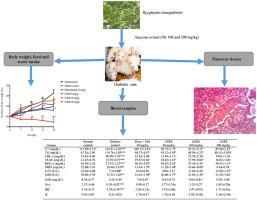
African traditional healers use Rytigynia senegalensis Blume to treat diseases such as diabetes mellitus, malaria, dysentery, constipation, and hemorrhoids. This study aimed to assess the hypoglycemic, lipid-lowering, and antioxidant properties of R. senegalensis extract (AERS) in type 1 diabetic (T1D) and insulin-resistant (T2D) rats.
Experimental procedure
The induction of T1D was made by intraperitoneal administration of streptozotocin (55 mg/kg b.w). As for T2D, it was induced for 10 days by daily subcutaneous administration of dexamethasone (1 mg/kg b.w). Diabetic animals were divided and treated with AERS (50, 100, and 200 mg/kg b.w) for 28 and 10 days for T1D and T2D, respectively. Glycaemia, food and water consumption, relative body weight, insulinemia, lipid profile, and oxidative stress parameters were evaluated. Histological sections were made on the pancreas of T1D rats.
Results and conclusion
AERS (100 and/or 200 mg/kg) prevented (p < 0.05 to p < 0.001) weight loss, polyphagia, and polysipsia in diabetic rats. AERS significantly lowered (p < 0.05 to p < 0.001) insulinemia, hyperglycemia, triglycerides (TG), low-density lipoprotein cholesterol (LDL-c) total cholesterol (TC),and malondialdehyde (MDA). In contrast, a significant increase (p < 0.05 to p < 0.001) in high-density lipoprotein cholesterol (HDL-c) levels, reduced glutathione levels, and superoxide dismutase (SOD) and catalase (CAT) activities were observed with all doses of AERS. Histopathological analysis showed an increase in the number and size of islets of Langerhans in the pancreas of T1D rats receiving AERS. AERS has an important antidiabetic, antidyslipidemic, and antioxidant potential.
期刊介绍:
eJTCM is committed to publish research providing the biological and clinical grounds for using Traditional and Complementary Medical treatments as well as studies that demonstrate the pathophysiological and molecular/biochemical bases supporting the effectiveness of such treatments. Review articles are by invitation only.
eJTCM is receiving an increasing amount of submission, and we need to adopt more stringent criteria to select the articles that can be considered for peer review. Note that eJTCM is striving to increase the quality and medical relevance of the publications.



 京公网安备 11010802042870号
京ICP备2023020795号-1
京公网安备 11010802042870号
京ICP备2023020795号-1

 分享
分享
 求助内容:
求助内容: 应助结果提醒方式:
 扫码关注我们
