{"title":"Reflections on the Infant Mental Health Endorsement® process in Virginia","authors":"Kasey Dye, Christine Spence, Jackie Robinson Brock","doi":"10.1002/imhj.22058","DOIUrl":null,"url":null,"abstract":"<p>This study was conducted to gather information to inform key stakeholders in Virginia's Early Childhood Mental Health workforce who are involved in the Infant Mental Health Endorsement<sup>®</sup>. An “Endorsement<sup>®</sup> indicates an individual's efforts to specialize in the promotion and practice of infant or early childhood mental health within his/her own chosen discipline” (Virginia Association for Infant Mental Health, 2021). The following research questions guided this study: (1) who is part of the infant mental health endorsed workforce in Virginia; (2) what are the benefits and barriers to the Endorsement<sup>®</sup> process. A total of 115 individuals who were or are involved in the Endorsement<sup>®</sup> as endorsees or advisors were participants in the study. Participants cited many benefits of obtaining their Infant Mental Health Endorsement<sup>®</sup>, including general professional development and connecting to other professionals in the field. Barriers to obtaining the Endorsement<sup>®</sup> included time and financial restraints related to obtaining reflective supervision from a qualified Reflective Supervisor. Results from the study will be used to inform the Infant Mental Health Endorsement<sup>®</sup> process, and applied to the Early Childhood Mental Health Endorsement<sup>®</sup> in 2023.</p>","PeriodicalId":48026,"journal":{"name":"Infant Mental Health Journal","volume":"44 4","pages":"513-525"},"PeriodicalIF":2.0000,"publicationDate":"2023-04-16","publicationTypes":"Journal Article","fieldsOfStudy":null,"isOpenAccess":false,"openAccessPdf":"https://onlinelibrary.wiley.com/doi/epdf/10.1002/imhj.22058","citationCount":"0","resultStr":null,"platform":"Semanticscholar","paperid":null,"PeriodicalName":"Infant Mental Health Journal","FirstCategoryId":"102","ListUrlMain":"https://onlinelibrary.wiley.com/doi/10.1002/imhj.22058","RegionNum":3,"RegionCategory":"心理学","ArticlePicture":[],"TitleCN":null,"AbstractTextCN":null,"PMCID":null,"EPubDate":"","PubModel":"","JCR":"Q3","JCRName":"PSYCHOLOGY, DEVELOPMENTAL","Score":null,"Total":0}
引用次数: 0
Abstract
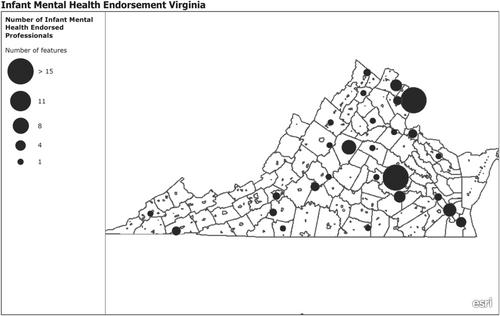
This study was conducted to gather information to inform key stakeholders in Virginia's Early Childhood Mental Health workforce who are involved in the Infant Mental Health Endorsement®. An “Endorsement® indicates an individual's efforts to specialize in the promotion and practice of infant or early childhood mental health within his/her own chosen discipline” (Virginia Association for Infant Mental Health, 2021). The following research questions guided this study: (1) who is part of the infant mental health endorsed workforce in Virginia; (2) what are the benefits and barriers to the Endorsement® process. A total of 115 individuals who were or are involved in the Endorsement® as endorsees or advisors were participants in the study. Participants cited many benefits of obtaining their Infant Mental Health Endorsement®, including general professional development and connecting to other professionals in the field. Barriers to obtaining the Endorsement® included time and financial restraints related to obtaining reflective supervision from a qualified Reflective Supervisor. Results from the study will be used to inform the Infant Mental Health Endorsement® process, and applied to the Early Childhood Mental Health Endorsement® in 2023.
期刊介绍:
The Infant Mental Health Journal (IMHJ) is the official publication of the World Association for Infant Mental Health (WAIMH) and the Michigan Association for Infant Mental Health (MI-AIMH) and is copyrighted by MI-AIMH. The Infant Mental Health Journal publishes peer-reviewed research articles, literature reviews, program descriptions/evaluations, theoretical/conceptual papers and brief reports (clinical case studies and novel pilot studies) that focus on early social and emotional development and characteristics that influence social-emotional development from relationship-based perspectives. Examples of such influences include attachment relationships, early relationship development, caregiver-infant interactions, infant and early childhood mental health services, contextual and cultural influences on infant/toddler/child and family development, including parental/caregiver psychosocial characteristics and attachment history, prenatal experiences, and biological characteristics in interaction with relational environments that promote optimal social-emotional development or place it at higher risk. Research published in IMHJ focuses on the prenatal-age 5 period and employs relationship-based perspectives in key research questions and interpretation and implications of findings.




 京公网安备 11010802042870号
京ICP备2023020795号-1
京公网安备 11010802042870号
京ICP备2023020795号-1

 分享
分享
 求助内容:
求助内容: 应助结果提醒方式:
 扫码关注我们
