Migration of a harem in search of a new leader following the loss of the former adult male leader from a one-male unit of geladas (Theropithecus gelada).
{"title":"Migration of a harem in search of a new leader following the loss of the former adult male leader from a one-male unit of geladas (Theropithecus gelada).","authors":"Zewdu Kifle","doi":"10.1007/s10329-023-01100-w","DOIUrl":null,"url":null,"abstract":"<p><p>Geladas (Theropithecus gelada) live in social groups consisting of one-male units (sometimes referred to as \"harems\"), bands, and all-male units. Takeover by a new male affects the reproductive success and mating strategies of the individuals in a harem. However, to the best of my knowledge, there is no information available on the fate of the females in a one-male unit whose leader dies or disappears and is not replaced by another adult male. In 2017, I observed the migration of a male-less unit into the home range of my study group at Kosheme, in Wollo, Ethiopia. The unit consisted of 14 individuals. I observed the harem leader of my study group desert his unit and join the new unit, which appeared to peacefully accept him as their leader. These observations are in agreement with information from local residents, who told me that if the leader male of a unit dies, the male-less group (the \"survivors\") will soon migrate in search of a new adult male leader. To the best of my knowledge, this is the first documented case of the migration of a gelada harem in search of an adult male leader after the loss of the unit's former leader. This report contributes toward a better understanding of the reproductive behavior of geladas in particular, and of primates in general.</p>","PeriodicalId":20468,"journal":{"name":"Primates","volume":" ","pages":"21-24"},"PeriodicalIF":1.5000,"publicationDate":"2024-01-01","publicationTypes":"Journal Article","fieldsOfStudy":null,"isOpenAccess":false,"openAccessPdf":"","citationCount":"0","resultStr":null,"platform":"Semanticscholar","paperid":null,"PeriodicalName":"Primates","FirstCategoryId":"99","ListUrlMain":"https://doi.org/10.1007/s10329-023-01100-w","RegionNum":4,"RegionCategory":"生物学","ArticlePicture":[],"TitleCN":null,"AbstractTextCN":null,"PMCID":null,"EPubDate":"2023/10/26 0:00:00","PubModel":"Epub","JCR":"Q2","JCRName":"ZOOLOGY","Score":null,"Total":0}
引用次数: 0
Abstract
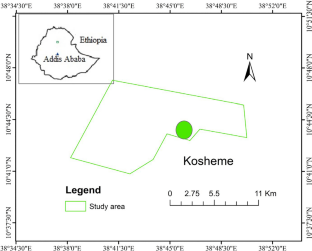
Geladas (Theropithecus gelada) live in social groups consisting of one-male units (sometimes referred to as "harems"), bands, and all-male units. Takeover by a new male affects the reproductive success and mating strategies of the individuals in a harem. However, to the best of my knowledge, there is no information available on the fate of the females in a one-male unit whose leader dies or disappears and is not replaced by another adult male. In 2017, I observed the migration of a male-less unit into the home range of my study group at Kosheme, in Wollo, Ethiopia. The unit consisted of 14 individuals. I observed the harem leader of my study group desert his unit and join the new unit, which appeared to peacefully accept him as their leader. These observations are in agreement with information from local residents, who told me that if the leader male of a unit dies, the male-less group (the "survivors") will soon migrate in search of a new adult male leader. To the best of my knowledge, this is the first documented case of the migration of a gelada harem in search of an adult male leader after the loss of the unit's former leader. This report contributes toward a better understanding of the reproductive behavior of geladas in particular, and of primates in general.
期刊介绍:
Primates is an international journal of primatology whose aim is to provide a forum for the elucidation of all aspects of primates. The oldest primatological journal, Primates publishes original papers that advance the scientific study of primates, and its scope embraces work in diverse fields covering biological bases of behavior, socio-ecology, learning and cognition, social processes, systematics, evolution, and medicine. Contributions relevant to conservation of natural populations and welfare of captive primates are welcome. Studies focusing on nonprimate species may be considered if their relevance to primatology is clear. Original Articles as well as Review Articles, News and Perspectives, and Book Reviews are included. All manuscripts received are initially screened for suitability by members of the Editorial Board, taking into account style and ethical issues, leading to a swift decision about whether to send the manuscript for external review.



 京公网安备 11010802042870号
京ICP备2023020795号-1
京公网安备 11010802042870号
京ICP备2023020795号-1

 分享
分享
 求助内容:
求助内容: 应助结果提醒方式:
 扫码关注我们
