{"title":"The relevance of the tangible and intangible social impacts of tourism on selected South African communities","authors":"Marco Scholtz, E. Slabbert","doi":"10.1080/14766825.2015.1031796","DOIUrl":null,"url":null,"abstract":"Most tourism social impact studies emphasise tangible social impacts such as economic improvement. In developing countries such as South Africa, a small percentage of tangible benefits filter down to community level. This creates a problem as various studies revealed the importance of community support for the sustainability of the tourism industry. Therefore it was important to explore the role of both the tangible and the intangible social impacts of tourism. Communities with established tourism industries (Clarens, Soweto and Jeffreys Bay) formed part of the quantitative research. Through exploratory factor analyses, 31 social impact statements could be categorised into four tangible and two intangible impacts. The tangible factor Economic improvement obtained a low rating, meaning that it was not directly experienced by residents, while the intangible factor Community pride and upliftment obtained the highest rating among all factors. This, together with the fact that community members continue their support for the tourism industry, is a novel find, indicating the significant role of intangible social impacts in fostering community support. This finding shows the importance of incorporating intangible social impacts into tourism planning in developing countries. Contributions are made towards social impact research methodology and literature.","PeriodicalId":46712,"journal":{"name":"Journal of Tourism and Cultural Change","volume":"14 1","pages":"107 - 128"},"PeriodicalIF":2.5000,"publicationDate":"2016-04-02","publicationTypes":"Journal Article","fieldsOfStudy":null,"isOpenAccess":false,"openAccessPdf":"https://sci-hub-pdf.com/10.1080/14766825.2015.1031796","citationCount":"28","resultStr":null,"platform":"Semanticscholar","paperid":null,"PeriodicalName":"Journal of Tourism and Cultural Change","FirstCategoryId":"91","ListUrlMain":"https://doi.org/10.1080/14766825.2015.1031796","RegionNum":4,"RegionCategory":"管理学","ArticlePicture":[],"TitleCN":null,"AbstractTextCN":null,"PMCID":null,"EPubDate":"","PubModel":"","JCR":"Q2","JCRName":"HOSPITALITY, LEISURE, SPORT & TOURISM","Score":null,"Total":0}
引用次数: 28
Abstract
Most tourism social impact studies emphasise tangible social impacts such as economic improvement. In developing countries such as South Africa, a small percentage of tangible benefits filter down to community level. This creates a problem as various studies revealed the importance of community support for the sustainability of the tourism industry. Therefore it was important to explore the role of both the tangible and the intangible social impacts of tourism. Communities with established tourism industries (Clarens, Soweto and Jeffreys Bay) formed part of the quantitative research. Through exploratory factor analyses, 31 social impact statements could be categorised into four tangible and two intangible impacts. The tangible factor Economic improvement obtained a low rating, meaning that it was not directly experienced by residents, while the intangible factor Community pride and upliftment obtained the highest rating among all factors. This, together with the fact that community members continue their support for the tourism industry, is a novel find, indicating the significant role of intangible social impacts in fostering community support. This finding shows the importance of incorporating intangible social impacts into tourism planning in developing countries. Contributions are made towards social impact research methodology and literature.
期刊介绍:
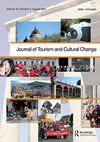
Journal of Tourism and Cultural Change ( JTCC ) is a peer-reviewed, transdisciplinary and transnational journal. It focuses on critically examining the relationships, tensions, representations, conflicts and possibilities that exist between tourism/travel and culture/cultures in an increasingly complex global context. JTCC provides a forum for debate against the backdrop of local, regional, national and transnational understandings of identity and difference. Economic restructuring, recognitions of the cultural dimension of biodiversity and sustainable development, contests regarding the positive and negative impact of patterns of tourist behaviour on cultural diversity, and transcultural strivings - all provide an important focus for JTCC . Global capitalism, in its myriad forms engages with multiple ''ways of being'', generating new relationships, re-evaluating existing, and challenging ways of knowing and being. Tourists and the tourism industry continue to find inventive ways to commodify, transform, present/re-present and consume material culture. JTCC seeks to widen and deepen understandings of such changing relationships and stimulate critical debate by: -Adopting a multidisciplinary approach -Encouraging deep and critical approaches to policy and practice -Embracing an inclusive definition of culture -Focusing on the concept, processes and meanings of change -Encouraging trans-national/transcultural perspectives



 京公网安备 11010802042870号
京ICP备2023020795号-1
京公网安备 11010802042870号
京ICP备2023020795号-1

 分享
分享
 求助内容:
求助内容: 应助结果提醒方式:
 扫码关注我们
