Marija Kamber, Theofanis Karafotias, Theodora Tsitoura
{"title":"Dark heritage tourism and the Sarajevo siege","authors":"Marija Kamber, Theofanis Karafotias, Theodora Tsitoura","doi":"10.1080/14766825.2016.1169346","DOIUrl":null,"url":null,"abstract":"ABSTRACT Sarajevo bears a rich and diverse cultural past, which includes the three distinct periods of the Ottoman occupation (1463–1878), the Austro–Hungarian rule (1878–1914) and the Yugoslav Federation (1945–1989). But the darkest chapter in its long history was about to be written just after Bosnia and Herzegovina was recognized as an independent country in 1992, when the latest war of 1992–1995 unfolded. One of the most distinctive episodes of that war was the siege of Sarajevo. Apart from the open wounds, the Sarajevo siege left behind a painful heritage too. As a matter of course, the goal of this paper is to try to answer some of the crucial questions related to the management of the 1992–1995 war sites in Sarajevo. In our research, we investigate tourists’ motives and expectations for visiting these sites as well as to identify crucial issues in managing ‘dark tourism/heritage’ sites. Moreover, the paper provides an analysis that could be a powerful tool for the different stakeholders to design activities and promote and manage effectively the war-related sites in Sarajevo, depending on the needs and opinion of their public.","PeriodicalId":46712,"journal":{"name":"Journal of Tourism and Cultural Change","volume":"14 1","pages":"255 - 269"},"PeriodicalIF":2.5000,"publicationDate":"2016-05-04","publicationTypes":"Journal Article","fieldsOfStudy":null,"isOpenAccess":false,"openAccessPdf":"https://sci-hub-pdf.com/10.1080/14766825.2016.1169346","citationCount":"20","resultStr":null,"platform":"Semanticscholar","paperid":null,"PeriodicalName":"Journal of Tourism and Cultural Change","FirstCategoryId":"91","ListUrlMain":"https://doi.org/10.1080/14766825.2016.1169346","RegionNum":4,"RegionCategory":"管理学","ArticlePicture":[],"TitleCN":null,"AbstractTextCN":null,"PMCID":null,"EPubDate":"","PubModel":"","JCR":"Q2","JCRName":"HOSPITALITY, LEISURE, SPORT & TOURISM","Score":null,"Total":0}
引用次数: 20
Abstract
ABSTRACT Sarajevo bears a rich and diverse cultural past, which includes the three distinct periods of the Ottoman occupation (1463–1878), the Austro–Hungarian rule (1878–1914) and the Yugoslav Federation (1945–1989). But the darkest chapter in its long history was about to be written just after Bosnia and Herzegovina was recognized as an independent country in 1992, when the latest war of 1992–1995 unfolded. One of the most distinctive episodes of that war was the siege of Sarajevo. Apart from the open wounds, the Sarajevo siege left behind a painful heritage too. As a matter of course, the goal of this paper is to try to answer some of the crucial questions related to the management of the 1992–1995 war sites in Sarajevo. In our research, we investigate tourists’ motives and expectations for visiting these sites as well as to identify crucial issues in managing ‘dark tourism/heritage’ sites. Moreover, the paper provides an analysis that could be a powerful tool for the different stakeholders to design activities and promote and manage effectively the war-related sites in Sarajevo, depending on the needs and opinion of their public.
期刊介绍:
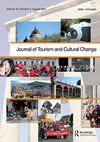
Journal of Tourism and Cultural Change ( JTCC ) is a peer-reviewed, transdisciplinary and transnational journal. It focuses on critically examining the relationships, tensions, representations, conflicts and possibilities that exist between tourism/travel and culture/cultures in an increasingly complex global context. JTCC provides a forum for debate against the backdrop of local, regional, national and transnational understandings of identity and difference. Economic restructuring, recognitions of the cultural dimension of biodiversity and sustainable development, contests regarding the positive and negative impact of patterns of tourist behaviour on cultural diversity, and transcultural strivings - all provide an important focus for JTCC . Global capitalism, in its myriad forms engages with multiple ''ways of being'', generating new relationships, re-evaluating existing, and challenging ways of knowing and being. Tourists and the tourism industry continue to find inventive ways to commodify, transform, present/re-present and consume material culture. JTCC seeks to widen and deepen understandings of such changing relationships and stimulate critical debate by: -Adopting a multidisciplinary approach -Encouraging deep and critical approaches to policy and practice -Embracing an inclusive definition of culture -Focusing on the concept, processes and meanings of change -Encouraging trans-national/transcultural perspectives



 京公网安备 11010802042870号
京ICP备2023020795号-1
京公网安备 11010802042870号
京ICP备2023020795号-1

 分享
分享
 求助内容:
求助内容: 应助结果提醒方式:
 扫码关注我们
