Xiao-Qing Cao, Xin-Xin Liu, Meng-Meng Li, Yu Zhang, Liang Chen, Lin Wang, Ming-Xue Di, Mei Zhang
{"title":"Overexpression of Prolyl-4-Hydroxylase-<i>α</i>1 Stabilizes but Increases Shear Stress-Induced Atherosclerotic Plaque in Apolipoprotein E-Deficient Mice.","authors":"Xiao-Qing Cao, Xin-Xin Liu, Meng-Meng Li, Yu Zhang, Liang Chen, Lin Wang, Ming-Xue Di, Mei Zhang","doi":"10.1155/2016/1701637","DOIUrl":null,"url":null,"abstract":"<p><p>The rupture and erosion of atherosclerotic plaque can induce coronary thrombosis. Prolyl-4-hydroxylase (P4H) plays a central role in the synthesis of all known types of collagens, which are the most abundant constituent of the extracellular matrix in atherosclerotic plaque. The pathogenesis of atherosclerosis is thought to be in part caused by shear stress. In this study, we aimed to investigate a relationship between P4H<i>α</i>1 and shear stress-induced atherosclerotic plaque. Carotid arteries of ApoE-/- mice were exposed to low and oscillatory shear stress conditions by the placement of a shear stress cast for 2 weeks; we divided 60 male ApoE-/- mice into three groups for treatments with saline (mock) (<i>n</i> = 20), empty lentivirus (lenti-EGFP) (<i>n</i> = 20), and lentivirus-P4H<i>α</i>1 (lenti-P4H<i>α</i>1) (<i>n</i> = 20). Our results reveal that after 2 weeks of lenti-P4H<i>α</i>1 treatment both low and oscillatory shear stress-induced plaques increased collagen and the thickness of fibrous cap and decreased macrophage accumulation but no change in lipid accumulation. We also observed that overexpression of P4Ha1 increased plaque size. Our study suggests that P4H<i>α</i>1 overexpression might be a potential therapeutic target in stabilizing vulnerable plaques.</p>","PeriodicalId":13301,"journal":{"name":"IEEE Transactions on Industrial Informatics","volume":"18 1","pages":"1701637"},"PeriodicalIF":9.9000,"publicationDate":"2016-01-01","publicationTypes":"Journal Article","fieldsOfStudy":null,"isOpenAccess":false,"openAccessPdf":"https://www.ncbi.nlm.nih.gov/pmc/articles/PMC5080484/pdf/","citationCount":"0","resultStr":null,"platform":"Semanticscholar","paperid":null,"PeriodicalName":"IEEE Transactions on Industrial Informatics","FirstCategoryId":"3","ListUrlMain":"https://doi.org/10.1155/2016/1701637","RegionNum":1,"RegionCategory":"计算机科学","ArticlePicture":[],"TitleCN":null,"AbstractTextCN":null,"PMCID":null,"EPubDate":"2016/10/12 0:00:00","PubModel":"Epub","JCR":"Q1","JCRName":"AUTOMATION & CONTROL SYSTEMS","Score":null,"Total":0}
引用次数: 0
Abstract
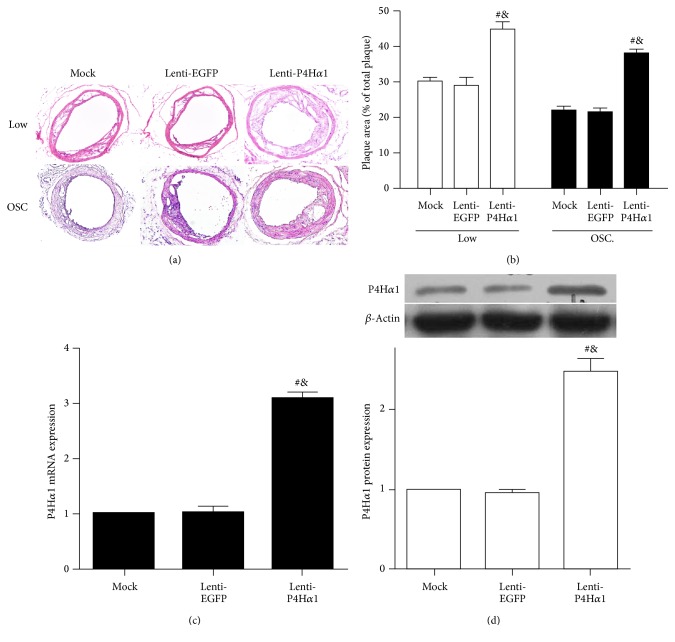
The rupture and erosion of atherosclerotic plaque can induce coronary thrombosis. Prolyl-4-hydroxylase (P4H) plays a central role in the synthesis of all known types of collagens, which are the most abundant constituent of the extracellular matrix in atherosclerotic plaque. The pathogenesis of atherosclerosis is thought to be in part caused by shear stress. In this study, we aimed to investigate a relationship between P4Hα1 and shear stress-induced atherosclerotic plaque. Carotid arteries of ApoE-/- mice were exposed to low and oscillatory shear stress conditions by the placement of a shear stress cast for 2 weeks; we divided 60 male ApoE-/- mice into three groups for treatments with saline (mock) (n = 20), empty lentivirus (lenti-EGFP) (n = 20), and lentivirus-P4Hα1 (lenti-P4Hα1) (n = 20). Our results reveal that after 2 weeks of lenti-P4Hα1 treatment both low and oscillatory shear stress-induced plaques increased collagen and the thickness of fibrous cap and decreased macrophage accumulation but no change in lipid accumulation. We also observed that overexpression of P4Ha1 increased plaque size. Our study suggests that P4Hα1 overexpression might be a potential therapeutic target in stabilizing vulnerable plaques.
期刊介绍:
The IEEE Transactions on Industrial Informatics is a multidisciplinary journal dedicated to publishing technical papers that connect theory with practical applications of informatics in industrial settings. It focuses on the utilization of information in intelligent, distributed, and agile industrial automation and control systems. The scope includes topics such as knowledge-based and AI-enhanced automation, intelligent computer control systems, flexible and collaborative manufacturing, industrial informatics in software-defined vehicles and robotics, computer vision, industrial cyber-physical and industrial IoT systems, real-time and networked embedded systems, security in industrial processes, industrial communications, systems interoperability, and human-machine interaction.





 京公网安备 11010802042870号
京ICP备2023020795号-1
京公网安备 11010802042870号
京ICP备2023020795号-1

 分享
分享
 求助内容:
求助内容: 应助结果提醒方式:
 扫码关注我们
