James M Kangethe, Stephen Gichuhi, Eddy Odari, Jillian Pintye, Kenneth Mutai, Leila Abdullahi, Alex Maiyo, Marianne W Mureithi
{"title":"Confronting the human papillomavirus-HIV intersection: Cervical cytology implications for Kenyan women living with HIV.","authors":"James M Kangethe, Stephen Gichuhi, Eddy Odari, Jillian Pintye, Kenneth Mutai, Leila Abdullahi, Alex Maiyo, Marianne W Mureithi","doi":"10.4102/sajhivmed.v24i1.1508","DOIUrl":null,"url":null,"abstract":"<p><strong>Background: </strong>High-risk human papillomavirus (HR-HPV) is the primary cause of cervical cancer, leading to over 311 000 global deaths, mainly in low- and middle-income countries. Kenyan women living with HIV (WLHIV) face a disproportionate burden of HR-HPV.</p><p><strong>Objectives: </strong>We determined the prevalence of HR-HPV infections and their association with cervical cytology findings among Kenyan WLHIV.</p><p><strong>Method: </strong>We conducted a cross-sectional study among WLHIV attending the HIV care and treatment clinic at the Kenyatta National Hospital (KNH), Kenya's national referral hospital. Study nurses collected a cervical sample with a cytobrush for HR-HPV genotyping using Gene Xpert<sup>®</sup> assays and HPV Genotypes 14 Real-TM Quant V67-100FRT. Bivariate analysis explored the associations.</p><p><strong>Results: </strong>We enrolled 647 WLHIV (mean age of 42.8 years), with 97.2% on antiretroviral therapy (ART) and 79% with a suppressed viral load (< 50 copies/mL plasma). The prevalence of any and vaccine-preventable HR-HPV was 34.6% and 29.4%, respectively, with HPV 52 being the most common genotype (13.4%). Among WLHIV with HR-HPV infections, 21.4% had abnormal cervical cytology. Women with multiple HR-HPV infections were more likely to have abnormal cytology compared to those with single HR-HPV infections (34.9 vs 9.3%, adjusted odds ratio [aOR] = 6.2, 95% confidence interval [CI]: 2.7-14.1, <i>P</i> = 0.001). Women with HR-HPV infection (single or multiple) were more likely to be on the second-line ART regimen compared to those without HR-HPV infections (53.1% vs 46.7%, aOR = 2.3, 95% CI: 1.3-4.1, <i>P</i> = 0.005).</p><p><strong>Conclusion: </strong>Among WLHIV at KNH, abnormal cytology was common and more frequent among women with multiple HR-HPV infections.</p>","PeriodicalId":94212,"journal":{"name":"Southern African journal of HIV medicine","volume":"24 1","pages":"1508"},"PeriodicalIF":2.3000,"publicationDate":"2023-10-27","publicationTypes":"Journal Article","fieldsOfStudy":null,"isOpenAccess":false,"openAccessPdf":"https://www.ncbi.nlm.nih.gov/pmc/articles/PMC10623654/pdf/","citationCount":"0","resultStr":null,"platform":"Semanticscholar","paperid":null,"PeriodicalName":"Southern African journal of HIV medicine","FirstCategoryId":"1085","ListUrlMain":"https://doi.org/10.4102/sajhivmed.v24i1.1508","RegionNum":0,"RegionCategory":null,"ArticlePicture":[],"TitleCN":null,"AbstractTextCN":null,"PMCID":null,"EPubDate":"2023/1/1 0:00:00","PubModel":"eCollection","JCR":"","JCRName":"","Score":null,"Total":0}
引用次数: 0
Abstract
Background: High-risk human papillomavirus (HR-HPV) is the primary cause of cervical cancer, leading to over 311 000 global deaths, mainly in low- and middle-income countries. Kenyan women living with HIV (WLHIV) face a disproportionate burden of HR-HPV.
Objectives: We determined the prevalence of HR-HPV infections and their association with cervical cytology findings among Kenyan WLHIV.
Method: We conducted a cross-sectional study among WLHIV attending the HIV care and treatment clinic at the Kenyatta National Hospital (KNH), Kenya's national referral hospital. Study nurses collected a cervical sample with a cytobrush for HR-HPV genotyping using Gene Xpert® assays and HPV Genotypes 14 Real-TM Quant V67-100FRT. Bivariate analysis explored the associations.
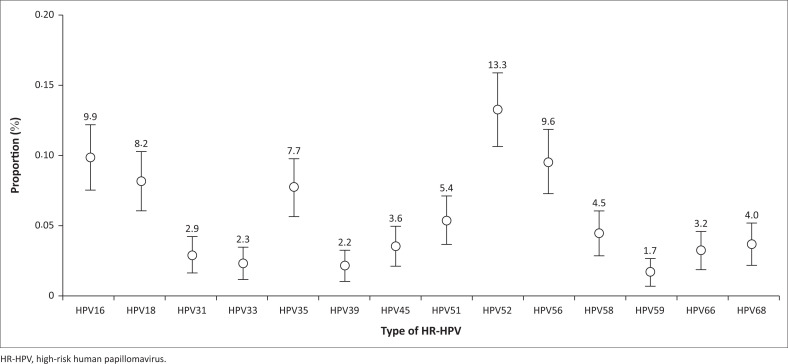
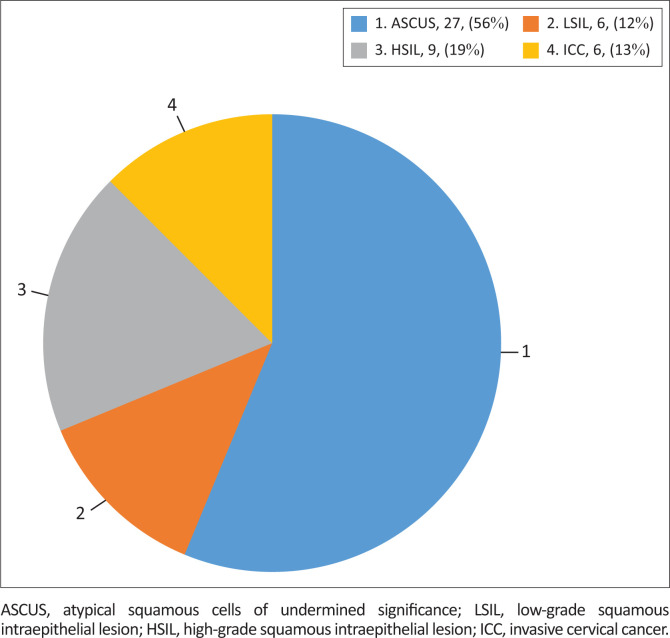
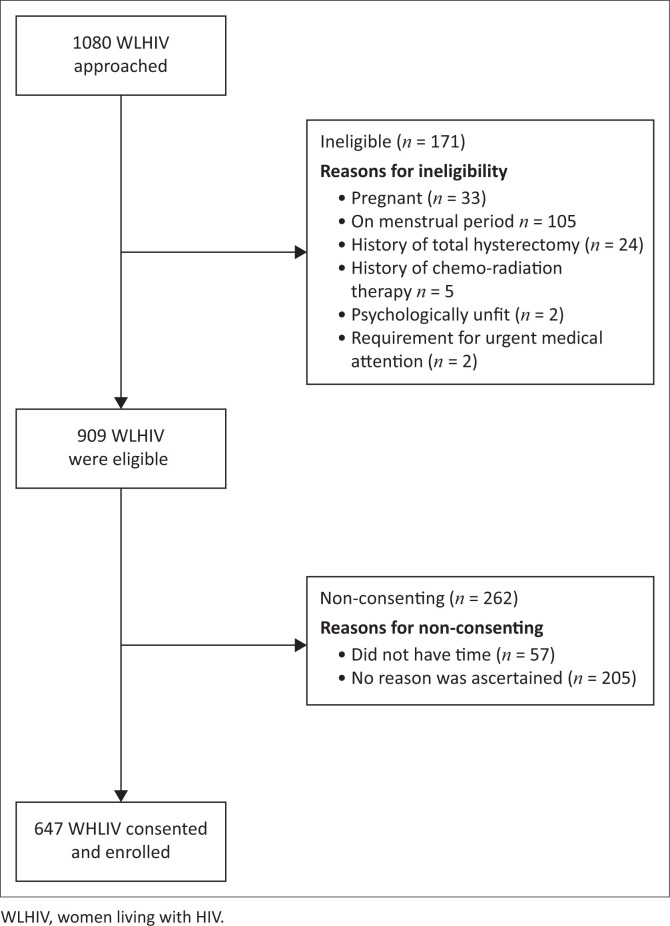
Results: We enrolled 647 WLHIV (mean age of 42.8 years), with 97.2% on antiretroviral therapy (ART) and 79% with a suppressed viral load (< 50 copies/mL plasma). The prevalence of any and vaccine-preventable HR-HPV was 34.6% and 29.4%, respectively, with HPV 52 being the most common genotype (13.4%). Among WLHIV with HR-HPV infections, 21.4% had abnormal cervical cytology. Women with multiple HR-HPV infections were more likely to have abnormal cytology compared to those with single HR-HPV infections (34.9 vs 9.3%, adjusted odds ratio [aOR] = 6.2, 95% confidence interval [CI]: 2.7-14.1, P = 0.001). Women with HR-HPV infection (single or multiple) were more likely to be on the second-line ART regimen compared to those without HR-HPV infections (53.1% vs 46.7%, aOR = 2.3, 95% CI: 1.3-4.1, P = 0.005).
Conclusion: Among WLHIV at KNH, abnormal cytology was common and more frequent among women with multiple HR-HPV infections.



 京公网安备 11010802042870号
京ICP备2023020795号-1
京公网安备 11010802042870号
京ICP备2023020795号-1

 分享
分享

 求助内容:
求助内容: 应助结果提醒方式:
 扫码关注我们
