Euyhyun Park, Se Hee Lee, Hak Hyun Jung, Gi Jung Im
{"title":"Protective Effect of Agmatine Against Cisplatin- Induced Cellular Apoptosis in an Auditory Cell Line.","authors":"Euyhyun Park, Se Hee Lee, Hak Hyun Jung, Gi Jung Im","doi":"10.5152/iao.2022.21319","DOIUrl":null,"url":null,"abstract":"<p><strong>Background: </strong>The aims of this study were to evaluate the protective effects of agmatine against cisplatin-induced cellular apoptosis in an audi- tory cell line and to prove the protective mechanism of agmatine.</p><p><strong>Methods: </strong>The House Ear Institute-Organ of Corti 1 cells were co-treated with agmatine at different concentrations and 15 μM of cisplatin for 48 hours. Cell viability and proliferation were measured. Annexin V-fluorescein isothiocyanate /propidium iodide staining was performed to analyze apoptosis. The levels of intracellular reactive oxygen species were measured using flow cytometry. The expression of BCL2-associated X protein and the enzymatic activity of caspase-3 was measured to examine the pathway of apoptosis induction.</p><p><strong>Results: </strong>In normal conditions, the maximal protective effect occurred with 10 mM of agmatine. However, in the presence of cisplatin, the maximal protective effect was observed from 8 mM of agmatine. Thus, 8 mM was chosen as the ideal agmatine concentration for the analysis of protective effects against cisplatin-induced cytotoxicity. Agmatine exerted a significant protective effect against 15 μM of cisplatin when applied for 48 hours and reduced the proportion of necrotic and late apoptotic cells. Agmatine did not significantly reduce the cisplatin-induced increase in reactive oxygen species but decreased the expression of BCL2-associated X protein and the activity of caspase-3.</p><p><strong>Conclusion: </strong>Agmatine protected against cisplatin-induced cellular apoptosis in an auditory cell line. These effects were mediated by the pro- tection of mitochondrial function and inhibition of apoptosis.</p>","PeriodicalId":49865,"journal":{"name":"Mathematical Methods in the Applied Sciences","volume":"11 1","pages":"257-263"},"PeriodicalIF":1.8000,"publicationDate":"2022-05-01","publicationTypes":"Journal Article","fieldsOfStudy":null,"isOpenAccess":false,"openAccessPdf":"https://www.ncbi.nlm.nih.gov/pmc/articles/PMC10682801/pdf/","citationCount":"0","resultStr":null,"platform":"Semanticscholar","paperid":null,"PeriodicalName":"Mathematical Methods in the Applied Sciences","FirstCategoryId":"1085","ListUrlMain":"https://doi.org/10.5152/iao.2022.21319","RegionNum":3,"RegionCategory":"数学","ArticlePicture":[],"TitleCN":null,"AbstractTextCN":null,"PMCID":null,"EPubDate":"","PubModel":"","JCR":"Q1","JCRName":"MATHEMATICS, APPLIED","Score":null,"Total":0}
引用次数: 0
Abstract
Background: The aims of this study were to evaluate the protective effects of agmatine against cisplatin-induced cellular apoptosis in an audi- tory cell line and to prove the protective mechanism of agmatine.
Methods: The House Ear Institute-Organ of Corti 1 cells were co-treated with agmatine at different concentrations and 15 μM of cisplatin for 48 hours. Cell viability and proliferation were measured. Annexin V-fluorescein isothiocyanate /propidium iodide staining was performed to analyze apoptosis. The levels of intracellular reactive oxygen species were measured using flow cytometry. The expression of BCL2-associated X protein and the enzymatic activity of caspase-3 was measured to examine the pathway of apoptosis induction.
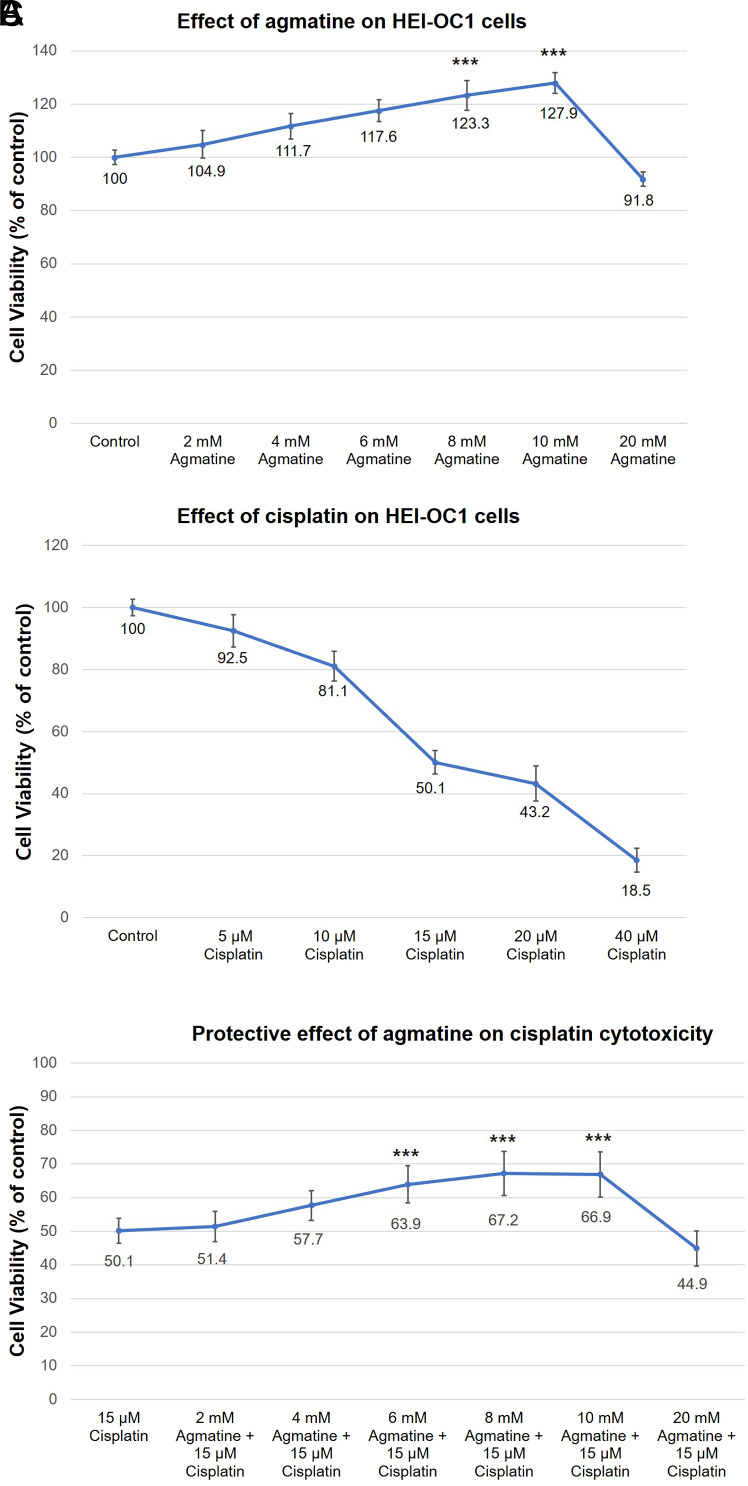
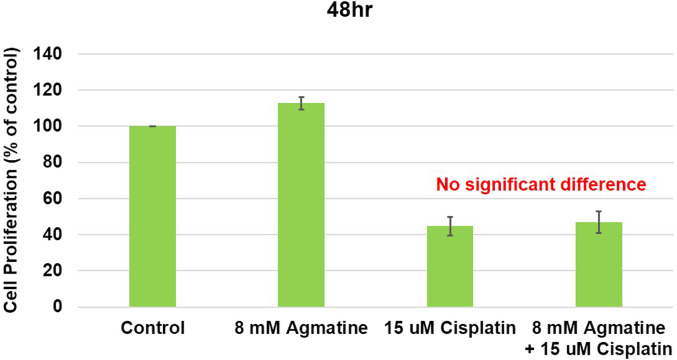
Results: In normal conditions, the maximal protective effect occurred with 10 mM of agmatine. However, in the presence of cisplatin, the maximal protective effect was observed from 8 mM of agmatine. Thus, 8 mM was chosen as the ideal agmatine concentration for the analysis of protective effects against cisplatin-induced cytotoxicity. Agmatine exerted a significant protective effect against 15 μM of cisplatin when applied for 48 hours and reduced the proportion of necrotic and late apoptotic cells. Agmatine did not significantly reduce the cisplatin-induced increase in reactive oxygen species but decreased the expression of BCL2-associated X protein and the activity of caspase-3.
Conclusion: Agmatine protected against cisplatin-induced cellular apoptosis in an auditory cell line. These effects were mediated by the pro- tection of mitochondrial function and inhibition of apoptosis.
期刊介绍:
Mathematical Methods in the Applied Sciences publishes papers dealing with new mathematical methods for the consideration of linear and non-linear, direct and inverse problems for physical relevant processes over time- and space- varying media under certain initial, boundary, transition conditions etc. Papers dealing with biomathematical content, population dynamics and network problems are most welcome.
Mathematical Methods in the Applied Sciences is an interdisciplinary journal: therefore, all manuscripts must be written to be accessible to a broad scientific but mathematically advanced audience. All papers must contain carefully written introduction and conclusion sections, which should include a clear exposition of the underlying scientific problem, a summary of the mathematical results and the tools used in deriving the results. Furthermore, the scientific importance of the manuscript and its conclusions should be made clear. Papers dealing with numerical processes or which contain only the application of well established methods will not be accepted.
Because of the broad scope of the journal, authors should minimize the use of technical jargon from their subfield in order to increase the accessibility of their paper and appeal to a wider readership. If technical terms are necessary, authors should define them clearly so that the main ideas are understandable also to readers not working in the same subfield.




 京公网安备 11010802042870号
京ICP备2023020795号-1
京公网安备 11010802042870号
京ICP备2023020795号-1

 分享
分享
 求助内容:
求助内容: 应助结果提醒方式:
 扫码关注我们
