{"title":"SiC Nanomaterials and Their Derived Carbons for High-Performance Supercapacitors","authors":"Huimin Liu, Kezhi Li, Xin Zhang, Xuemin Yin, Qiangang Fu, Hejun Li","doi":"10.3866/PKU.WHXB202304026","DOIUrl":null,"url":null,"abstract":"<div><div>As technology and society have continued to develop, the demand for energy storage solutions has increased significantly. Indeed, the development of low-cost, low-carbon, environmentally friendly energy conversion and storage systems is required to address the environmental and ecological problems faced by society. Due to their fast charging and discharging speeds, long cycle life and environmentally friendly characteristics, supercapacitors are widely used in many fields, especially in wind power generation systems, communication and transportation. Among all kinds of electrode materials, silicon carbide (SiC) nanomaterials and SiC-derived carbon (SiC-CDC) materials present long life, high power density, and uncomplicated working mechanisms, which hold significant promise as electrode materials for supercapacitors. So far, various strategies and approaches for controlling the microstructure of SiC nanomaterials and SiC-CDC materials have been developed to achieve further improvement from preparation methods to electrochemical properties. As such, this review systematically introduces the common preparation methods of SiC nanomaterials and SiC-CDC, including the template method, chemical vapor deposition (CVD) method, high temperature halogen etching method and high temperature thermal decomposition process for preparing SiC-CDC. Furthermore, the advantages and disadvantages of different preparation methods are discussed. Additionally, the review covers the progress in employing SiC nanomaterials and SiC-CDC materials as supercapacitor electrode materials in detail. However, despite this progress, the commercial application of SiC nanomaterials and SiC-CDC materials as supercapacitor electrodes has been restricted by some problems, in particular their limited conductivity and poor wettability. More importantly, the low energy density of supercapacitors is still a major problem. Thus, current methods and developmental trends of the strategies to improve electrochemical performance such as “highly conductive carbon material composite”, “heteroatomic doping”, “pseudocapacitance composites”, “multi-stage pore structure design”, “chemical activation” are further analyzed with regards to the current challenges. For example, the introduction of heteroatoms and functional group molecules for reactions into SiC and SiC-CDC materials can inhibit the agglomeration of materials (such as particles and nanosheets), improve their conductivity and wettability, and enhance their specific capacitance. Finally, the challenges and opportunities in the application of SiC nanomaterials and their derived carbons in the field of energy storage for supercapacitors are summarized and prospected. As current preparation methods are limited to the laboratory scale, the combination and improvement of different preparation methods and the development of large-scale and low-cost preparation technology are still the directions of the next efforts. This comprehensive review is expected to further advance the research of SiC nanomaterials and SiC-CDC materials.</div><div><span><figure><span><img><ol><li><span><span>Download: <span>Download high-res image (90KB)</span></span></span></li><li><span><span>Download: <span>Download full-size image</span></span></span></li></ol></span></figure></span></div></div>","PeriodicalId":6964,"journal":{"name":"物理化学学报","volume":"40 2","pages":"Article 2304026"},"PeriodicalIF":13.5000,"publicationDate":"2024-02-01","publicationTypes":"Journal Article","fieldsOfStudy":null,"isOpenAccess":false,"openAccessPdf":"","citationCount":"0","resultStr":null,"platform":"Semanticscholar","paperid":null,"PeriodicalName":"物理化学学报","FirstCategoryId":"92","ListUrlMain":"https://www.sciencedirect.com/science/article/pii/S1000681824000560","RegionNum":2,"RegionCategory":"化学","ArticlePicture":[],"TitleCN":null,"AbstractTextCN":null,"PMCID":null,"EPubDate":"2023/6/12 0:00:00","PubModel":"Epub","JCR":"Q1","JCRName":"CHEMISTRY, PHYSICAL","Score":null,"Total":0}
引用次数: 0
Abstract
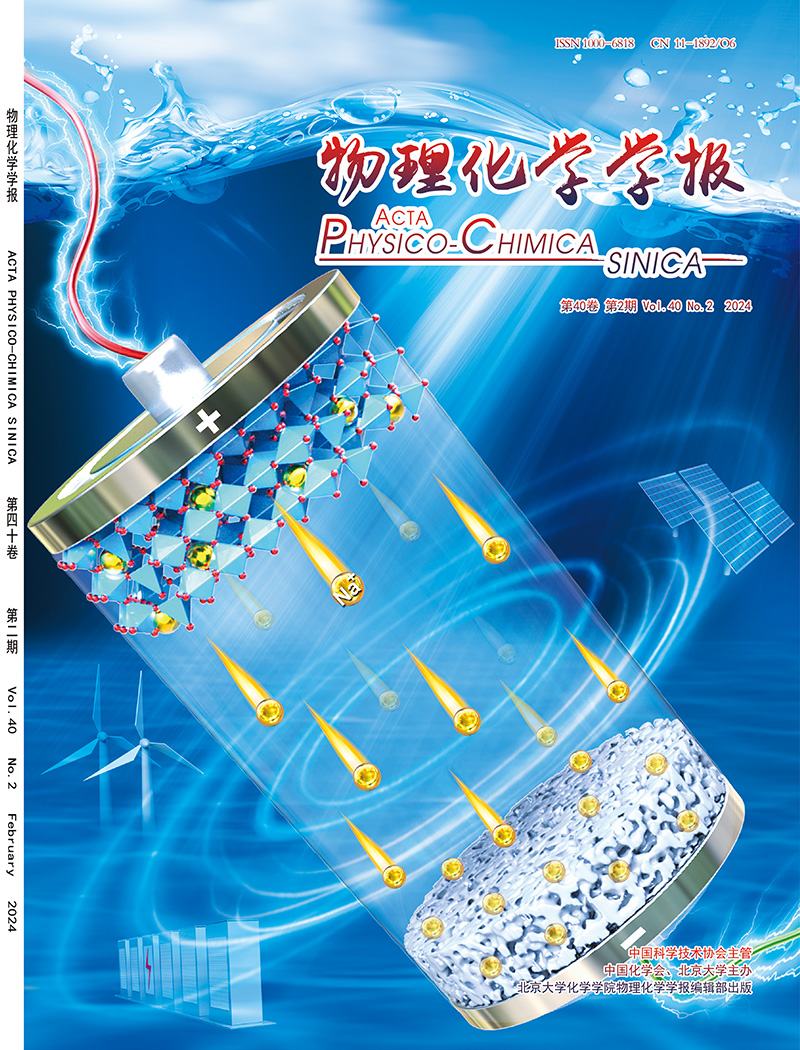
As technology and society have continued to develop, the demand for energy storage solutions has increased significantly. Indeed, the development of low-cost, low-carbon, environmentally friendly energy conversion and storage systems is required to address the environmental and ecological problems faced by society. Due to their fast charging and discharging speeds, long cycle life and environmentally friendly characteristics, supercapacitors are widely used in many fields, especially in wind power generation systems, communication and transportation. Among all kinds of electrode materials, silicon carbide (SiC) nanomaterials and SiC-derived carbon (SiC-CDC) materials present long life, high power density, and uncomplicated working mechanisms, which hold significant promise as electrode materials for supercapacitors. So far, various strategies and approaches for controlling the microstructure of SiC nanomaterials and SiC-CDC materials have been developed to achieve further improvement from preparation methods to electrochemical properties. As such, this review systematically introduces the common preparation methods of SiC nanomaterials and SiC-CDC, including the template method, chemical vapor deposition (CVD) method, high temperature halogen etching method and high temperature thermal decomposition process for preparing SiC-CDC. Furthermore, the advantages and disadvantages of different preparation methods are discussed. Additionally, the review covers the progress in employing SiC nanomaterials and SiC-CDC materials as supercapacitor electrode materials in detail. However, despite this progress, the commercial application of SiC nanomaterials and SiC-CDC materials as supercapacitor electrodes has been restricted by some problems, in particular their limited conductivity and poor wettability. More importantly, the low energy density of supercapacitors is still a major problem. Thus, current methods and developmental trends of the strategies to improve electrochemical performance such as “highly conductive carbon material composite”, “heteroatomic doping”, “pseudocapacitance composites”, “multi-stage pore structure design”, “chemical activation” are further analyzed with regards to the current challenges. For example, the introduction of heteroatoms and functional group molecules for reactions into SiC and SiC-CDC materials can inhibit the agglomeration of materials (such as particles and nanosheets), improve their conductivity and wettability, and enhance their specific capacitance. Finally, the challenges and opportunities in the application of SiC nanomaterials and their derived carbons in the field of energy storage for supercapacitors are summarized and prospected. As current preparation methods are limited to the laboratory scale, the combination and improvement of different preparation methods and the development of large-scale and low-cost preparation technology are still the directions of the next efforts. This comprehensive review is expected to further advance the research of SiC nanomaterials and SiC-CDC materials.



 京公网安备 11010802042870号
京ICP备2023020795号-1
京公网安备 11010802042870号
京ICP备2023020795号-1

 分享
分享
 求助内容:
求助内容: 应助结果提醒方式:
 扫码关注我们
