Methodological considerations in PISCES 3: a randomized, placebo-controlled study of intracerebral stem cells in subjects with disability following an ischemic stroke.
Daniel T Laskowitz, Keith W Muir, Sean I Savitz, Lawrence R Wechsler, Julie G Pilitsis, Scott Y Rahimi, Richard L Beckman, Vincent Holmes, Peng R Chen, Laura Juel, Deborah Koltai, Brad J Kolls
{"title":"Methodological considerations in PISCES 3: a randomized, placebo-controlled study of intracerebral stem cells in subjects with disability following an ischemic stroke.","authors":"Daniel T Laskowitz, Keith W Muir, Sean I Savitz, Lawrence R Wechsler, Julie G Pilitsis, Scott Y Rahimi, Richard L Beckman, Vincent Holmes, Peng R Chen, Laura Juel, Deborah Koltai, Brad J Kolls","doi":"10.3389/fstro.2023.1182537","DOIUrl":null,"url":null,"abstract":"<p><strong>Background and hypothesis: </strong>At present, there are no medical interventions proven to improve functional recovery in patients with subacute stroke. We hypothesize that the intraparenchymal administration of CTX0E03, a conditionally immortalized neural stem cell line, linked with a standardized rehabilitation therapy regimen for the upper limb, would improve functional outcomes in patients 6-12 months after an index ischemic stroke.</p><p><strong>Study design: </strong>PISCES III was designed as a multicenter prospective, sham-controlled, outcome-blinded randomized clinical trial. Eligibility required a qualifying ischemic stroke 6-12 months prior to surgical intervention. Patients must be between 35 and 75 years of age and have residual moderate or moderately severe disability (mRS 3 or 4), with the preservation of some residual upper limb movement. All patients received a standardized regimen of home physical therapy following the intervention.</p><p><strong>Study outcomes: </strong>The primary outcome measure is improvement in the modified Rankin Scale (mRS) of disability at 6 months post treatment. Secondary outcomes include assessment of activities of daily living (Barthel Index), functional mobility (Timed Up and Go; Fugl Meyer Assessment), neurological impairment (NIHSS), upper limb function (Chedoke Arm and Hand Inventory), as well as patient related quality of life and global rating scales.</p><p><strong>Discussion: </strong>PISCES III was designed as a randomized trial directly comparing the effects of intraparenchymal injection of a conditional stem cell line vs. sham procedure in patients with subacute stroke. This is one of the first studies of this type to include a standardized minimum rehabilitation protocol. As there are a limited number of studies evaluating invasive stem cell administration in the chronic setting of CNS injury, study design considerations are discussed.</p><p><strong>Clinical trial registration: </strong>https://clinicaltrials.gov/, identifier NCT03629275.</p>","PeriodicalId":73108,"journal":{"name":"Frontiers in stroke","volume":"2 1","pages":"1182537"},"PeriodicalIF":0.0000,"publicationDate":"2023-07-04","publicationTypes":"Journal Article","fieldsOfStudy":null,"isOpenAccess":false,"openAccessPdf":"https://www.ncbi.nlm.nih.gov/pmc/articles/PMC12802619/pdf/","citationCount":"0","resultStr":null,"platform":"Semanticscholar","paperid":null,"PeriodicalName":"Frontiers in stroke","FirstCategoryId":"1085","ListUrlMain":"https://doi.org/10.3389/fstro.2023.1182537","RegionNum":0,"RegionCategory":null,"ArticlePicture":[],"TitleCN":null,"AbstractTextCN":null,"PMCID":null,"EPubDate":"2023/1/1 0:00:00","PubModel":"eCollection","JCR":"","JCRName":"","Score":null,"Total":0}
引用次数: 0
Abstract
Background and hypothesis: At present, there are no medical interventions proven to improve functional recovery in patients with subacute stroke. We hypothesize that the intraparenchymal administration of CTX0E03, a conditionally immortalized neural stem cell line, linked with a standardized rehabilitation therapy regimen for the upper limb, would improve functional outcomes in patients 6-12 months after an index ischemic stroke.
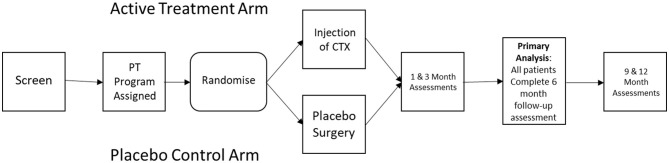
Study design: PISCES III was designed as a multicenter prospective, sham-controlled, outcome-blinded randomized clinical trial. Eligibility required a qualifying ischemic stroke 6-12 months prior to surgical intervention. Patients must be between 35 and 75 years of age and have residual moderate or moderately severe disability (mRS 3 or 4), with the preservation of some residual upper limb movement. All patients received a standardized regimen of home physical therapy following the intervention.
Study outcomes: The primary outcome measure is improvement in the modified Rankin Scale (mRS) of disability at 6 months post treatment. Secondary outcomes include assessment of activities of daily living (Barthel Index), functional mobility (Timed Up and Go; Fugl Meyer Assessment), neurological impairment (NIHSS), upper limb function (Chedoke Arm and Hand Inventory), as well as patient related quality of life and global rating scales.
Discussion: PISCES III was designed as a randomized trial directly comparing the effects of intraparenchymal injection of a conditional stem cell line vs. sham procedure in patients with subacute stroke. This is one of the first studies of this type to include a standardized minimum rehabilitation protocol. As there are a limited number of studies evaluating invasive stem cell administration in the chronic setting of CNS injury, study design considerations are discussed.
背景与假设:目前,尚无医学干预措施被证实可改善亚急性脑卒中患者的功能恢复。我们假设,CTX0E03(一种有条件永生化的神经干细胞系)的肺内给药,与上肢标准化康复治疗方案相关联,将改善指数缺血性卒中患者6-12个月的功能结局。研究设计:双鱼座III是一项多中心前瞻性、假对照、结果盲随机临床试验。资格要求在手术干预前6-12个月有合格的缺血性卒中。患者年龄必须在35 - 75岁之间,有残余的中度或中度重度残疾(mRS 3或4),保留一些残余的上肢运动。所有患者在干预后接受标准化的家庭物理治疗方案。研究结果:主要结局指标是治疗后6个月改良Rankin量表(mRS)残疾的改善。次要结局包括日常生活活动评估(Barthel指数)、功能活动评估(Timed Up and Go; Fugl Meyer评估)、神经损伤评估(NIHSS)、上肢功能评估(Chedoke手臂和手量表)以及患者相关生活质量和全球评分量表。讨论:双鱼座III被设计为一项随机试验,直接比较亚急性卒中患者肺实质内注射条件干细胞系与假手术的效果。这是此类研究中首次纳入标准化的最低康复方案。由于评估慢性中枢神经系统损伤的侵袭性干细胞给药的研究数量有限,因此本文讨论了研究设计的考虑因素。临床试验注册:https://clinicaltrials.gov/,标识符NCT03629275。



 京公网安备 11010802042870号
京ICP备2023020795号-1
京公网安备 11010802042870号
京ICP备2023020795号-1

 分享
分享

 求助内容:
求助内容: 应助结果提醒方式:
 扫码关注我们
