Meng-Yin Wang , Ruo-Bei Huang , Jian-Feng Xiong , Jing-Hua Tian , Jian-Feng Li , Zhong-Qun Tian
{"title":"Critical Role and Recent Development of Separator in Zinc-Air Batteries","authors":"Meng-Yin Wang , Ruo-Bei Huang , Jian-Feng Xiong , Jing-Hua Tian , Jian-Feng Li , Zhong-Qun Tian","doi":"10.3866/PKU.WHXB202307017","DOIUrl":null,"url":null,"abstract":"<div><div>Amidst widespread consumption and the scarcity of non-renewable fossil fuels, the advancement of clean energy sources like solar and wind energy holds immense significance. Nevertheless, these clean energy sources grapple with unstable power supply, underscoring the pressing need for the enhancement of large-scale energy conversion and storage devices. Zinc-air batteries, boasting high energy density, safety, affordability, ease of assembly, eco-friendliness, and abundant zinc metal resources, exhibit promising potential as energy storage and conversion solutions. Nevertheless, various challenges persist in their application, including a limited cycle life and inadequate power density. Throughout the charge and discharge cycles, factors such as the dendritic growth of the zinc negative electrode, the formation of ZnO passivation layers, electrolyte evaporation, and side reactions involving the diffusion of zincate ions to the positive electrode collectively exert influence on the performance of zinc-air batteries. The separator plays a crucial role in zinc-air batteries by isolating the positive and negative electrodes to prevent short circuits, and these aforementioned issues can be resolved through optimization of the design. Until now, the commonly employed separators in zinc-air batteries can be categorized into various types: standard porous separators, anion exchange membranes, polymer gel electrolyte membranes, and composite membranes comprising diverse polymer compositions. Among these, within the context of separator research, porous separators of the polyolefin type are generally utilized in aqueous alkaline zinc-air batteries. Nevertheless, their pronounced hydrophobic nature results in markedly diminished ion conductivity. Conversely, gel-based solid-state or semi-solid-state electrolyte membranes are tailored for flexible electronic device applications. This adaptation ensures that zinc-air batteries uphold favorable electrochemical performance even under deformation conditions, simultaneously addressing the challenge of electrolyte volatilization to a certain degree. Fundamental attributes of the separator, such as pore size, hydrophilicity, and other properties, significantly impact the battery's lifespan and charge/discharge performance. Nevertheless, research on separators and their modifications to enhance zinc-air battery performance, along with the underlying principles, lags behind other aspects of zinc-air battery research, presenting ample room for advancement. This review offers a concise overview of zinc-air battery development, using aqueous alkaline zinc-air batteries as an example to elucidate their operational principles. The objective is to grasp the challenges leading to battery failure in different components and to particularly analyze how separator performance influences overall battery efficiency. This includes aspects such as ion selectivity, ion conductivity, stability, and water retention of the separator. The overview is divided into two main sections: (1) elucidating the fundamental structure and operational principles of the zinc-air battery, and (2) comprehensively exploring the fundamental attributes of the separator and its pivotal function within the zinc-air battery. The research progress and perspective for the development of zinc-air battery separators are also discussed and anticipated.</div><div><span><figure><span><img><ol><li><span><span>Download: <span>Download high-res image (110KB)</span></span></span></li><li><span><span>Download: <span>Download full-size image</span></span></span></li></ol></span></figure></span></div></div>","PeriodicalId":6964,"journal":{"name":"物理化学学报","volume":"40 6","pages":"Article 2307017"},"PeriodicalIF":13.5000,"publicationDate":"2024-06-01","publicationTypes":"Journal Article","fieldsOfStudy":null,"isOpenAccess":false,"openAccessPdf":"","citationCount":"0","resultStr":null,"platform":"Semanticscholar","paperid":null,"PeriodicalName":"物理化学学报","FirstCategoryId":"92","ListUrlMain":"https://www.sciencedirect.com/science/article/pii/S1000681824000912","RegionNum":2,"RegionCategory":"化学","ArticlePicture":[],"TitleCN":null,"AbstractTextCN":null,"PMCID":null,"EPubDate":"","PubModel":"","JCR":"Q1","JCRName":"CHEMISTRY, PHYSICAL","Score":null,"Total":0}
引用次数: 0
Abstract
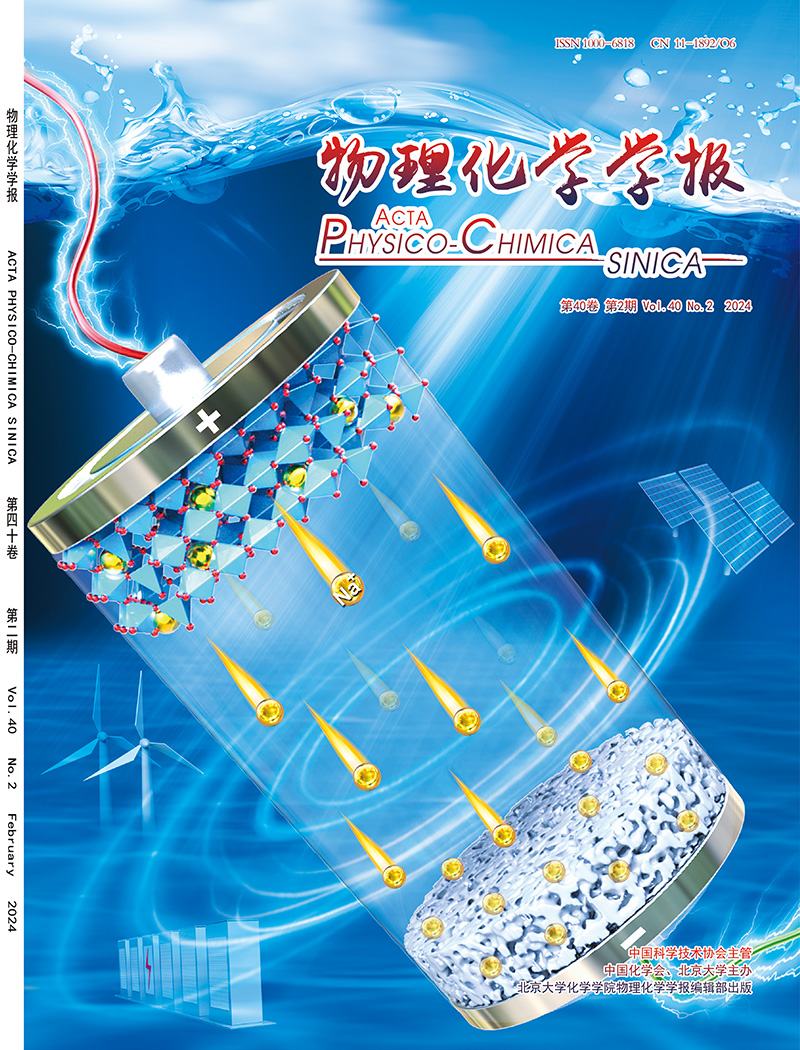
Amidst widespread consumption and the scarcity of non-renewable fossil fuels, the advancement of clean energy sources like solar and wind energy holds immense significance. Nevertheless, these clean energy sources grapple with unstable power supply, underscoring the pressing need for the enhancement of large-scale energy conversion and storage devices. Zinc-air batteries, boasting high energy density, safety, affordability, ease of assembly, eco-friendliness, and abundant zinc metal resources, exhibit promising potential as energy storage and conversion solutions. Nevertheless, various challenges persist in their application, including a limited cycle life and inadequate power density. Throughout the charge and discharge cycles, factors such as the dendritic growth of the zinc negative electrode, the formation of ZnO passivation layers, electrolyte evaporation, and side reactions involving the diffusion of zincate ions to the positive electrode collectively exert influence on the performance of zinc-air batteries. The separator plays a crucial role in zinc-air batteries by isolating the positive and negative electrodes to prevent short circuits, and these aforementioned issues can be resolved through optimization of the design. Until now, the commonly employed separators in zinc-air batteries can be categorized into various types: standard porous separators, anion exchange membranes, polymer gel electrolyte membranes, and composite membranes comprising diverse polymer compositions. Among these, within the context of separator research, porous separators of the polyolefin type are generally utilized in aqueous alkaline zinc-air batteries. Nevertheless, their pronounced hydrophobic nature results in markedly diminished ion conductivity. Conversely, gel-based solid-state or semi-solid-state electrolyte membranes are tailored for flexible electronic device applications. This adaptation ensures that zinc-air batteries uphold favorable electrochemical performance even under deformation conditions, simultaneously addressing the challenge of electrolyte volatilization to a certain degree. Fundamental attributes of the separator, such as pore size, hydrophilicity, and other properties, significantly impact the battery's lifespan and charge/discharge performance. Nevertheless, research on separators and their modifications to enhance zinc-air battery performance, along with the underlying principles, lags behind other aspects of zinc-air battery research, presenting ample room for advancement. This review offers a concise overview of zinc-air battery development, using aqueous alkaline zinc-air batteries as an example to elucidate their operational principles. The objective is to grasp the challenges leading to battery failure in different components and to particularly analyze how separator performance influences overall battery efficiency. This includes aspects such as ion selectivity, ion conductivity, stability, and water retention of the separator. The overview is divided into two main sections: (1) elucidating the fundamental structure and operational principles of the zinc-air battery, and (2) comprehensively exploring the fundamental attributes of the separator and its pivotal function within the zinc-air battery. The research progress and perspective for the development of zinc-air battery separators are also discussed and anticipated.



 京公网安备 11010802042870号
京ICP备2023020795号-1
京公网安备 11010802042870号
京ICP备2023020795号-1

 分享
分享
 求助内容:
求助内容: 应助结果提醒方式:
 扫码关注我们
